
World
Monster Storm Claims 30 Lives as Arctic Temperatures Grip U.S.

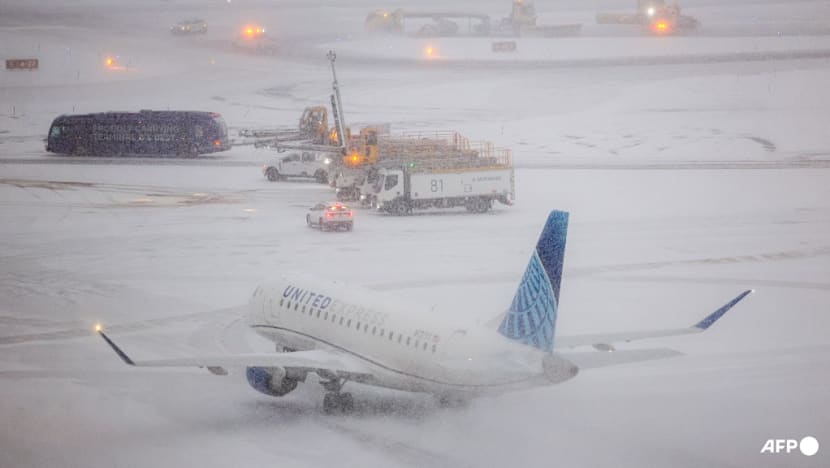
A powerful storm sweeping across the United States has resulted in the deaths of at least 30 people and left over half a million residents without electricity. The severe weather, characterized by record low temperatures and heavy snowfall, has affected a wide range of states from New Mexico to Maine. As authorities work to restore services, the National Weather Service warns that frigid conditions will persist, with temperatures expected to remain below freezing until at least February 1, 2024.
In the wake of this storm, which has dumped significant amounts of snow and freezing rain, many communities are struggling to recover. The situation is particularly dire in southern states, which are ill-equipped to handle such extreme winter conditions. For instance, parts of Connecticut experienced over 56 centimeters of snow, and Boston recorded more than 40.6 centimeters.
As the storm unfolded, various causes of death were reported, including hypothermia and accidents related to vehicles and outdoor activities. Notably, a tragic plane crash in Bangor, Maine, claimed the lives of seven individuals when their aircraft went down during takeoff in adverse weather conditions, as confirmed by the Federal Aviation Administration. In New Jersey, emergency responders discovered a man unresponsive in the snow with a shovel in his hand, while eight fatalities were reported in New York City under similar conditions.
Electricity outages have been widespread, with over 540,000 customers still without power as of Tuesday morning, January 27. The states of Tennessee, Texas, Mississippi, and Louisiana have been particularly hard hit. As power restoration efforts began, utility companies faced challenges due to fallen trees and ice accumulation. Nashville’s Mayor Freddie O’Connell mentioned that ice-laden trees continued to collapse, further complicating recovery efforts.
Transportation has also been severely affected, with more than 9,000 flights canceled or delayed across the country. Passengers at Dallas-Fort Worth International Airport expressed frustration and uncertainty about their travel plans. One traveler, Alan Vazquez, remarked, “We don’t know if we are going to make it or not. We’ve been here since Sunday.”
Emergency shelters are being established in affected areas to provide warmth and refuge for those without heat. The recovery process is complicated by the widespread impact of the storm, with northern states unable to share resources with their southern counterparts. Meteorologist Allison Santorelli from the National Weather Service noted that many southern locations lack sufficient resources for effective snow removal and recovery.
The storm’s origins can be traced to a stretched polar vortex, a phenomenon that occurs when cold Arctic air disperses across North America. While scientists are studying the potential link between such weather patterns and climate change, the debate continues. Meteorologist Dave Radell pointed out that the storm produced “very dry” and “fluffy” snow, making it challenging for crews to clear roads effectively.
As the storm’s effects continue to unfold, officials emphasize the importance of safety and preparedness, especially in regions unaccustomed to such severe winter weather. The road to recovery will likely be long, requiring resilience from communities and assistance from neighboring states.

India Unveils Long-Range Hypersonic Missile Amid Regional Tensions

SK bioscience Launches Global Trial for Universal Sarbecovirus Vaccine

Senegal Coach Pape Thiaw Suspended and Fined After Final Disruption

PAS Denies Abolishing Chairman Post, Contradicts Muhyiddin’s Claim

Mbappé Critiques Real Madrid’s Effort After Benfica Defeat

Thailand’s December Factory Output Surges 2.52% Year-on-Year

Ishita Dutta Reveals Her Parenting Secret: Strong Coffee

Older GPs Express Concerns Over New Digital Health Record Mandate

Urban Jurgensen: A 252-Year Legacy Enters a New Era

Regina Martinez Breaks New Ground for Mexico in Cross-Country Skiing

South Korea’s Foreign Minister Cho Hyun to Visit China This Week

Starling Bank Plans Secondary Share Sale, Targeting $5.4 Billion Valuation

Munsang College Celebrates 100 Years with Grand Ceremony

PAS Aims to Expand Parliamentary Influence in Upcoming Election

De Minaur Triumphs at Washington Open After Thrilling Comeback

Kenvue Dismisses CEO Thibaut Mongon as Strategic Review Advances

Humanism Camp Engages 250 Youths in Summer Fest 2025

Colombian Senator Miguel Uribe Shows Signs of Recovery After Attack
-
 Sports2 months ago
Regina Martinez Breaks New Ground for Mexico in Cross-Country Skiing
-
 World6 months ago
South Korea’s Foreign Minister Cho Hyun to Visit China This Week
-
 Business6 months ago
Starling Bank Plans Secondary Share Sale, Targeting $5.4 Billion Valuation
-
 Top Stories6 months ago
Munsang College Celebrates 100 Years with Grand Ceremony
-
 World6 months ago
PAS Aims to Expand Parliamentary Influence in Upcoming Election
-
 Sports8 months ago
De Minaur Triumphs at Washington Open After Thrilling Comeback
-
 Business8 months ago
Kenvue Dismisses CEO Thibaut Mongon as Strategic Review Advances
-
 Lifestyle8 months ago
Humanism Camp Engages 250 Youths in Summer Fest 2025
-
 Top Stories8 months ago
Colombian Senator Miguel Uribe Shows Signs of Recovery After Attack
-

 Sports8 months ago
Tupou and Daugunu Join First Nations Squad for Lions Clash
-

 World8 months ago
ASEAN Gears Up for Historic Joint Meeting of Foreign and Economic Ministers
-

 Health8 months ago
New Study Challenges Assumptions About Aging and Inflammation