
World
Leadership Crisis in Malaysia’s Opposition as Muhyiddin Resigns

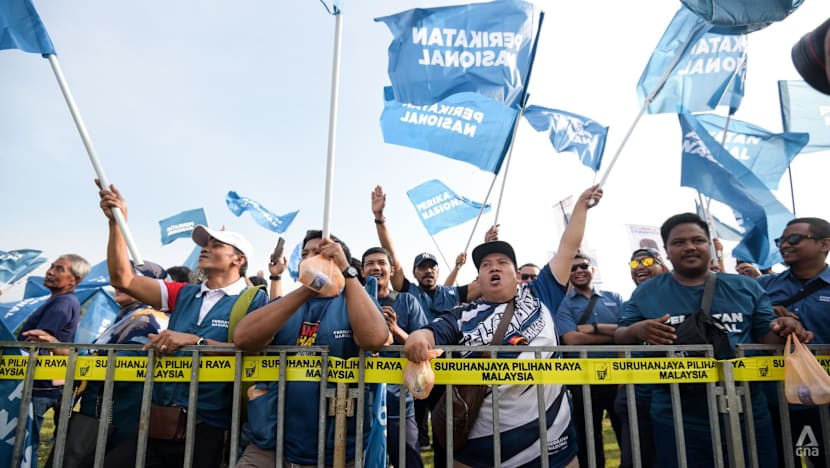
KUALA LUMPUR: A significant leadership void has emerged in Malaysia’s opposition coalition, Perikatan Nasional (PN), following the announcement that Muhyiddin Yassin will resign as its chairperson, effective January 1. This development raises urgent questions regarding his successor and the coalition’s direction as it prepares for the upcoming 16th general election (GE16), mandated to occur by February 2028.
In response to Muhyiddin’s impending departure, the Parti Islam Se-Malaysia (PAS) has expressed its readiness to assume leadership of the coalition. PAS leaders have indicated their intention to nominate a candidate to fill the vacancy left by Muhyiddin. Yet, political analysts caution that any replacement from PAS may lack the necessary credentials to unite the coalition and appeal to a diverse electorate, particularly in constituencies with significant non-Malay populations.
Muhyiddin, who previously served as Malaysia’s eighth prime minister from March 2020 to August 2021, announced his resignation on December 30. His decision prompted a wave of resignations from other key figures within the coalition, including former international trade and industry minister Mohamed Azmin Ali, who stepped down as PN secretary-general and chairman of the Selangor State PN Liaison Committee. Several state leaders from Bersatu, including Faizal Azumu, Sahruddin Jamal, and Hanifah Abu Baker, followed suit.
The resignation of Muhyiddin has intensified discussions about who will inherit his role as the coalition’s de facto candidate for prime minister in the upcoming election. Awang Azman Awang Pawi, a political analyst from Universiti Malaya, emphasized the critical nature of this transition, noting that the optics of a PAS-led coalition may deter votes in multi-ethnic constituencies.
As of now, PN comprises four main parties: Bersatu, PAS, Parti Gerakan Rakyat Malaysia, and the Malaysian Indian People’s Party. While PAS has a strong foothold in Malay-majority areas, its previous statements and actions have often alienated non-Muslim voters. The internal dynamics of the coalition are further complicated by recent political turmoil in Perlis, where the assembly is under PN control.
The upheaval saw PAS’s Mohd Shukri Ramli resign as chief minister, with Abu Bakar Hamzah from Bersatu taking over the role. This shift occurred after several assembly members, including three from PAS and five from Bersatu, withdrew their support for Shukri, leading to his dismissal from the party.
Observers are now speculating about potential successors to Muhyiddin. The most frequently mentioned candidate is Hamzah Zainudin, PN’s deputy chairman and current leader of the opposition. Political scientist Syaza Shukri of the International Islamic University Malaysia believes Hamzah is a strong contender given his support from PAS leaders. Yet, the question remains whether PAS is ready to accept a candidate from Bersatu, as this could lead to perceptions of PAS dominance within the coalition.
Political analysts, including James Chin from the University of Tasmania, highlight that if PAS were to lead PN, it may struggle to win over the Chinese community, which has largely rejected the party. Despite some PAS grassroots members pushing for their party to take the lead, there are concerns that such a move could alienate other essential voter segments.
The youth wing of PAS has been vocal about leading PN, with Afnan Hamimi Azamudden, the youth chief, asserting that the party’s leadership is justified following the recent events in Perlis. Various names have surfaced as potential candidates for the chairmanship, including Tuan Ibrahim Tuan Man, Takiyuddin Hassan, Ahmad Samsuri Mokhtar, and Muhammad Sanusi Md Nor. However, PAS President Hadi Awang is unlikely to be considered due to health issues.
The internal discussions regarding succession are crucial, as the coalition faces the challenge of presenting a united front ahead of the next election. Tuan Ibrahim has indicated that any decision on leadership will be made within the coalition’s supreme council.
Despite the ongoing turmoil, Tun Faisal Ismail Aziz, Bersatu’s information chief, praised Muhyiddin’s decision to step down, framing it as a magnanimous move aimed at restoring harmony within the coalition. Observers note that the former prime minister has been under increasing pressure to resign, particularly following a tumultuous period within the party and allegations of corruption that he now faces.
The future of Perikatan Nasional hinges on how it navigates this leadership transition and addresses the concerns of its diverse electorate. As political dynamics continue to evolve, the coalition’s ability to unify and appeal to all segments of Malaysian society will be critical in the lead-up to GE16.

India Unveils Long-Range Hypersonic Missile Amid Regional Tensions

SK bioscience Launches Global Trial for Universal Sarbecovirus Vaccine

Senegal Coach Pape Thiaw Suspended and Fined After Final Disruption

PAS Denies Abolishing Chairman Post, Contradicts Muhyiddin’s Claim

Mbappé Critiques Real Madrid’s Effort After Benfica Defeat

Thailand’s December Factory Output Surges 2.52% Year-on-Year

Ishita Dutta Reveals Her Parenting Secret: Strong Coffee

Older GPs Express Concerns Over New Digital Health Record Mandate

Urban Jurgensen: A 252-Year Legacy Enters a New Era

Regina Martinez Breaks New Ground for Mexico in Cross-Country Skiing

South Korea’s Foreign Minister Cho Hyun to Visit China This Week

Starling Bank Plans Secondary Share Sale, Targeting $5.4 Billion Valuation

Munsang College Celebrates 100 Years with Grand Ceremony

PAS Aims to Expand Parliamentary Influence in Upcoming Election

De Minaur Triumphs at Washington Open After Thrilling Comeback

Kenvue Dismisses CEO Thibaut Mongon as Strategic Review Advances

Humanism Camp Engages 250 Youths in Summer Fest 2025

Colombian Senator Miguel Uribe Shows Signs of Recovery After Attack
-
 Sports2 months ago
Regina Martinez Breaks New Ground for Mexico in Cross-Country Skiing
-
 World7 months ago
South Korea’s Foreign Minister Cho Hyun to Visit China This Week
-
 Business7 months ago
Starling Bank Plans Secondary Share Sale, Targeting $5.4 Billion Valuation
-
 Top Stories7 months ago
Munsang College Celebrates 100 Years with Grand Ceremony
-
 World7 months ago
PAS Aims to Expand Parliamentary Influence in Upcoming Election
-
 Sports8 months ago
De Minaur Triumphs at Washington Open After Thrilling Comeback
-
 Business9 months ago
Kenvue Dismisses CEO Thibaut Mongon as Strategic Review Advances
-
 Lifestyle8 months ago
Humanism Camp Engages 250 Youths in Summer Fest 2025
-
 Top Stories9 months ago
Colombian Senator Miguel Uribe Shows Signs of Recovery After Attack
-

 Sports9 months ago
Tupou and Daugunu Join First Nations Squad for Lions Clash
-
 World9 months ago
ASEAN Gears Up for Historic Joint Meeting of Foreign and Economic Ministers
-

 Health8 months ago
New Study Challenges Assumptions About Aging and Inflammation