
World
Japan’s PM Takaichi Plans Snap Election for Stronger Mandate

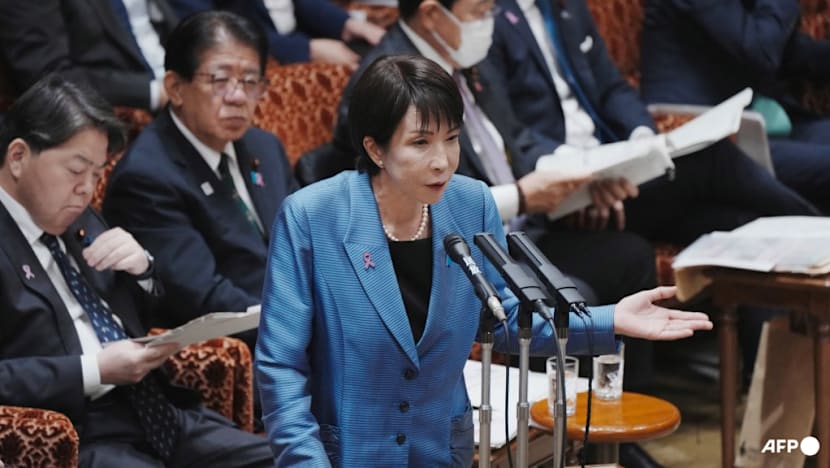
Japanese Prime Minister Sanae Takaichi is set to announce her plans to dissolve parliament and call for a snap election, according to multiple media reports. The announcement, scheduled for Monday, January 19, 2024, aims to secure a stronger mandate for her ambitious policy agenda. As the first woman to lead Japan, Takaichi is banking on her favorable approval ratings to guide the ruling Liberal Democratic Party (LDP) to victory in the upcoming election.
Takaichi communicated her intentions to party officials last week and is expected to provide further details about the election, likely to be held as early as February 8, during a press conference. The LDP has maintained a dominant role in Japanese politics for decades, although it has experienced frequent leadership changes. Since her appointment in October 2023, Takaichi’s Cabinet has enjoyed high approval ratings, despite the party’s overall declining popularity.
Currently, Takaichi’s ruling coalition, which includes the Japan Innovation Party (JIP), holds only a slim majority in the lower house of parliament. This precarious position poses a challenge to advancing her policy initiatives, which include increasing fiscal spending and enhancing the defense budget. Sadafumi Kawato, a professor emeritus at the University of Tokyo, noted, “If the LDP can get a majority by itself in the lower house, that’ll help her pursue policies without concessions to other parties.”
In a significant move, Takaichi’s Cabinet recently approved a record 122.3 trillion yen (approximately USD 768 billion) budget for the fiscal year starting in April 2026. Takaichi has expressed her intention to secure parliamentary approval swiftly to address rising inflation and stabilize Japan’s economy, which ranks as the fourth-largest in the world.
However, opposition parties are voicing concerns that dissolving the lower house could delay the budget’s passage. Jun Azumi, a representative from the main opposition Constitutional Democratic Party of Japan (CDP), stated that the move could “sacrifice livelihoods.” Public sentiment reflects this concern, as Masaaki Tokuno, a 64-year-old bicycle lot manager, emphasized the need to prioritize inflation policies before proceeding with elections.
The LDP is reportedly considering campaigning on a proposed reduction of the tax on food purchases to alleviate the financial burden on consumers facing rising grocery prices.
Takaichi’s decision to call a snap election could also impact Japan’s ongoing tensions with China. Analysts suggest that a strong showing at the polls could enhance her negotiating power, particularly following her comments in November about potential military intervention should China attempt to attack Taiwan, which it claims as its territory.
Despite potential advantages, Mikitaka Masuyama, dean of the National Graduate Institute for Policy Studies, warned that a victory for Takaichi might provoke further pressure from Beijing. He noted that China could retaliate by sending a message to voters that supporting a hawkish leader could result in economic consequences.
Relations between Tokyo and Beijing have deteriorated sharply in recent months, especially after China implemented a ban on the export of “dual-use” goods to Japan that could have military applications. Additionally, reports indicate that China has restricted exports of rare-earth materials essential for various industries, including electric cars and military technology.
Concerns about the ramifications of a worsening Japan-China relationship on the economy are prevalent among the public, with a recent Asahi newspaper poll revealing that 60 percent of respondents expressed worries about the situation.
Under the leadership of Takaichi’s predecessor, Shigeru Ishiba, the LDP lost its majority in both chambers during the last two national elections. This trend continued with the loss of seats in the July 2023 upper house election, which ultimately led to Ishiba’s resignation. Smaller parties, including the populist Sanseito, have gained traction, particularly with their focus on immigration issues.
In a strategic move, the Komeito party and the CDP have formed an alliance to challenge Takaichi in the upcoming election, hoping to attract undecided voters and bolster their chances of success.

India Unveils Long-Range Hypersonic Missile Amid Regional Tensions

SK bioscience Launches Global Trial for Universal Sarbecovirus Vaccine

Senegal Coach Pape Thiaw Suspended and Fined After Final Disruption

PAS Denies Abolishing Chairman Post, Contradicts Muhyiddin’s Claim

Mbappé Critiques Real Madrid’s Effort After Benfica Defeat

Thailand’s December Factory Output Surges 2.52% Year-on-Year

Ishita Dutta Reveals Her Parenting Secret: Strong Coffee

Older GPs Express Concerns Over New Digital Health Record Mandate

Urban Jurgensen: A 252-Year Legacy Enters a New Era

Regina Martinez Breaks New Ground for Mexico in Cross-Country Skiing

South Korea’s Foreign Minister Cho Hyun to Visit China This Week

Starling Bank Plans Secondary Share Sale, Targeting $5.4 Billion Valuation

Munsang College Celebrates 100 Years with Grand Ceremony

PAS Aims to Expand Parliamentary Influence in Upcoming Election

De Minaur Triumphs at Washington Open After Thrilling Comeback

Kenvue Dismisses CEO Thibaut Mongon as Strategic Review Advances

Humanism Camp Engages 250 Youths in Summer Fest 2025

Colombian Senator Miguel Uribe Shows Signs of Recovery After Attack
-
 Sports2 months ago
Regina Martinez Breaks New Ground for Mexico in Cross-Country Skiing
-
 World6 months ago
South Korea’s Foreign Minister Cho Hyun to Visit China This Week
-
 Business7 months ago
Starling Bank Plans Secondary Share Sale, Targeting $5.4 Billion Valuation
-
 Top Stories7 months ago
Munsang College Celebrates 100 Years with Grand Ceremony
-
 World6 months ago
PAS Aims to Expand Parliamentary Influence in Upcoming Election
-
 Sports8 months ago
De Minaur Triumphs at Washington Open After Thrilling Comeback
-
 Business8 months ago
Kenvue Dismisses CEO Thibaut Mongon as Strategic Review Advances
-
 Lifestyle8 months ago
Humanism Camp Engages 250 Youths in Summer Fest 2025
-
 Top Stories9 months ago
Colombian Senator Miguel Uribe Shows Signs of Recovery After Attack
-

 Sports8 months ago
Tupou and Daugunu Join First Nations Squad for Lions Clash
-

 World8 months ago
ASEAN Gears Up for Historic Joint Meeting of Foreign and Economic Ministers
-

 Health8 months ago
New Study Challenges Assumptions About Aging and Inflammation