
World
Japanese Opposition Parties Unite to Form New Centrist Political Force

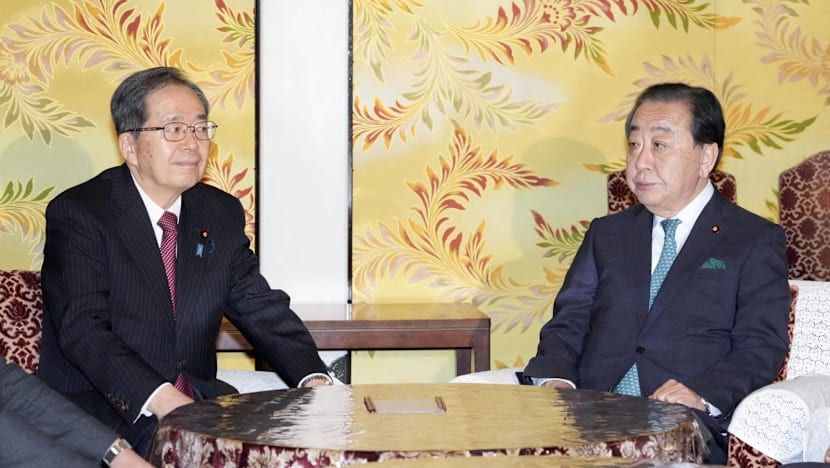
In a significant political development, Japan’s main opposition parties, the Constitutional Democratic Party of Japan (CDP) and Komeito, announced their intention to unite and form a new political party. This decision, revealed by party leaders on January 15, 2024, aims to present a cohesive front against the ruling coalition, which they perceive as increasingly right-leaning.
This announcement follows Prime Minister Sanae Takaichi‘s indication to ruling party executives that she plans to dissolve parliament next week and call a snap election. Sources suggest that the election could be scheduled for February 8, capitalizing on her current high approval rating. According to CDP leader Yoshihiko Noda, the Takaichi administration has favored policies that lean towards the right, creating an opportunity for the centrist camp to assert its influence in national politics.
Komeito recently severed its 26-year alliance with Takaichi’s Liberal Democratic Party (LDP) due to dissatisfaction with the party’s handling of a political funding scandal. Following this, the LDP formed a coalition with the Japan Innovation Party, known as Ishin, which has facilitated Takaichi’s rise as Japan’s first female prime minister.
In the newly formed party, initial leadership will be shared between Noda and Tetsuo Saito, Komeito’s chief. Lawmakers from both parties will transition to the yet-to-be-named party, and Noda has expressed a desire to attract lawmakers from other parties as well.
With a total of 465 seats in the lower house, the LDP and Ishin currently hold a combined 233 seats, securing a simple majority. In contrast, the CDP and Komeito together control 172 seats. A recent poll by public broadcaster NHK indicated that Takaichi enjoys support from 62 percent of voters. A decisive victory in the upcoming election would bolster her position within the LDP and lessen her dependence on smaller parties for legislative support.
Despite potentially gaining a lower house majority, Takaichi would still face challenges governing due to a minority in the upper house, which she cannot dissolve. The upper house elections occur every three years, with the next scheduled for 2028. Saito mentioned that lawmakers from both the CDP and Komeito in the upper house would also aim to join the new party ahead of their upcoming elections.
The formation of this new political entity reflects a strategic effort to consolidate centrist forces in Japan and could significantly influence the political landscape leading into the next election cycle.

India Unveils Long-Range Hypersonic Missile Amid Regional Tensions

SK bioscience Launches Global Trial for Universal Sarbecovirus Vaccine

Senegal Coach Pape Thiaw Suspended and Fined After Final Disruption

PAS Denies Abolishing Chairman Post, Contradicts Muhyiddin’s Claim

Mbappé Critiques Real Madrid’s Effort After Benfica Defeat

Thailand’s December Factory Output Surges 2.52% Year-on-Year

Ishita Dutta Reveals Her Parenting Secret: Strong Coffee

Older GPs Express Concerns Over New Digital Health Record Mandate

Urban Jurgensen: A 252-Year Legacy Enters a New Era

Regina Martinez Breaks New Ground for Mexico in Cross-Country Skiing

South Korea’s Foreign Minister Cho Hyun to Visit China This Week

Starling Bank Plans Secondary Share Sale, Targeting $5.4 Billion Valuation

Munsang College Celebrates 100 Years with Grand Ceremony

PAS Aims to Expand Parliamentary Influence in Upcoming Election

De Minaur Triumphs at Washington Open After Thrilling Comeback

Kenvue Dismisses CEO Thibaut Mongon as Strategic Review Advances

Humanism Camp Engages 250 Youths in Summer Fest 2025

Colombian Senator Miguel Uribe Shows Signs of Recovery After Attack
-
 Sports2 months ago
Regina Martinez Breaks New Ground for Mexico in Cross-Country Skiing
-
 World6 months ago
South Korea’s Foreign Minister Cho Hyun to Visit China This Week
-
 Business7 months ago
Starling Bank Plans Secondary Share Sale, Targeting $5.4 Billion Valuation
-
 Top Stories7 months ago
Munsang College Celebrates 100 Years with Grand Ceremony
-
 World6 months ago
PAS Aims to Expand Parliamentary Influence in Upcoming Election
-
 Sports8 months ago
De Minaur Triumphs at Washington Open After Thrilling Comeback
-
 Business8 months ago
Kenvue Dismisses CEO Thibaut Mongon as Strategic Review Advances
-
 Lifestyle8 months ago
Humanism Camp Engages 250 Youths in Summer Fest 2025
-
 Top Stories9 months ago
Colombian Senator Miguel Uribe Shows Signs of Recovery After Attack
-

 Sports8 months ago
Tupou and Daugunu Join First Nations Squad for Lions Clash
-

 World8 months ago
ASEAN Gears Up for Historic Joint Meeting of Foreign and Economic Ministers
-

 Health8 months ago
New Study Challenges Assumptions About Aging and Inflammation