
World
Japan Faces Rising Bear Attacks as 13 Lives Lost This Year

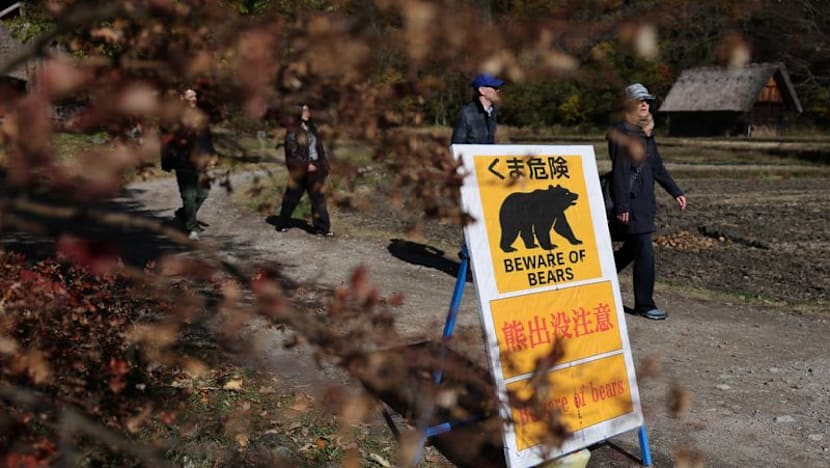
Japan is confronting a significant rise in bear encounters, with a record 13 people killed this year due to bear attacks. The alarming trend is evident in Omachi, a city in Nagano Prefecture, where residents are increasingly on alert as bears venture closer to populated areas. Local authorities are implementing new measures in response to this growing threat, which has transformed the landscape of wildlife management in the region.
Hunting and Local Response to Bear Activity
In his role as a local hunter, Yoshikazu Katsuno, 64, patrols the wooded areas near residential neighborhoods, prepared with a rifle slung across his back. Katsuno is one of approximately 150,000 licensed hunters in Japan, though few engage in hunting as a full-time profession. His experience, while extensive, has not included hunting bears in the wild; he has only dispatched bears that had already been trapped.
Previously, hunters like Katsuno were primarily employed to manage populations of wild boars, deer, and monkeys that damage farmland. Now, the focus has shifted toward bears, with 9,867 bears captured nationwide as of October 2023, most of which have been culled. Local governments are increasing compensation for bear capture and are implementing emergency measures to authorize hunters to shoot bears that enter populated areas.
Katsuno’s personal experience with the bear threat became apparent last year when he heard unusual noises outside his home at night. After investigating, he discovered a persimmon tree nearly stripped bare by a bear. “We had heavy snow that day, so I thought the noise was from bamboo being crushed,” he recounted. Despite having his rifle, strict gun regulations in Japan would have prohibited him from firing at the bear.
Community Impact and Precautions
The situation is compounded by the challenges faced by local businesses, especially in tourist areas like Omachi Onsenkyo, a hot spring resort. This summer, bears were frequently sighted in the vicinity, prompting business owners to take preventive measures. The Tateyama Prince Hotel has installed warning signs and now rents out bells for guests to ward off potential bear encounters.
Joji Hirabayashi, a crisis management officer in the city, explained that the bears are increasingly searching for food as climate conditions affect the growth of nuts and berries. “There are four or five bears constantly coming to this area. The same bears are sticking around,” he said. The authorities prioritize capturing bears using traps before considering the use of rifles.
Concerns about bear safety are also influencing tourism. Sayaka Hosokawa, an officer from the Omachi City Tourism Association, noted that potential visitors are expressing reservations due to fears of bear encounters. This decline in tourist confidence could have lasting effects on the local economy, which relies heavily on seasonal visitors.
As winter approaches, bear sightings are expected to decrease with the onset of hibernation. Yet, officials warn that the threat is far from over, as food shortages may keep some bears active during the colder months. The combination of changing environmental conditions and human encroachment into bear habitats underscores the need for ongoing vigilance and effective management strategies in Japan’s wildlife policy.

India Unveils Long-Range Hypersonic Missile Amid Regional Tensions

SK bioscience Launches Global Trial for Universal Sarbecovirus Vaccine

Senegal Coach Pape Thiaw Suspended and Fined After Final Disruption

PAS Denies Abolishing Chairman Post, Contradicts Muhyiddin’s Claim

Mbappé Critiques Real Madrid’s Effort After Benfica Defeat

Thailand’s December Factory Output Surges 2.52% Year-on-Year

Ishita Dutta Reveals Her Parenting Secret: Strong Coffee

Older GPs Express Concerns Over New Digital Health Record Mandate

Urban Jurgensen: A 252-Year Legacy Enters a New Era

Regina Martinez Breaks New Ground for Mexico in Cross-Country Skiing

South Korea’s Foreign Minister Cho Hyun to Visit China This Week

Starling Bank Plans Secondary Share Sale, Targeting $5.4 Billion Valuation

Munsang College Celebrates 100 Years with Grand Ceremony

PAS Aims to Expand Parliamentary Influence in Upcoming Election

De Minaur Triumphs at Washington Open After Thrilling Comeback

Kenvue Dismisses CEO Thibaut Mongon as Strategic Review Advances

Humanism Camp Engages 250 Youths in Summer Fest 2025

Colombian Senator Miguel Uribe Shows Signs of Recovery After Attack
-
 Sports1 month ago
Regina Martinez Breaks New Ground for Mexico in Cross-Country Skiing
-
 World6 months ago
South Korea’s Foreign Minister Cho Hyun to Visit China This Week
-
 Business6 months ago
Starling Bank Plans Secondary Share Sale, Targeting $5.4 Billion Valuation
-
 Top Stories6 months ago
Munsang College Celebrates 100 Years with Grand Ceremony
-
 World6 months ago
PAS Aims to Expand Parliamentary Influence in Upcoming Election
-
 Sports7 months ago
De Minaur Triumphs at Washington Open After Thrilling Comeback
-
 Business8 months ago
Kenvue Dismisses CEO Thibaut Mongon as Strategic Review Advances
-
 Lifestyle7 months ago
Humanism Camp Engages 250 Youths in Summer Fest 2025
-
 Top Stories8 months ago
Colombian Senator Miguel Uribe Shows Signs of Recovery After Attack
-

 Sports8 months ago
Tupou and Daugunu Join First Nations Squad for Lions Clash
-

 World8 months ago
ASEAN Gears Up for Historic Joint Meeting of Foreign and Economic Ministers
-

 Health7 months ago
New Study Challenges Assumptions About Aging and Inflammation