
World
High Seas Treaty: New Era for Ocean Protection Begins in Southeast Asia

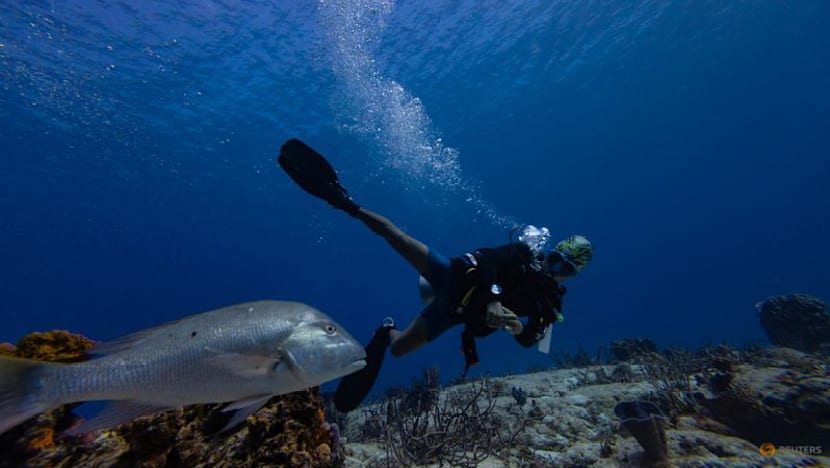
BANGKOK: The High Seas Treaty, aimed at protecting the world’s oceans, has officially become international law as of January 17, 2024. This landmark agreement, ratified by 83 nations and signed by an additional 62, marks a significant shift in global ocean governance. With its provisions now in effect, the treaty seeks to address the long-standing legal uncertainties surrounding the high seas, which encompass nearly half the Earth’s surface and two-thirds of its oceans.
The high seas, defined as waters beyond any country’s exclusive economic zone, have historically been vulnerable to exploitation. Biodiversity, including migratory fish stocks and deep-sea ecosystems, has largely existed in a legal grey area. According to Maeve Nightingale, the regional coordinator for the coastal and marine programme at the International Union for Conservation of Nature (IUCN) Asia, this treaty represents a “landmark moment for ocean protection.”
Transforming Ocean Governance
Before the treaty’s enactment, less than 1 percent of the high seas was fully protected under existing regulations. The new treaty establishes a comprehensive framework for the governance of international waters, covering activities such as commercial fishing, deep-sea mining, and marine scientific research. Nichanan Tanthanawit, Global Project Lead for Ocean Justice at Greenpeace, highlighted the treaty’s potential to introduce necessary regulations and procedures for countries.
With the High Seas Treaty in place, nations can now designate marine protected areas (MPAs) in international waters, a significant step towards safeguarding marine ecosystems. “This legally binding opportunity allows us to set global commitments into action,” Nightingale stated, emphasizing the treaty’s importance in achieving broader environmental goals.
For Southeast Asia, the treaty promises enhanced scientific knowledge, access to ocean data, and capacity building for countries that rely heavily on marine resources. Seven countries in the region—Indonesia, Singapore, Vietnam, Cambodia, Laos, the Philippines, and Timor-Leste—are parties to the treaty. Meanwhile, Malaysia, Thailand, and Brunei are signatories, while Myanmar has not yet consented.
Regional Implications and Opportunities
As a region rich in biodiversity and reliant on fisheries for nutrition and employment, Southeast Asia has a vested interest in the treaty’s success. Rena Lee, Singapore’s Ambassador for International Law, noted that the interconnectedness of marine ecosystems means that activities in the high seas impact nearby coastal waters. “What happens far out in the high seas does have an impact on our near shore waters,” she explained.
The treaty aims to drive momentum towards the global objective of protecting 30 percent of the world’s land and oceans by 2030, as outlined in the Kunming–Montreal Global Biodiversity Framework. Without rules governing the high seas, achieving this target would be challenging.
In addition, observers suggest that the treaty could enhance regional cooperation among ASEAN nations. While internal dynamics and varying maritime priorities pose challenges, the opportunity exists for countries to collaborate on initiatives like establishing an MPA in nearby international waters. Tanthanawit shared her firsthand experience of the Saya de Malha Bank, a potential MPA candidate in the Indian Ocean, where she observed thriving marine life in an area previously deemed remote.
The treaty’s implementation comes at a time of heightened geopolitical tension, yet it has been hailed as a rare example of successful multilateral cooperation. As China emerges as a key player, its Minister of Foreign Affairs, Wang Yi, expressed the nation’s readiness to contribute to the treaty’s objectives, emphasizing the importance of conservation and sustainable use of ocean resources.
Despite the absence of the United States in the treaty, the global community is optimistic about its potential to foster collaboration in addressing pressing marine issues. Coordinating efforts among the numerous parties will be crucial for the treaty’s success, according to Lee, who emphasized the need for universal participation and effective frameworks.
As the world navigates challenges in implementing the treaty, experts acknowledge that substantial financing, institutional frameworks, and cooperation will be vital. Nightingale remarked on the excitement surrounding the treaty’s entry into force while recognizing the work still required to translate this agreement into actionable outcomes.
“The next steps are where the real challenges lie,” she noted, encouraging stakeholders from governments to NGOs to unite in the effort. The High Seas Treaty represents a crucial step forward in ocean governance, promising to reshape how humanity interacts with the deep blue.

India Unveils Long-Range Hypersonic Missile Amid Regional Tensions

SK bioscience Launches Global Trial for Universal Sarbecovirus Vaccine

Senegal Coach Pape Thiaw Suspended and Fined After Final Disruption

PAS Denies Abolishing Chairman Post, Contradicts Muhyiddin’s Claim

Mbappé Critiques Real Madrid’s Effort After Benfica Defeat

Thailand’s December Factory Output Surges 2.52% Year-on-Year

Ishita Dutta Reveals Her Parenting Secret: Strong Coffee

Older GPs Express Concerns Over New Digital Health Record Mandate

Urban Jurgensen: A 252-Year Legacy Enters a New Era

South Korea’s Foreign Minister Cho Hyun to Visit China This Week

Starling Bank Plans Secondary Share Sale, Targeting $5.4 Billion Valuation

Munsang College Celebrates 100 Years with Grand Ceremony

PAS Aims to Expand Parliamentary Influence in Upcoming Election

Kenvue Dismisses CEO Thibaut Mongon as Strategic Review Advances

Humanism Camp Engages 250 Youths in Summer Fest 2025

De Minaur Triumphs at Washington Open After Thrilling Comeback

Tupou and Daugunu Join First Nations Squad for Lions Clash

Colombian Senator Miguel Uribe Shows Signs of Recovery After Attack
-
 World5 months ago
South Korea’s Foreign Minister Cho Hyun to Visit China This Week
-
 Business5 months ago
Starling Bank Plans Secondary Share Sale, Targeting $5.4 Billion Valuation
-
 Top Stories5 months ago
Munsang College Celebrates 100 Years with Grand Ceremony
-
 World5 months ago
PAS Aims to Expand Parliamentary Influence in Upcoming Election
-
 Business7 months ago
Kenvue Dismisses CEO Thibaut Mongon as Strategic Review Advances
-
 Lifestyle6 months ago
Humanism Camp Engages 250 Youths in Summer Fest 2025
-
 Sports6 months ago
De Minaur Triumphs at Washington Open After Thrilling Comeback
-
 Sports7 months ago
Tupou and Daugunu Join First Nations Squad for Lions Clash
-
 Top Stories7 months ago
Colombian Senator Miguel Uribe Shows Signs of Recovery After Attack
-
 World7 months ago
ASEAN Gears Up for Historic Joint Meeting of Foreign and Economic Ministers
-

 Health6 months ago
New Study Challenges Assumptions About Aging and Inflammation
-

 Business7 months ago
Oil Prices Surge Following New EU Sanctions on Russia