
World
China Reduces Demand for Venezuelan Oil Amid US Sanctions

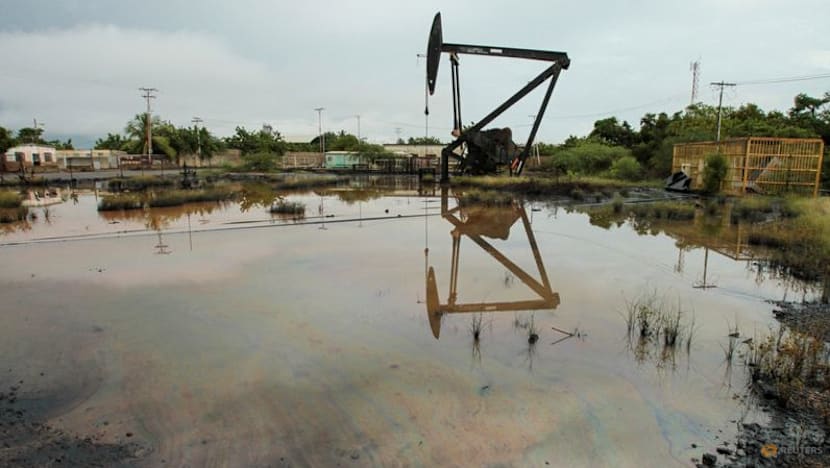
The shifting dynamics of global oil demand have taken a significant turn, as China, once a key customer for Venezuelan crude, is reducing its intake. This change coincides with actions from the United States to arrest former Venezuelan President Nicolas Maduro and increase pressure on the country’s oil industry. The US government’s strategy, which seems aimed at limiting Beijing’s influence in the Americas, complicates the already fragile situation for Venezuela, a nation struggling under the weight of a prolonged economic crisis.
Donald Trump asserted during a press conference on January 3, 2023 that the US would continue to sell Venezuelan oil, stating, “We’re in the oil business, we’re gonna sell it to them.” This statement hints at the potential for increased exports, yet the reality on the ground suggests a more complex scenario. China, the largest contributor to oil demand growth over the past decades, is currently experiencing a downturn in consumption, which may affect its capacity to absorb more Venezuelan oil.
Venezuela’s Narrowing Customer Base
Venezuela’s oil exports have faced substantial challenges since the first round of US sanctions were imposed in 2019. The country’s primary customers now consist of only two nations: the United States and China. The latter remains the only nation capable of circumventing Washington’s sanctions, thanks to its financial and political leverage.
Among the most significant players in this market are the ‘teapot’ refiners in Shandong province. These privately owned facilities have gained a reputation for their resilience, often competing against larger, state-backed oil companies. Historically, they have been the main consumers of Venezuelan crude, particularly the heavy and viscous oil that many refiners find difficult to process. Until 2021, these refiners were eager buyers, capitalizing on Venezuela’s product for asphalt production, a critical component during China’s real estate boom.
The collapse of the property market in 2021 marked a downward trend in this trade, with imports dropping to less than half of their 2020 peak. In response, these teapot refiners adapted by purchasing sanctioned oil from Venezuela, Iran, and Russia at significant discounts, allowing them to maintain minimal profitability despite challenging market conditions.
China’s Changing Energy Landscape
Recent patterns indicate that China’s appetite for oil may be plateauing. With electric vehicles representing more than half of the country’s auto sales, the demand for traditional gasoline has diminished. Currently, teapot refiners are operating at less than 50 percent capacity, a stark contrast to US refineries along the Gulf Coast, which have been running close to full capacity.
The demand for various oil products, including gasoline and diesel, has stagnated since the pandemic. Only the petrochemical sector is witnessing growth, which relies on lighter hydrocarbons that Venezuela does not abundantly supply. According to Sinopec, China’s largest state-owned refiner, the country’s crude oil demand is expected to peak before the end of 2024, presenting a daunting challenge for Venezuela’s hopes of revitalizing its oil industry.
With the international investment climate for upstream oil extraction declining, it is becoming increasingly difficult for Venezuela to secure long-term customers for its most vital export. The geopolitical landscape remains fluid, and the potential for further US sanctions could further complicate Venezuela’s efforts to regain its status as a significant oil exporter. As global reliance on fossil fuels continues to evolve, the future of Venezuelan oil exports appears uncertain, with the nation needing stable buyers at an exceptionally challenging time.

India Unveils Long-Range Hypersonic Missile Amid Regional Tensions

SK bioscience Launches Global Trial for Universal Sarbecovirus Vaccine

Senegal Coach Pape Thiaw Suspended and Fined After Final Disruption

PAS Denies Abolishing Chairman Post, Contradicts Muhyiddin’s Claim

Mbappé Critiques Real Madrid’s Effort After Benfica Defeat

Thailand’s December Factory Output Surges 2.52% Year-on-Year

Ishita Dutta Reveals Her Parenting Secret: Strong Coffee

Older GPs Express Concerns Over New Digital Health Record Mandate

Urban Jurgensen: A 252-Year Legacy Enters a New Era

Regina Martinez Breaks New Ground for Mexico in Cross-Country Skiing

South Korea’s Foreign Minister Cho Hyun to Visit China This Week

Starling Bank Plans Secondary Share Sale, Targeting $5.4 Billion Valuation

Munsang College Celebrates 100 Years with Grand Ceremony

PAS Aims to Expand Parliamentary Influence in Upcoming Election

De Minaur Triumphs at Washington Open After Thrilling Comeback

Kenvue Dismisses CEO Thibaut Mongon as Strategic Review Advances

Humanism Camp Engages 250 Youths in Summer Fest 2025

Colombian Senator Miguel Uribe Shows Signs of Recovery After Attack
-
 Sports3 months ago
Regina Martinez Breaks New Ground for Mexico in Cross-Country Skiing
-
 World8 months ago
South Korea’s Foreign Minister Cho Hyun to Visit China This Week
-
 Business8 months ago
Starling Bank Plans Secondary Share Sale, Targeting $5.4 Billion Valuation
-
 Top Stories8 months ago
Munsang College Celebrates 100 Years with Grand Ceremony
-
 World8 months ago
PAS Aims to Expand Parliamentary Influence in Upcoming Election
-
 Sports9 months ago
De Minaur Triumphs at Washington Open After Thrilling Comeback
-
 Business10 months ago
Kenvue Dismisses CEO Thibaut Mongon as Strategic Review Advances
-
 Lifestyle9 months ago
Humanism Camp Engages 250 Youths in Summer Fest 2025
-
 Top Stories10 months ago
Colombian Senator Miguel Uribe Shows Signs of Recovery After Attack
-

 Sports10 months ago
Tupou and Daugunu Join First Nations Squad for Lions Clash
-
 World10 months ago
ASEAN Gears Up for Historic Joint Meeting of Foreign and Economic Ministers
-

 Health9 months ago
New Study Challenges Assumptions About Aging and Inflammation