
World
Border Tensions Rise as Pakistan and Afghanistan Clash Over Water

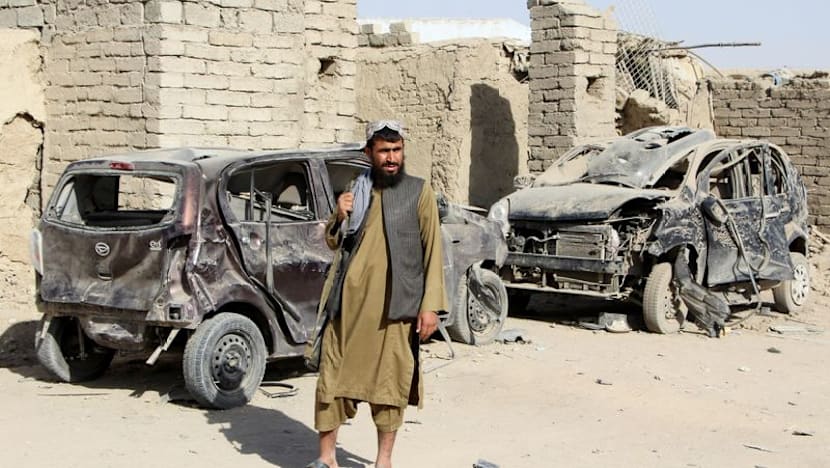
Tensions between Afghanistan and Pakistan have escalated significantly, particularly over water resources, as both nations grapple with deteriorating political relations. In October 2023, the two countries experienced some of their most intense violence in recent years, leading to a fragile ceasefire established on October 19. This agreement remains threatened by ongoing skirmishes, with significant implications for regional stability.
The backdrop to this turmoil is the Taliban’s announcement of plans to construct a dam on the Kunar River, known as the Chitral River in Pakistan. This river originates in northern Pakistan, flows into Afghanistan, and ultimately meets the Kabul River near Jalalabad in Nangarhar province. The Kabul River then empties into the Indus River near Attock in Pakistan’s Punjab province. Although Pakistan enjoys upstream advantages, it relies heavily on water from the Kabul River system, receiving approximately 21 billion cubic metres annually.
The directive for the dam’s construction came from Supreme Leader Mawlawi Hibatullah Akhundzada, with the acting water minister asserting on social media that “Afghans have the right to manage their own water.” Pakistan quickly condemned this decision. Defence Minister Khawaja Asif warned the Taliban against unilaterally proceeding with the dam, emphasizing that Kabul “cannot disregard Pakistan’s water rights.”
Historically, Pakistan’s security establishment has supported the Taliban, welcoming their return to power in Afghanistan in 2021. However, relations have soured due to the Afghan Taliban’s association with the Pakistani Taliban, also known as Tehrik-e Taliban Pakistan (TTP), which Islamabad blames for numerous militant attacks within its borders. Furthermore, tensions have arisen over the status of the 2,600-kilometre long Durand Line, which some Taliban leaders have dismissed as a “hypothetical” or “imaginary” line.
Water Crisis Looms Amid Political Strife
Both Pakistan and Afghanistan share nine rivers but lack a formal agreement for joint management. Both nations are increasingly facing water stress, with parts of Afghanistan experiencing severe shortages. In fact, the capital city, Kabul, is at risk of becoming the first modern city to completely run out of water. A report from the non-governmental organization Mercy Corps highlights alarming findings: over the past decade, Kabul’s aquifer levels have plummeted by between 25 metres and 30 metres, with projections suggesting it may run dry by 2030.
Pakistan, too, is experiencing significant water challenges, including droughts and floods exacerbated by climate change. The flooding during the 2025 monsoon season affected around six million people and resulted in over 1,000 fatalities, severely impacting key crops such as rice and wheat. Additionally, Pakistan’s per capita water availability is projected to decline to 795 cubic metres by 2030.
While the dam on the Kunar River will take time to construct, local media have reported that Kabul is finalizing plans to transfer water from this river to the Darunta Dam in Nangarhar. This move threatens to reduce water flow downstream in Pakistan, further escalating tensions.
Shifts in Regional Alliances and Water Management
This is not the first instance in which Afghanistan has proposed building dams on shared rivers. What distinguishes the current situation is the timing and the evolving political landscape between the two nations. In more amicable times, they reached a preliminary agreement in 2013 regarding joint management of shared rivers and the construction of a 1,500 megawatt (MW) dam on the Kunar River. However, the recent announcement of the dam has emerged as a point of contention during the October skirmishes.
Notably, these tensions coincided with a rare visit by Taliban Foreign Minister Amir Khan Muttaqi to India, signaling a potential warming of ties between the two countries. During this visit, a joint statement emphasized the importance of sustainable water management and expressed interest in cooperating on hydroelectric projects to address Afghanistan’s energy needs. An official from the Indian Ministry of External Affairs, Randhir Jaiswal, reflected on a “long history of cooperation on water matters” between India and Afghanistan, suggesting a new phase of engagement that aligns with India’s interests in the region.
India’s involvement in Afghan water projects, particularly the Salma Dam (also known as the India–Afghanistan Friendship Dam), completed in 2016 with approximately US$300 million in funding, highlights its commitment to regional partnerships. However, these initiatives have not been without controversy; the dam was targeted by Taliban militants in 2017, resulting in the deaths of ten Afghan soldiers.
Supporting Kabul’s water projects could fulfill overlapping objectives for India, but it also poses risks. The Pakistani power establishment remains wary of any engagement between the Taliban and India, particularly in light of ongoing tensions between Pakistan and India. Earlier this year, India suspended the 1960 Indus Waters Treaty, which governs water-sharing with Pakistan, following a terrorist attack in Jammu and Kashmir that New Delhi attributed to Islamabad, a claim Pakistan denied. Any further disruption in river flows, whether natural or human-made, could be perceived as “an act of aggression,” a narrative that could escalate military tensions.
To address their water issues effectively, both countries must first de-escalate tensions. As the situation continues to unfold, the potential for a broader crisis looms large, driven by not only the immediate conflict over water but also by the historical and political complexities that underpin Pakistan-Afghanistan relations.

India Unveils Long-Range Hypersonic Missile Amid Regional Tensions

SK bioscience Launches Global Trial for Universal Sarbecovirus Vaccine

Senegal Coach Pape Thiaw Suspended and Fined After Final Disruption

PAS Denies Abolishing Chairman Post, Contradicts Muhyiddin’s Claim

Mbappé Critiques Real Madrid’s Effort After Benfica Defeat

Thailand’s December Factory Output Surges 2.52% Year-on-Year

Ishita Dutta Reveals Her Parenting Secret: Strong Coffee

Older GPs Express Concerns Over New Digital Health Record Mandate

Urban Jurgensen: A 252-Year Legacy Enters a New Era

Regina Martinez Breaks New Ground for Mexico in Cross-Country Skiing

South Korea’s Foreign Minister Cho Hyun to Visit China This Week

Starling Bank Plans Secondary Share Sale, Targeting $5.4 Billion Valuation

Munsang College Celebrates 100 Years with Grand Ceremony

PAS Aims to Expand Parliamentary Influence in Upcoming Election

De Minaur Triumphs at Washington Open After Thrilling Comeback

Kenvue Dismisses CEO Thibaut Mongon as Strategic Review Advances

Humanism Camp Engages 250 Youths in Summer Fest 2025

Colombian Senator Miguel Uribe Shows Signs of Recovery After Attack
-
 Sports3 months ago
Regina Martinez Breaks New Ground for Mexico in Cross-Country Skiing
-
 World8 months ago
South Korea’s Foreign Minister Cho Hyun to Visit China This Week
-
 Business8 months ago
Starling Bank Plans Secondary Share Sale, Targeting $5.4 Billion Valuation
-
 Top Stories8 months ago
Munsang College Celebrates 100 Years with Grand Ceremony
-
 World8 months ago
PAS Aims to Expand Parliamentary Influence in Upcoming Election
-
 Sports9 months ago
De Minaur Triumphs at Washington Open After Thrilling Comeback
-
 Business10 months ago
Kenvue Dismisses CEO Thibaut Mongon as Strategic Review Advances
-
 Lifestyle9 months ago
Humanism Camp Engages 250 Youths in Summer Fest 2025
-
 Top Stories10 months ago
Colombian Senator Miguel Uribe Shows Signs of Recovery After Attack
-

 Sports10 months ago
Tupou and Daugunu Join First Nations Squad for Lions Clash
-

 World10 months ago
ASEAN Gears Up for Historic Joint Meeting of Foreign and Economic Ministers
-

 Health9 months ago
New Study Challenges Assumptions About Aging and Inflammation