
Top Stories
US, Russia, Ukraine Hold Talks but Peace Remains Elusive

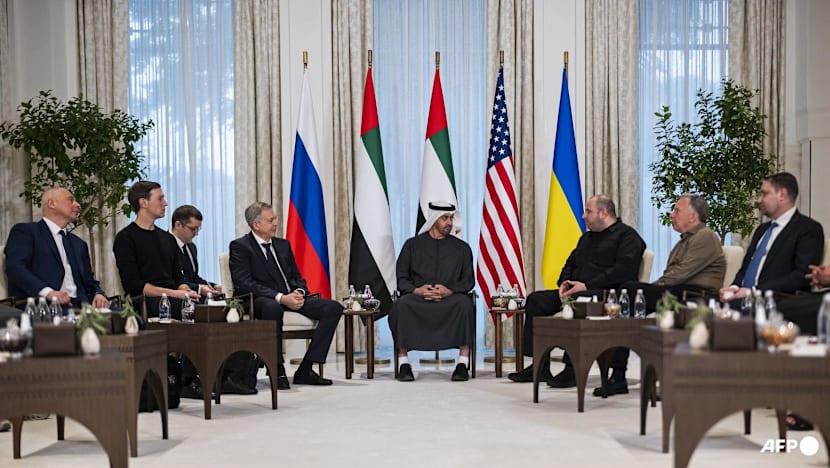
The first official three-way discussions involving the United States, Russia, and Ukraine since the onset of the conflict in February 2022 concluded on January 24, 2024, without achieving a significant breakthrough. Although follow-up talks are anticipated, their timing and effectiveness remain uncertain. This latest round of negotiations underscores the persistent challenges in reaching a peace agreement, as highlighted by Ukrainian President Volodymyr Zelenskyy during a recent address at the World Economic Forum in Davos, where he described the situation as “the last mile” towards peace.
Key to the ongoing deadlock is a fundamental disagreement regarding territorial claims. Russia formally annexed four regions of Ukraine in September 2022 but has struggled to establish full control over these areas after nearly two years of conflict. Both sides have shown little willingness to compromise on their territorial aspirations. President Vladimir Putin remains steadfast in his belief that he can capture the remaining parts of Ukraine’s Donetsk region, which spans approximately 5,000 square kilometers, through military force if necessary. Conversely, Zelenskyy has firmly rejected any notion of ceding territory that has not been seized by force, a stance that resonates with the Ukrainian public.
Territorial Disputes Complicate Peace Efforts
The Ukrainian constitution complicates any potential territorial concessions, requiring any significant changes to be ratified through a referendum. Strategically, the regions in the Donbas that Ukrainian forces still control serve as vital defensive positions, including several fortified cities. Surrendering these areas would leave Kyiv vulnerable to future Russian offensives and provide Moscow with a more advantageous staging ground.
The recent trilateral discussions, led by a U.S. delegation that included Steve Witkoff and Jared Kushner, did not yield the hoped-for concessions from either side. Observers note that if the U.S. aimed to exert pressure on the parties for compromise, the strategy has not yet proven effective. Despite the tumultuous foreign policy landscape under the Trump administration, significant pressure on Russia appears unlikely, a sentiment echoed by Kremlin spokesperson Dmitry Peskov, who reiterated Russia’s demand for complete control of the Donbas prior to the talks.
The discussions were further complicated by Russia’s recent military actions, including a significant strike on Ukraine’s energy infrastructure, which is already on the verge of collapse. Such maneuvers suggest a lack of genuine intent to negotiate in good faith. The Kremlin’s framing of its territorial demands under the term “Anchorage formula,” referring to a previous agreement between Trump and Putin, appears to manipulate perceptions, casting the U.S. as a mediator while presenting Zelenskyy as an unreasonable party if he rejects terms he did not help negotiate.
Global Dynamics Shift as Negotiations Continue
The landscape of international support for Ukraine is evolving. While U.S. backing remains crucial, European allies are increasingly stepping up their commitment. Zelenskyy is aware that European partners are gaining momentum in their support, which may lessen the reliance on U.S. mediation alone. Indeed, recent unity among European nations against threats from the Trump administration, including his controversial remarks about Greenland, suggests a stronger collaborative framework that could bolster Ukraine’s position.
The potential for a comprehensive agreement on American security guarantees, as mentioned by Zelenskyy in Davos, remains contingent upon formal consensus among leaders. Given Trump’s unpredictable relations with traditional allies, skepticism surrounds the reliability of any U.S. assurances. Additionally, discussions surrounding the reconstruction of Ukraine in the wake of any peace deal remain rudimentary, with Russia opposing the notion of reparations while proposing that part of its frozen assets in the U.S. be allocated for rebuilding efforts—a proposal that Ukraine and its European partners reject outright.
As the parties prepare for further dialogue, the focus remains on whether these discussions will evolve into a meaningful negotiation process. With Ukrainians enduring a harsh winter amidst ongoing hostilities, the prospect of a ceasefire or peace agreement appears as distant as ever, leaving many to question the viability of a resolution in the near future.

India Unveils Long-Range Hypersonic Missile Amid Regional Tensions

SK bioscience Launches Global Trial for Universal Sarbecovirus Vaccine

Senegal Coach Pape Thiaw Suspended and Fined After Final Disruption

PAS Denies Abolishing Chairman Post, Contradicts Muhyiddin’s Claim

Mbappé Critiques Real Madrid’s Effort After Benfica Defeat

Thailand’s December Factory Output Surges 2.52% Year-on-Year

Ishita Dutta Reveals Her Parenting Secret: Strong Coffee

Older GPs Express Concerns Over New Digital Health Record Mandate

Urban Jurgensen: A 252-Year Legacy Enters a New Era

South Korea’s Foreign Minister Cho Hyun to Visit China This Week

Starling Bank Plans Secondary Share Sale, Targeting $5.4 Billion Valuation

Munsang College Celebrates 100 Years with Grand Ceremony

PAS Aims to Expand Parliamentary Influence in Upcoming Election

Kenvue Dismisses CEO Thibaut Mongon as Strategic Review Advances

Humanism Camp Engages 250 Youths in Summer Fest 2025

De Minaur Triumphs at Washington Open After Thrilling Comeback

Tupou and Daugunu Join First Nations Squad for Lions Clash

Colombian Senator Miguel Uribe Shows Signs of Recovery After Attack
-
 World5 months ago
South Korea’s Foreign Minister Cho Hyun to Visit China This Week
-
 Business5 months ago
Starling Bank Plans Secondary Share Sale, Targeting $5.4 Billion Valuation
-
 Top Stories5 months ago
Munsang College Celebrates 100 Years with Grand Ceremony
-
 World5 months ago
PAS Aims to Expand Parliamentary Influence in Upcoming Election
-
 Business7 months ago
Kenvue Dismisses CEO Thibaut Mongon as Strategic Review Advances
-
 Lifestyle6 months ago
Humanism Camp Engages 250 Youths in Summer Fest 2025
-
 Sports6 months ago
De Minaur Triumphs at Washington Open After Thrilling Comeback
-
 Sports7 months ago
Tupou and Daugunu Join First Nations Squad for Lions Clash
-
 Top Stories7 months ago
Colombian Senator Miguel Uribe Shows Signs of Recovery After Attack
-

 World7 months ago
ASEAN Gears Up for Historic Joint Meeting of Foreign and Economic Ministers
-

 Health6 months ago
New Study Challenges Assumptions About Aging and Inflammation
-

 Business7 months ago
Oil Prices Surge Following New EU Sanctions on Russia