
Top Stories
Myanmar’s Rare Earths: A Strategic Battleground for Powers

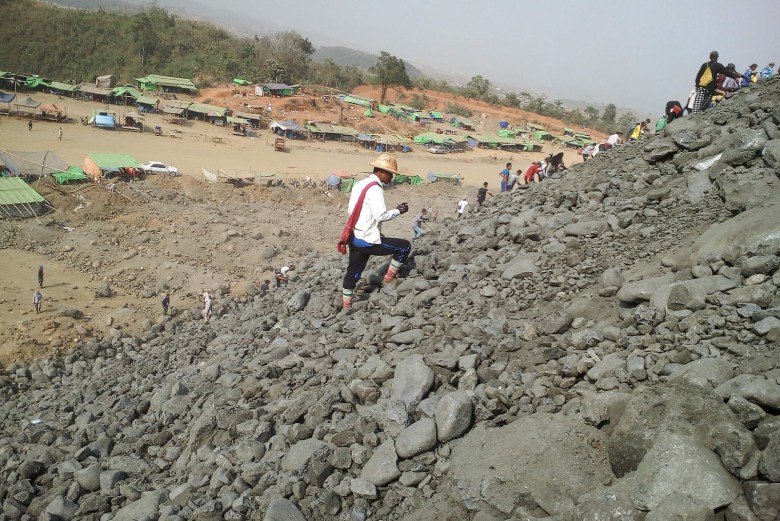
The ongoing rivalry between the United States and China is increasingly manifesting in the realm of rare earth minerals, with Myanmar emerging as a crucial battleground. This Southeast Asian nation, sitting at the intersection of India, China, and Southeast Asia, possesses significant reserves of rare earth minerals, including dysprosium. This mineral is essential for advanced technologies such as precision-guided weapons and electric vehicles. Despite the turmoil of a civil war, Myanmar’s mineral wealth is drawing international attention and competition.
Historically, China has dominated the extraction and processing of Myanmar’s critical minerals, controlling approximately two-thirds of its imports since 2017. Following the military coup in Myanmar in February 2021, China’s influence grew further as Western nations imposed sanctions, increasing Myanmar’s reliance on Chinese capital and logistical support. By 2024, China was importing more critical minerals from Myanmar than it was producing domestically, underscoring the latter’s importance to Beijing’s industrial and defense strategies.
However, recent military gains by ethnic rebel groups, particularly the Kachin Independence Army (KIA), have disrupted this arrangement. The KIA’s decision to halt operations involving Chinese firms has created a significant gap in Myanmar’s strategic minerals sector. This development not only threatens China’s monopoly but also opens the door for other international players to diversify their supply chains away from Chinese dominance.
The United States, under the administration of President Joe Biden, is reassessing its approach to Myanmar, aiming to establish a geoeconomic foothold in the region. Washington’s strategy includes maintaining tariffs to exert pressure, selectively rolling back sanctions on certain junta officials to foster diplomatic options, and expanding its intelligence presence through a new consulate in Chiang Mai, Thailand. Any incremental access to Myanmar’s critical minerals is seen as a potential setback for China’s control.
Nevertheless, the United States faces significant challenges in deepening its engagement. The junta’s longstanding dependence on China, the geographical isolation of northern mineral deposits, and the lack of secure transport routes to the sea are formidable obstacles. Attempts to navigate these constraints are likely to be slow and fraught with risk, particularly as the dynamics of conflict in the region evolve.
India, looking to enhance its technological capabilities and reduce its reliance on Chinese rare earth imports, is also increasing its interest in Myanmar’s resources. The National Critical Mineral Mission 2025 is a key initiative aimed at acquiring foreign mineral assets through both government entities and private firms. Progress has been made by Khanij Bidesh India Ltd. (KABIL), which has initiated exploration projects in Argentina and Australia. Additionally, talks are ongoing between the Geological Survey of India (GSI) and Myanmar’s Ministry of Natural Resources regarding potential collaborations in the mining sector.
India’s strategic interests extend to the northern Kachin state, where the Ministry of Mines is encouraging both public and private sectors to explore mining opportunities. As India develops its domestic processing capabilities, partnerships with countries like Japan and South Korea are being explored to commercialize the production of rare-earth magnets. This approach is expected to enhance India’s strategic position in the critical minerals field.
The involvement of India’s Quad partners, including Australia and Japan, adds another layer to this competition. Both countries recognize the potential of northeastern India as an alternative for critical mineral processing. While Australia has engaged in support initiatives, Japan has focused on infrastructure development to support the region’s economic resilience. The Quad’s Critical Mineral Initiative aims to diversify and secure supply chains, although formal engagement remains to be established.
What distinguishes Quad partners from the US and China is their emphasis on sustainable, community-driven programs that adhere to environmental norms. By collaborating through India’s processing hubs, these nations could develop a resilient and viable regional rare-earth supply chain. The proximity of these resources presents a unique advantage for India, which could play a pivotal role in reshaping Myanmar’s position within the global rare earth supply chain.
With a commitment to responsible development and strategic cooperation, India and its Quad partners have the potential to redefine the landscape of rare earth mineral extraction in Myanmar, paving the way for a more sustainable and equitable approach to resource management in the region.

India Unveils Long-Range Hypersonic Missile Amid Regional Tensions

SK bioscience Launches Global Trial for Universal Sarbecovirus Vaccine

Senegal Coach Pape Thiaw Suspended and Fined After Final Disruption

PAS Denies Abolishing Chairman Post, Contradicts Muhyiddin’s Claim

Mbappé Critiques Real Madrid’s Effort After Benfica Defeat

Thailand’s December Factory Output Surges 2.52% Year-on-Year

Ishita Dutta Reveals Her Parenting Secret: Strong Coffee

Older GPs Express Concerns Over New Digital Health Record Mandate

Urban Jurgensen: A 252-Year Legacy Enters a New Era

Regina Martinez Breaks New Ground for Mexico in Cross-Country Skiing

South Korea’s Foreign Minister Cho Hyun to Visit China This Week

Starling Bank Plans Secondary Share Sale, Targeting $5.4 Billion Valuation

Munsang College Celebrates 100 Years with Grand Ceremony

PAS Aims to Expand Parliamentary Influence in Upcoming Election

De Minaur Triumphs at Washington Open After Thrilling Comeback

Kenvue Dismisses CEO Thibaut Mongon as Strategic Review Advances

Humanism Camp Engages 250 Youths in Summer Fest 2025

Colombian Senator Miguel Uribe Shows Signs of Recovery After Attack
-
 Sports2 months ago
Regina Martinez Breaks New Ground for Mexico in Cross-Country Skiing
-
 World6 months ago
South Korea’s Foreign Minister Cho Hyun to Visit China This Week
-
 Business6 months ago
Starling Bank Plans Secondary Share Sale, Targeting $5.4 Billion Valuation
-
 Top Stories6 months ago
Munsang College Celebrates 100 Years with Grand Ceremony
-
 World6 months ago
PAS Aims to Expand Parliamentary Influence in Upcoming Election
-
 Sports8 months ago
De Minaur Triumphs at Washington Open After Thrilling Comeback
-
 Business8 months ago
Kenvue Dismisses CEO Thibaut Mongon as Strategic Review Advances
-
 Lifestyle8 months ago
Humanism Camp Engages 250 Youths in Summer Fest 2025
-
 Top Stories8 months ago
Colombian Senator Miguel Uribe Shows Signs of Recovery After Attack
-

 Sports8 months ago
Tupou and Daugunu Join First Nations Squad for Lions Clash
-

 World8 months ago
ASEAN Gears Up for Historic Joint Meeting of Foreign and Economic Ministers
-

 Health8 months ago
New Study Challenges Assumptions About Aging and Inflammation