
Top Stories
Lawmaker Calls for Enhanced Education on Cosmetics for Youth

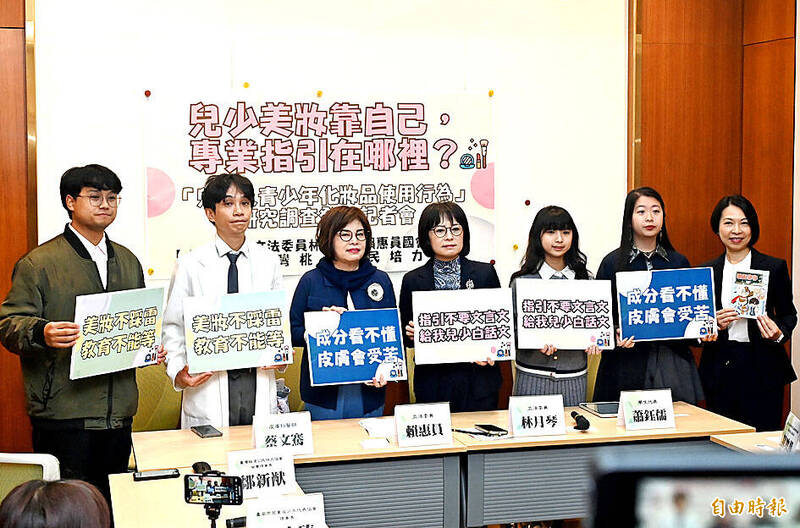
Lin Yueh-chin, a legislator from the Democratic Progressive Party (DPP), has urged for improved educational initiatives regarding cosmetics use among teenagers in Taiwan. This call comes in light of rising concerns over the safety of makeup products, particularly after the detection of the carcinogenic substance known as Sudan red dye in certain cosmetics. The Ministry of Health and Welfare swiftly intervened, removing these products from stores in late September 2023.
During a joint news conference held by DPP lawmakers and the Taiwan Tao Zhan Civil Empowering Association, a survey was presented highlighting the prevalence of makeup among adolescents. Approximately 68 percent of respondents stated they use cosmetics, with a striking 80 percent of these users being high school or vocational students. Alarmingly, about half of elementary school students reported having experimented with makeup, indicating that the trend starts at a young age, typically between 8 and 13 years. Notably, 11.5 percent of those surveyed indicated they were exposed to makeup before the age of seven.
With this shift towards earlier makeup use, Lin emphasized the necessity for comprehensive education on cosmetics. She noted that while children are beginning to use makeup at younger ages, the information available regarding product safety is often unclear. Lin highlighted the role of schools and the cosmetics industry in failing to provide adequate guidance on this topic.
Lai Hui-yuan, another DPP legislator, pointed out that using makeup for special occasions is common in many cultures, particularly among teenagers. The influence of K-pop culture has further contributed to the rising usage of cosmetics among Taiwanese youth. Lai stressed the importance of equipping children with knowledge to protect their health as they navigate this growing trend.
At the conference, Tsou Hsin-yu, an elementary school teacher and honorary president of the association, shared insights from the survey, revealing that more than half of the respondents supported the introduction of courses on cosmetics usage. Tsou proposed that the government should publish a cosmetics guide in accessible language and collaborate with experts and retailers to enhance understanding among young consumers.
The issue of body image and cosmetics was further illustrated by eighth-grade student representative Hsiao Yu-ju, who noted that some of her peers wear masks in class due to anxiety about their appearance. She expressed concerns over the safety of commercial cosmetics, especially for children. For instance, while salicylic acid is a common anti-acne ingredient in many beauty products, its suitability for children remains questionable despite compliance with safety standards for adults.
Hsiao advocated for the creation of a supportive environment where teenagers can learn to express themselves and use cosmetics responsibly. She highlighted the need for educational resources that empower youth to make informed choices about their appearance and overall health.
As discussions continue on the importance of cosmetics education, the health and well-being of Taiwan’s youth remain at the forefront of legislative efforts. The DPP’s initiative aims to foster a generation that not only understands the beauty industry but also prioritizes safety and self-acceptance.

India Unveils Long-Range Hypersonic Missile Amid Regional Tensions

SK bioscience Launches Global Trial for Universal Sarbecovirus Vaccine

Senegal Coach Pape Thiaw Suspended and Fined After Final Disruption

PAS Denies Abolishing Chairman Post, Contradicts Muhyiddin’s Claim

Mbappé Critiques Real Madrid’s Effort After Benfica Defeat

Thailand’s December Factory Output Surges 2.52% Year-on-Year

Ishita Dutta Reveals Her Parenting Secret: Strong Coffee

Older GPs Express Concerns Over New Digital Health Record Mandate

Urban Jurgensen: A 252-Year Legacy Enters a New Era

Regina Martinez Breaks New Ground for Mexico in Cross-Country Skiing

South Korea’s Foreign Minister Cho Hyun to Visit China This Week

Starling Bank Plans Secondary Share Sale, Targeting $5.4 Billion Valuation

Munsang College Celebrates 100 Years with Grand Ceremony

PAS Aims to Expand Parliamentary Influence in Upcoming Election

De Minaur Triumphs at Washington Open After Thrilling Comeback

Kenvue Dismisses CEO Thibaut Mongon as Strategic Review Advances

Humanism Camp Engages 250 Youths in Summer Fest 2025

Colombian Senator Miguel Uribe Shows Signs of Recovery After Attack
-
 Sports2 months ago
Regina Martinez Breaks New Ground for Mexico in Cross-Country Skiing
-
 World6 months ago
South Korea’s Foreign Minister Cho Hyun to Visit China This Week
-
 Business7 months ago
Starling Bank Plans Secondary Share Sale, Targeting $5.4 Billion Valuation
-
 Top Stories6 months ago
Munsang College Celebrates 100 Years with Grand Ceremony
-
 World6 months ago
PAS Aims to Expand Parliamentary Influence in Upcoming Election
-
 Sports8 months ago
De Minaur Triumphs at Washington Open After Thrilling Comeback
-
 Business8 months ago
Kenvue Dismisses CEO Thibaut Mongon as Strategic Review Advances
-
 Lifestyle8 months ago
Humanism Camp Engages 250 Youths in Summer Fest 2025
-
 Top Stories8 months ago
Colombian Senator Miguel Uribe Shows Signs of Recovery After Attack
-

 Sports8 months ago
Tupou and Daugunu Join First Nations Squad for Lions Clash
-

 World8 months ago
ASEAN Gears Up for Historic Joint Meeting of Foreign and Economic Ministers
-

 Health8 months ago
New Study Challenges Assumptions About Aging and Inflammation