
Top Stories
JNCASR and Dreamfly Innovations Join Forces for Aviation Battery Advancements

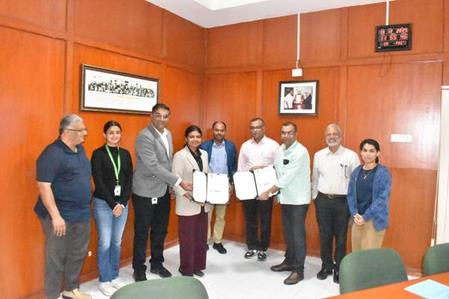
The Jawaharlal Nehru Centre for Advanced Scientific Research (JNCASR) has entered into a significant partnership with Bengaluru-based Dreamfly Innovations to develop cutting-edge thermal materials aimed at enhancing aviation battery performance. This collaboration, formalized through a Memorandum of Understanding on January 24, 2024, seeks to address critical thermal management challenges faced by high-energy-density batteries used in the aviation industry.
Under this agreement, the two organizations will focus on the development of advanced thermal materials and thermoelectric devices to improve thermal management capabilities in aviation batteries. The initiative aims to translate fundamental materials research into practical, robust thermal technologies that can be deployed in real-world aviation applications.
Addressing Thermal Management Challenges
Effective heat management is crucial for optimizing the performance and safety of lithium-based batteries, particularly in aviation settings. Excessive heat generation during high-power operations not only reduces battery efficiency but also shortens lifespan and raises safety concerns. The Ministry of Science and Technology highlighted that while passive thermal management solutions, such as Phase Change Materials (PCMs), are appealing due to their lightweight nature and zero power consumption, they have not achieved widespread adoption. This is primarily due to the poor thermal conductivity of conventional PCMs, which hampers their ability to absorb heat rapidly, leading to overheating and accelerated degradation of battery components.
To overcome this limitation, the collaboration will explore strategies that incorporate high-thermal-conductivity additives to create composite PCMs. While these composites can enhance thermal performance, they often face challenges related to long-term stability, such as additive agglomeration during thermal cycling, which can compromise their effectiveness.
Innovative Solutions for Aviation
The advanced thermal materials being developed through this partnership are engineered to provide high thermal conductivity. This will allow for rapid absorption of excess heat during high-load operations, helping to maintain battery temperatures within optimal operating ranges. The goal is to achieve lightweight thermal regulation without sacrificing the long-term stability of the materials.
This collaboration brings together the research expertise of Prof. Kanishka Biswas‘ lab at JNCASR and the industrial innovation capabilities of Dreamfly Innovations. Together, they aim to tackle critical issues affecting drone performance, safety, and operational endurance, which are essential for the future of aviation technology.
This partnership not only represents a step forward in aviation battery technology but also underscores the importance of collaboration between academic institutions and industry players in addressing complex technical challenges. As the aviation sector continues to evolve, innovations in battery technology will play a pivotal role in shaping the future of sustainable air travel.

India Unveils Long-Range Hypersonic Missile Amid Regional Tensions

SK bioscience Launches Global Trial for Universal Sarbecovirus Vaccine

Senegal Coach Pape Thiaw Suspended and Fined After Final Disruption

PAS Denies Abolishing Chairman Post, Contradicts Muhyiddin’s Claim

Mbappé Critiques Real Madrid’s Effort After Benfica Defeat

Thailand’s December Factory Output Surges 2.52% Year-on-Year

Ishita Dutta Reveals Her Parenting Secret: Strong Coffee

Older GPs Express Concerns Over New Digital Health Record Mandate

Urban Jurgensen: A 252-Year Legacy Enters a New Era

Regina Martinez Breaks New Ground for Mexico in Cross-Country Skiing

South Korea’s Foreign Minister Cho Hyun to Visit China This Week

Starling Bank Plans Secondary Share Sale, Targeting $5.4 Billion Valuation

Munsang College Celebrates 100 Years with Grand Ceremony

PAS Aims to Expand Parliamentary Influence in Upcoming Election

De Minaur Triumphs at Washington Open After Thrilling Comeback

Kenvue Dismisses CEO Thibaut Mongon as Strategic Review Advances

Humanism Camp Engages 250 Youths in Summer Fest 2025

Colombian Senator Miguel Uribe Shows Signs of Recovery After Attack
-
 Sports2 months ago
Regina Martinez Breaks New Ground for Mexico in Cross-Country Skiing
-
 World6 months ago
South Korea’s Foreign Minister Cho Hyun to Visit China This Week
-
 Business6 months ago
Starling Bank Plans Secondary Share Sale, Targeting $5.4 Billion Valuation
-
 Top Stories6 months ago
Munsang College Celebrates 100 Years with Grand Ceremony
-
 World6 months ago
PAS Aims to Expand Parliamentary Influence in Upcoming Election
-
 Sports8 months ago
De Minaur Triumphs at Washington Open After Thrilling Comeback
-
 Business8 months ago
Kenvue Dismisses CEO Thibaut Mongon as Strategic Review Advances
-
 Lifestyle8 months ago
Humanism Camp Engages 250 Youths in Summer Fest 2025
-
 Top Stories8 months ago
Colombian Senator Miguel Uribe Shows Signs of Recovery After Attack
-

 Sports8 months ago
Tupou and Daugunu Join First Nations Squad for Lions Clash
-

 World8 months ago
ASEAN Gears Up for Historic Joint Meeting of Foreign and Economic Ministers
-

 Health8 months ago
New Study Challenges Assumptions About Aging and Inflammation