
Top Stories
Hong Kong Advances Stablecoins with New Regulatory Framework

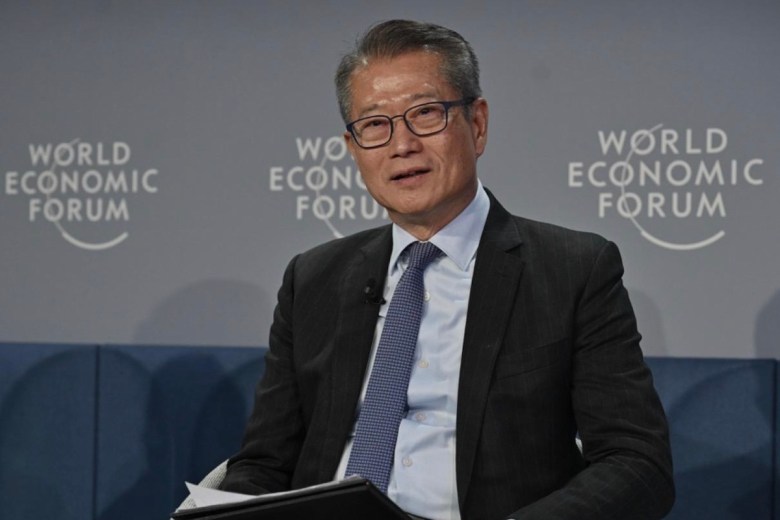
Hong Kong is set to issue its first stablecoin issuer licenses by early 2026, marking a significant step in the region’s approach to digital finance. Financial Secretary Paul Chan announced this development during the World Economic Forum in Davos, emphasizing a careful, regulated transition rather than sweeping reforms. This move underscores Hong Kong’s commitment to integrating stablecoins into its financial framework while prioritizing stability and continuity.
Stablecoins, which are digital tokens pegged to fiat currencies, have gained traction as essential components of financial infrastructure. They are increasingly viewed not merely as speculative assets but as viable solutions for cross-border payments, asset settlement, and liquidity management. Despite this growing acceptance, regulatory responses vary widely across jurisdictions, ranging from permissive to restrictive. Hong Kong’s strategy is intentionally positioned between these extremes, aiming for a balanced approach.
From Sandbox to Regulation
The groundwork for Hong Kong’s stablecoin policy began with the Hong Kong Monetary Authority (HKMA), which launched a stablecoin issuer sandbox in mid-2024. This initiative enabled selected participants to explore various issuance models under stringent regulatory oversight. The sandbox prioritized technical aspects such as reserve management, redemption processes, and compliance with anti-money laundering standards. The HKMA’s approach was designed to identify potential operational weaknesses before a formal regulatory framework could be established.
By treating stablecoins as financial activities rather than technological novelties, Hong Kong has avoided pitfalls encountered by other regions where innovation outpaced regulation. As Chan stated in Davos, the principle of “same activity, same risk, same regulation” will guide the treatment of stablecoin issuers, aligning their standards with those of traditional financial institutions. This includes ensuring robust reserve backing, enforceable redemption rights, and effective governance structures.
Market Engagement and Future Prospects
Currently, no companies have received stablecoin licenses in Hong Kong, and the official register remains empty. Nonetheless, several firms are actively preparing to apply for licenses. Anchorpoint Financial Limited, a joint venture involving Standard Chartered Bank (Hong Kong), Animoca Brands, and Hong Kong Telecom, has announced its intention to issue a Hong Kong dollar-pegged stablecoin. Its collaborative structure and proactive regulatory engagement position it as a prominent candidate.
Similarly, HashKey Group has expressed optimism about the regulatory framework and its readiness to launch a stablecoin once licensing begins. Although specific products have yet to be revealed, the firm’s confidence reflects a broader market sentiment favoring regulatory clarity.
In contrast, expectations for China-affiliated firms, such as JD Coinlink Technology (Hong Kong), are more cautious. Due to recent policy signals from the People’s Bank of China, market participants do not anticipate a significant role for these entities in the initial licensing phases. These insights are based on market observations rather than official commitments.
The transition to a formal licensing system indicates a significant evolution in Hong Kong’s approach to digital finance. Chan’s remarks signal a belief that stablecoins can coexist within the existing regulatory framework without jeopardizing financial stability. This development illustrates the region’s intention to shape its stablecoin policy according to unique market needs, rather than simply replicating models from mainland China.
As the first licenses are issued, key questions will arise concerning governance standards, reserve transparency, and technological resilience. These factors will ultimately determine whether stablecoins become integral to Hong Kong’s financial infrastructure or remain limited to niche applications.
In establishing a stablecoin regime, Hong Kong is not merely adding to its regulatory landscape; it is outlining a comprehensive approach for the institutionalization of digital assets within a traditional financial system. This carefully crafted blueprint will likely attract interest from other international financial centers navigating similar transitions.

India Unveils Long-Range Hypersonic Missile Amid Regional Tensions

SK bioscience Launches Global Trial for Universal Sarbecovirus Vaccine

Senegal Coach Pape Thiaw Suspended and Fined After Final Disruption

PAS Denies Abolishing Chairman Post, Contradicts Muhyiddin’s Claim

Mbappé Critiques Real Madrid’s Effort After Benfica Defeat

Thailand’s December Factory Output Surges 2.52% Year-on-Year

Ishita Dutta Reveals Her Parenting Secret: Strong Coffee

Older GPs Express Concerns Over New Digital Health Record Mandate

Urban Jurgensen: A 252-Year Legacy Enters a New Era

South Korea’s Foreign Minister Cho Hyun to Visit China This Week

Starling Bank Plans Secondary Share Sale, Targeting $5.4 Billion Valuation

Munsang College Celebrates 100 Years with Grand Ceremony

PAS Aims to Expand Parliamentary Influence in Upcoming Election

Kenvue Dismisses CEO Thibaut Mongon as Strategic Review Advances

Humanism Camp Engages 250 Youths in Summer Fest 2025

De Minaur Triumphs at Washington Open After Thrilling Comeback

Tupou and Daugunu Join First Nations Squad for Lions Clash

Colombian Senator Miguel Uribe Shows Signs of Recovery After Attack
-
 World5 months ago
South Korea’s Foreign Minister Cho Hyun to Visit China This Week
-
 Business5 months ago
Starling Bank Plans Secondary Share Sale, Targeting $5.4 Billion Valuation
-
 Top Stories5 months ago
Munsang College Celebrates 100 Years with Grand Ceremony
-
 World5 months ago
PAS Aims to Expand Parliamentary Influence in Upcoming Election
-
 Business7 months ago
Kenvue Dismisses CEO Thibaut Mongon as Strategic Review Advances
-
 Lifestyle6 months ago
Humanism Camp Engages 250 Youths in Summer Fest 2025
-
 Sports6 months ago
De Minaur Triumphs at Washington Open After Thrilling Comeback
-
 Sports7 months ago
Tupou and Daugunu Join First Nations Squad for Lions Clash
-
 Top Stories7 months ago
Colombian Senator Miguel Uribe Shows Signs of Recovery After Attack
-

 World7 months ago
ASEAN Gears Up for Historic Joint Meeting of Foreign and Economic Ministers
-

 Health6 months ago
New Study Challenges Assumptions About Aging and Inflammation
-
 Business7 months ago
Oil Prices Surge Following New EU Sanctions on Russia