
Top Stories
Expert Advocates Data Monitoring Over Stricter Gun Laws in Australia

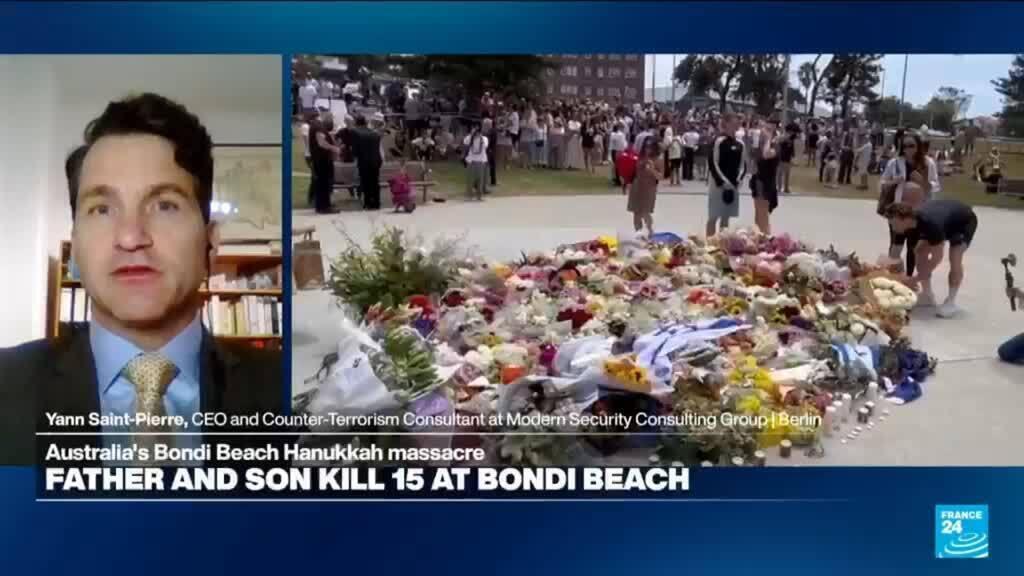
The Australian government’s recent push for stricter gun laws has drawn critical attention from counter-terrorism experts, who argue that such measures may not effectively address the root causes of terrorism. Speaking with FRANCE 24’s Peter O’Brien, Yann Saint Pierre, CEO and counter-terrorism consultant at the Modern Security Consulting Group, emphasized that a proactive approach focused on data monitoring and behavioral analysis is essential for more effective counter-terrorism strategies.
Saint Pierre contended that while tightening gun regulations is an important aspect of public safety, it ultimately represents a superficial solution that does not tackle the complexities underlying terrorist threats. He stated, “The heart of the problem cannot be addressed solely through gun control laws.” Instead, he stressed the importance of “pre-emptively working and monitoring data and behaviours,” which he believes can significantly enhance efforts to prevent terrorist acts before they occur.
Focusing on Proactive Strategies
The discussion around gun laws comes in the wake of increased concerns about domestic and international terrorism. Saint Pierre highlighted that understanding patterns of behavior and gathering intelligence through data can lead to more effective interventions. “It is about identifying risks and acting on them before any incident takes place,” he noted. This approach, he argues, empowers law enforcement agencies to act decisively and efficiently.
The current landscape of terrorism requires adaptive strategies that extend beyond legislation. Saint Pierre pointed out that many terrorist acts are influenced by a variety of factors, including social dynamics, economic conditions, and ideological motivations. Therefore, a multi-faceted strategy that incorporates data analytics, community engagement, and targeted interventions is crucial for any government serious about combating terrorism.
Furthermore, he highlighted that existing data tracking systems can be enhanced to better capture and analyze emerging threats. The integration of technology in monitoring public behavior can provide valuable insights that inform policy decisions and law enforcement tactics.
Balancing Safety and Civil Liberties
While advocating for enhanced data monitoring, Saint Pierre acknowledged the delicate balance between security and individual freedoms. He stressed the importance of ensuring that any measures implemented do not infringe upon civil liberties or erode public trust in government institutions. “Transparency and accountability are vital in any counter-terrorism strategy,” he said.
The call for a more nuanced approach to counter-terrorism comes at a time when many countries, including Australia, are grappling with how to best protect their citizens while respecting fundamental rights. Saint Pierre’s insights suggest that the debate surrounding gun laws should be part of a broader conversation about safety, effectiveness, and the ethical implications of surveillance.
In conclusion, as discussions regarding gun control and public safety continue to evolve, the insights from experts like Yann Saint Pierre underscore the need for a comprehensive strategy that prioritizes data monitoring and behavioral analysis. By focusing on these proactive measures, governments can potentially enhance their ability to prevent terrorism and protect their communities more effectively.

India Unveils Long-Range Hypersonic Missile Amid Regional Tensions

SK bioscience Launches Global Trial for Universal Sarbecovirus Vaccine

Senegal Coach Pape Thiaw Suspended and Fined After Final Disruption

PAS Denies Abolishing Chairman Post, Contradicts Muhyiddin’s Claim

Mbappé Critiques Real Madrid’s Effort After Benfica Defeat

Thailand’s December Factory Output Surges 2.52% Year-on-Year

Ishita Dutta Reveals Her Parenting Secret: Strong Coffee

Older GPs Express Concerns Over New Digital Health Record Mandate

Urban Jurgensen: A 252-Year Legacy Enters a New Era

Regina Martinez Breaks New Ground for Mexico in Cross-Country Skiing

South Korea’s Foreign Minister Cho Hyun to Visit China This Week

Starling Bank Plans Secondary Share Sale, Targeting $5.4 Billion Valuation

Munsang College Celebrates 100 Years with Grand Ceremony

PAS Aims to Expand Parliamentary Influence in Upcoming Election

De Minaur Triumphs at Washington Open After Thrilling Comeback

Kenvue Dismisses CEO Thibaut Mongon as Strategic Review Advances

Humanism Camp Engages 250 Youths in Summer Fest 2025

Colombian Senator Miguel Uribe Shows Signs of Recovery After Attack
-
 Sports1 month ago
Regina Martinez Breaks New Ground for Mexico in Cross-Country Skiing
-
 World6 months ago
South Korea’s Foreign Minister Cho Hyun to Visit China This Week
-
 Business6 months ago
Starling Bank Plans Secondary Share Sale, Targeting $5.4 Billion Valuation
-
 Top Stories6 months ago
Munsang College Celebrates 100 Years with Grand Ceremony
-
 World6 months ago
PAS Aims to Expand Parliamentary Influence in Upcoming Election
-
 Sports7 months ago
De Minaur Triumphs at Washington Open After Thrilling Comeback
-
 Business8 months ago
Kenvue Dismisses CEO Thibaut Mongon as Strategic Review Advances
-
 Lifestyle7 months ago
Humanism Camp Engages 250 Youths in Summer Fest 2025
-
 Top Stories8 months ago
Colombian Senator Miguel Uribe Shows Signs of Recovery After Attack
-

 Sports8 months ago
Tupou and Daugunu Join First Nations Squad for Lions Clash
-

 World8 months ago
ASEAN Gears Up for Historic Joint Meeting of Foreign and Economic Ministers
-

 Health7 months ago
New Study Challenges Assumptions About Aging and Inflammation