
Top Stories
Europe Faces Economic Challenge from China’s High-Tech Exports

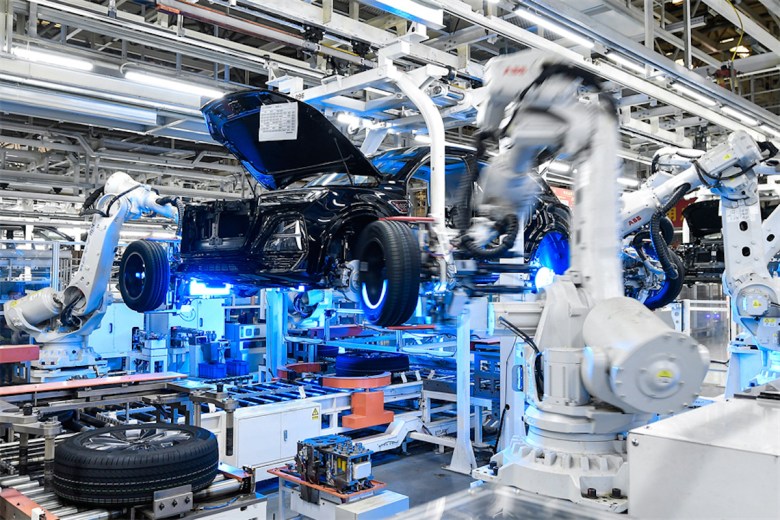
Europe is currently navigating a multifaceted economic landscape marked by external pressures from a resurgent Russia and complex trade dynamics with China. This situation is exacerbated by the so-called Second China Shock, a term used to describe the recent influx of high-tech exports from China. This surge comes at a time when the Chinese economy is still grappling with the lingering effects of a real estate collapse that began in late 2021.
In response to its economic challenges, the Chinese government, led by Xi Jinping, has implemented an expansive industrial policy aimed at boosting high-tech manufacturing across various sectors. As domestic consumption in China falters, manufacturers are increasingly directing their output towards foreign markets, including Europe, resulting in significant trade deficits.
The economic implications for Europe are profound. The depreciation of the yuan against the euro has made Chinese goods more affordable, while the impact of tariffs from the Trump administration has altered trade flows. Although tariffs on Chinese imports have been relaxed, changes such as the termination of the “de minimis” exemption for small packages have encouraged Chinese companies to look for new markets. Consequently, exports from China to Europe, Southeast Asia, and Latin America have surged, raising concerns about Europe’s economic stability.
The question arises: should Europe embrace these low-cost imports? While the availability of affordable consumer goods, such as electric vehicles and solar panels, may seem beneficial, there are broader implications to consider. Embracing deindustrialization in favor of cheaper imports may ultimately undermine Europe’s military and economic resilience.
Military and Economic Risks of Deindustrialization
The military aspect cannot be overlooked. Europe may soon find itself in a precarious position, needing to confront a military threat from Russia, whose economy is increasingly focused on defense manufacturing. In this context, Europe’s reliance on foreign high-tech imports could leave it vulnerable. The ability to repurpose civilian manufacturing for military purposes is crucial, and a significant reduction in domestic manufacturing capacity could hinder this capability.
Furthermore, Europe’s trade relationship with China is becoming increasingly one-sided. Instead of exchanging services for goods, Europe is accruing a trade deficit, essentially accumulating debt in the form of IOUs. As pointed out by Robin Harding in the Financial Times, such a deficit is not a gift; it represents a loan that must eventually be repaid. This dependency could have severe repercussions for future generations.
Economic analyses from organizations like Goldman Sachs suggest that unbalanced trade might ultimately make Europe poorer. The dynamics of this trade relationship indicate that while the immediate benefits of cheap imports are clear, the long-term effects may lead to a loss of innovative capacity and economic stability.
Strategies for Resisting the Second China Shock
In light of these challenges, Europe must explore strategies to combat the Second China Shock. Protectionist measures, including tariffs and non-tariff barriers, may be essential to safeguarding European industries. Such measures would provide a buffer that encourages local investment and reduces the likelihood of foreign competition undermining domestic firms. Tariffs should be specifically targeted at Chinese imports, while allowing for more favorable trade terms with allied nations.
Additionally, Europe could benefit from fostering partnerships with companies like Siemens and exploring joint ventures with Chinese firms. This approach could facilitate knowledge transfer, enhancing Europe’s manufacturing capabilities and innovation potential. By bringing manufacturing closer to home, Europe can ensure that key industries remain competitive and resilient.
Economic analysts also suggest that Europe should take a firm stance on currency valuation. Pressuring China to allow the yuan to appreciate could mitigate some trade tensions and help stabilize the global financial system.
While the challenges posed by the Second China Shock are significant, they also present an opportunity for Europe to reassess its economic strategies. By resisting deindustrialization and prioritizing domestic manufacturing, Europe can enhance its military readiness, improve its economic standing, and secure a more balanced and equitable global economy.
As Europe grapples with these pressing issues, the path forward will require careful consideration of both immediate needs and long-term impacts. The stakes are high, and the choices made today will resonate for generations to come.

India Unveils Long-Range Hypersonic Missile Amid Regional Tensions

SK bioscience Launches Global Trial for Universal Sarbecovirus Vaccine

Senegal Coach Pape Thiaw Suspended and Fined After Final Disruption

PAS Denies Abolishing Chairman Post, Contradicts Muhyiddin’s Claim

Mbappé Critiques Real Madrid’s Effort After Benfica Defeat

Thailand’s December Factory Output Surges 2.52% Year-on-Year

Ishita Dutta Reveals Her Parenting Secret: Strong Coffee

Older GPs Express Concerns Over New Digital Health Record Mandate

Urban Jurgensen: A 252-Year Legacy Enters a New Era

Regina Martinez Breaks New Ground for Mexico in Cross-Country Skiing

South Korea’s Foreign Minister Cho Hyun to Visit China This Week

Starling Bank Plans Secondary Share Sale, Targeting $5.4 Billion Valuation

Munsang College Celebrates 100 Years with Grand Ceremony

PAS Aims to Expand Parliamentary Influence in Upcoming Election

De Minaur Triumphs at Washington Open After Thrilling Comeback

Kenvue Dismisses CEO Thibaut Mongon as Strategic Review Advances

Humanism Camp Engages 250 Youths in Summer Fest 2025

Colombian Senator Miguel Uribe Shows Signs of Recovery After Attack
-
 Sports1 month ago
Regina Martinez Breaks New Ground for Mexico in Cross-Country Skiing
-
 World6 months ago
South Korea’s Foreign Minister Cho Hyun to Visit China This Week
-
 Business6 months ago
Starling Bank Plans Secondary Share Sale, Targeting $5.4 Billion Valuation
-
 Top Stories6 months ago
Munsang College Celebrates 100 Years with Grand Ceremony
-
 World6 months ago
PAS Aims to Expand Parliamentary Influence in Upcoming Election
-
 Sports7 months ago
De Minaur Triumphs at Washington Open After Thrilling Comeback
-
 Business8 months ago
Kenvue Dismisses CEO Thibaut Mongon as Strategic Review Advances
-
 Lifestyle7 months ago
Humanism Camp Engages 250 Youths in Summer Fest 2025
-
 Top Stories8 months ago
Colombian Senator Miguel Uribe Shows Signs of Recovery After Attack
-

 Sports8 months ago
Tupou and Daugunu Join First Nations Squad for Lions Clash
-

 World8 months ago
ASEAN Gears Up for Historic Joint Meeting of Foreign and Economic Ministers
-

 Health7 months ago
New Study Challenges Assumptions About Aging and Inflammation