
Top Stories
Build Muscles Without Weights? Experts Explain Alternative Methods

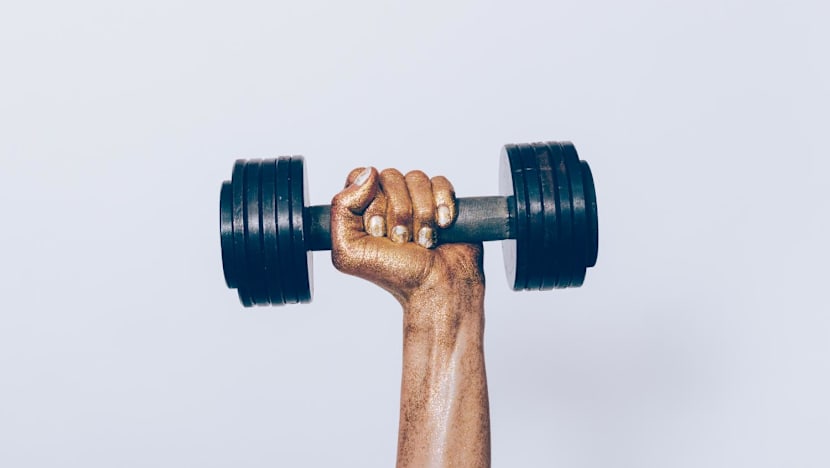
Muscle building is often associated with weights, but experts confirm that it is possible to enhance strength without traditional equipment. This alternative approach is especially appealing for individuals who may feel intimidated by gyms or prefer home workouts. Health professionals emphasize that various methods, including bodyweight exercises and resistance bands, can effectively stimulate muscle growth.
Understanding the Importance of Muscle Strength
Many individuals may not realize the significance of maintaining muscle strength as they age. Dr. Leong Jiajie Nicholas, an associate consultant sports physician at Tan Tock Seng Hospital, highlights the impact of sarcopenia—the age-related loss of muscle mass. He states, “Reduced muscle mass and strength would make it harder to perform daily activities or play sports that one was used to doing.” For older adults, having sufficient strength is crucial for maintaining independence and quality of life.
In addition to physical benefits, strength training contributes to reducing the risk of chronic diseases such as diabetes and hypertension. Regular physical activity also enhances mental health and sleep quality, making a compelling case for incorporating muscle-building exercises into daily routines.
The Science of Muscle Building
Muscles consist of three primary types: skeletal, cardiac, and smooth. Skeletal muscles, responsible for body movement, are the focus of strength training. During resistance exercises, microscopic tears in muscle fibers occur, leading to a cycle of repair and growth. Isaac Lim, a senior physiotherapist, explains that this process increases the cross-sectional area of the muscles.
Muscle fibers are categorized into slow-twitch and fast-twitch types. Slow-twitch fibers support endurance activities, while fast-twitch fibers are involved in powerful, short bursts of movement. According to experts, most individuals are born with a balanced ratio of these fibers, but training can shift this balance toward either type. Dr. Claudine Pang, founder of Asia Longevity, emphasizes the role of mitochondria in muscle building, noting that these structures convert nutrients into energy. Effective exercise promotes the creation and quality of mitochondria, enhancing overall muscle performance.
Building Muscle Without Weights
The consensus among physiotherapists is clear: it is indeed possible to build muscle without using weights. Deon Tan, a senior physiotherapist at Changi General Hospital, states, “Muscles grow when they are challenged through progressive overload.” This principle means that gradually increasing the difficulty of exercises is key to muscle development. Bodyweight exercises, resistance bands, and even yoga can effectively stimulate muscle growth.
Resistance bands, for example, provide external tension that enhances basic movements without the need for heavy weights. Jean Behrend, a clinical exercise physiologist, notes that small adjustments in body position can increase the difficulty of familiar exercises. This adaptability allows for continuous progression as strength improves.
While gym workouts often facilitate tracking progress through weight and repetitions, home-based options can also yield significant results. Isaac Lim indicates that whether through bodyweight exercises or resistance bands, consistently challenging oneself leads to muscle development.
Evaluating Various Workout Methods
Different workout methodologies can contribute to muscle strength, albeit with varying effectiveness. For instance, workouts like Hyrox focus on functional strength but may not isolate muscle growth as effectively as traditional lifting. Isaac Lim explains that while these sessions improve endurance, they often use lighter loads that may not create sufficient mechanical tension for muscle growth.
High-Intensity Interval Training (HIIT) can improve muscle endurance but likewise may not maximize muscle size. It’s effective for calorie burning but might not yield the desired muscle-building results.
Conversely, Pilates offers a unique approach to strength training, emphasizing control, stability, and endurance. While it may not enhance muscle mass to the same degree as weight training, it serves as an excellent complement by improving overall movement quality and core strength.
Challenges of Muscle Building with Age
As individuals age, building muscle becomes more challenging due to a natural decline in muscle fiber count and anabolic hormones essential for growth. Isaac Lim underscores that even though the process may slow down after age 30, muscle development remains achievable. Regular exercise, particularly strength training, can counteract age-related declines in muscle mass and mitochondrial efficiency.
For those who may face mobility limitations or injuries, alternatives such as pulsed electromagnetic fields (PEMF) can stimulate muscle growth. Dr. Claudine Pang asserts that while PEMF cannot entirely replace the benefits of resistance training, it is beneficial for individuals unable to perform heavy workouts.
In conclusion, muscle building without weights is not only feasible but can be effectively achieved through various alternative methods. Understanding the principles of muscle mechanics and the options available can empower individuals to pursue strength training tailored to their preferences and needs, regardless of age or fitness level.

India Unveils Long-Range Hypersonic Missile Amid Regional Tensions

SK bioscience Launches Global Trial for Universal Sarbecovirus Vaccine

Senegal Coach Pape Thiaw Suspended and Fined After Final Disruption

PAS Denies Abolishing Chairman Post, Contradicts Muhyiddin’s Claim

Mbappé Critiques Real Madrid’s Effort After Benfica Defeat

Thailand’s December Factory Output Surges 2.52% Year-on-Year

Ishita Dutta Reveals Her Parenting Secret: Strong Coffee

Older GPs Express Concerns Over New Digital Health Record Mandate

Urban Jurgensen: A 252-Year Legacy Enters a New Era

Regina Martinez Breaks New Ground for Mexico in Cross-Country Skiing

South Korea’s Foreign Minister Cho Hyun to Visit China This Week

Starling Bank Plans Secondary Share Sale, Targeting $5.4 Billion Valuation

Munsang College Celebrates 100 Years with Grand Ceremony

PAS Aims to Expand Parliamentary Influence in Upcoming Election

De Minaur Triumphs at Washington Open After Thrilling Comeback

Kenvue Dismisses CEO Thibaut Mongon as Strategic Review Advances

Humanism Camp Engages 250 Youths in Summer Fest 2025

Colombian Senator Miguel Uribe Shows Signs of Recovery After Attack
-
 Sports2 months ago
Regina Martinez Breaks New Ground for Mexico in Cross-Country Skiing
-
 World6 months ago
South Korea’s Foreign Minister Cho Hyun to Visit China This Week
-
 Business7 months ago
Starling Bank Plans Secondary Share Sale, Targeting $5.4 Billion Valuation
-
 Top Stories7 months ago
Munsang College Celebrates 100 Years with Grand Ceremony
-
 World6 months ago
PAS Aims to Expand Parliamentary Influence in Upcoming Election
-
 Sports8 months ago
De Minaur Triumphs at Washington Open After Thrilling Comeback
-
 Business8 months ago
Kenvue Dismisses CEO Thibaut Mongon as Strategic Review Advances
-
 Lifestyle8 months ago
Humanism Camp Engages 250 Youths in Summer Fest 2025
-
 Top Stories8 months ago
Colombian Senator Miguel Uribe Shows Signs of Recovery After Attack
-

 Sports8 months ago
Tupou and Daugunu Join First Nations Squad for Lions Clash
-
 World8 months ago
ASEAN Gears Up for Historic Joint Meeting of Foreign and Economic Ministers
-

 Health8 months ago
New Study Challenges Assumptions About Aging and Inflammation