
Top Stories
AI Transforms Singapore’s Workforce, Sparking Mixed Reactions

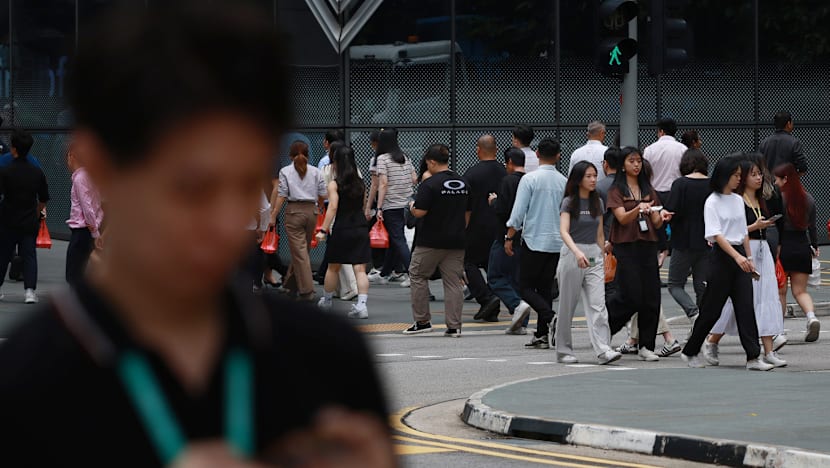
SINGAPORE: As artificial intelligence (AI) continues to reshape industries, workers and businesses in Singapore are experiencing a varied landscape of change. This transformation raises important questions about job security and the future of work, particularly as some sectors embrace technology more rapidly than others.
Hands-On Skills Amid Technological Advances
Mr Loh Ming Shun, a 40-year-old handyman known to his clients as Mickey, exemplifies a profession largely insulated from automation. Known for fixing drawers and mounting artwork, he emphasizes the irreplaceable nature of hands-on skills. “I think it’s impossible for AI to take over handyman services because it requires two hands,” he stated, highlighting the need for physical presence and dexterity in his trade.
While Mr Loh feels secure in his role, many other sectors are adapting to AI’s capabilities. Companies are increasingly turning to AI to enhance productivity, leading to concerns over job displacement in areas where automation can perform tasks traditionally held by human workers.
Technology’s Impact on Business Operations
At the event planning firm Adrenalin, technology has significantly altered daily operations. Thanks to funding from the National Trades Union Congress (NTUC), the company has implemented AI tools that streamline guest registration processes. Project manager Adeline Soon noted, “This actually cuts down a lot of time for them,” allowing guests to engage more freely while staff can address potential issues on the ground.
Despite these advancements, the integration of AI is uneven across the business landscape. Larger firms often have the resources to adopt comprehensive AI strategies, while smaller enterprises may prioritize immediate financial concerns over technological investments.
Business organizations suggest firms must be willing to experiment with AI to fully harness its benefits. The Association of Small and Medium Enterprises warns that over-reliance on technology could hinder younger workers’ development. “People who are fresh into the workforce will likely tend to use it, over-rely on it, and therefore stunt their ability to grow their judgment and their experience,” stated the association’s president, Ang Yuit.
Concerns are growing that companies may become hesitant to hire recent graduates, given that AI systems can outperform early-career employees in certain tasks. Yet, the evolution of entry-level roles is a crucial aspect of this transition. Alvin Goh, CEO of the Singapore Human Resources Institute, points out that while routine jobs may diminish, opportunities requiring judgment and collaboration are on the rise.
Redesigning Roles and Emphasizing Learning
Research from the Singapore National Employers Federation (SNEF) indicates that many companies are implementing hiring freezes this year. SNEF CEO Hao Shuo emphasizes the necessity of investing in job redesign and training to adapt to these changes. “Ultimately, I think humans will have to be in the loop in deciding, making the value judgments and when to actually make the change,” he explained.
The challenge lies in embedding ongoing learning within work environments. Goh notes that skills such as judgment and ethical decision-making are not easily automated. “Upskilling must move from classrooms to daily work,” he added, stressing that the ability to create time and space for on-the-job learning is essential for future success.
For Mr Loh, continuous learning occurs through practical experience and online resources. “Some of the things that I do not know, probably I will go to YouTube and Facebook,” he shared, illustrating how tradespeople are adapting their skills to remain competitive.
As the landscape of work shifts, the balance between technology and human skills will be crucial. While AI may change the way tasks are performed, the importance of personal professionalism and hands-on expertise remains a vital element in many trades.

India Unveils Long-Range Hypersonic Missile Amid Regional Tensions

SK bioscience Launches Global Trial for Universal Sarbecovirus Vaccine

Senegal Coach Pape Thiaw Suspended and Fined After Final Disruption

PAS Denies Abolishing Chairman Post, Contradicts Muhyiddin’s Claim

Mbappé Critiques Real Madrid’s Effort After Benfica Defeat

Thailand’s December Factory Output Surges 2.52% Year-on-Year

Ishita Dutta Reveals Her Parenting Secret: Strong Coffee

Older GPs Express Concerns Over New Digital Health Record Mandate

Urban Jurgensen: A 252-Year Legacy Enters a New Era

Regina Martinez Breaks New Ground for Mexico in Cross-Country Skiing

South Korea’s Foreign Minister Cho Hyun to Visit China This Week

Starling Bank Plans Secondary Share Sale, Targeting $5.4 Billion Valuation

Munsang College Celebrates 100 Years with Grand Ceremony

PAS Aims to Expand Parliamentary Influence in Upcoming Election

De Minaur Triumphs at Washington Open After Thrilling Comeback

Kenvue Dismisses CEO Thibaut Mongon as Strategic Review Advances

Humanism Camp Engages 250 Youths in Summer Fest 2025

Colombian Senator Miguel Uribe Shows Signs of Recovery After Attack
-
 Sports2 months ago
Regina Martinez Breaks New Ground for Mexico in Cross-Country Skiing
-
 World6 months ago
South Korea’s Foreign Minister Cho Hyun to Visit China This Week
-
 Business7 months ago
Starling Bank Plans Secondary Share Sale, Targeting $5.4 Billion Valuation
-
 Top Stories7 months ago
Munsang College Celebrates 100 Years with Grand Ceremony
-
 World6 months ago
PAS Aims to Expand Parliamentary Influence in Upcoming Election
-
 Sports8 months ago
De Minaur Triumphs at Washington Open After Thrilling Comeback
-
 Business8 months ago
Kenvue Dismisses CEO Thibaut Mongon as Strategic Review Advances
-
 Lifestyle8 months ago
Humanism Camp Engages 250 Youths in Summer Fest 2025
-
 Top Stories8 months ago
Colombian Senator Miguel Uribe Shows Signs of Recovery After Attack
-

 Sports8 months ago
Tupou and Daugunu Join First Nations Squad for Lions Clash
-
 World8 months ago
ASEAN Gears Up for Historic Joint Meeting of Foreign and Economic Ministers
-

 Health8 months ago
New Study Challenges Assumptions About Aging and Inflammation