
Science
United Imaging Introduces AI Innovations at RSNA 2025

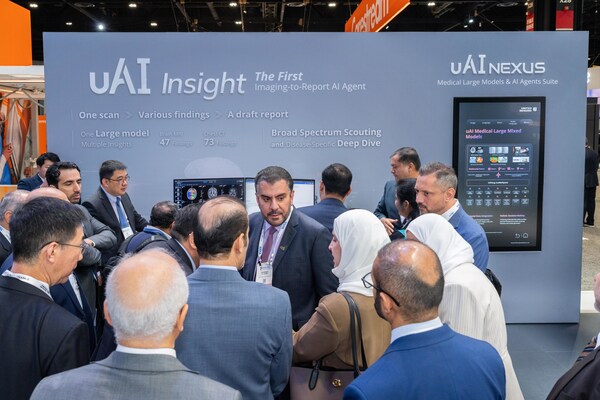
At the RSNA 2025 conference held in Shanghai, United Imaging Intelligence (UII) unveiled groundbreaking advancements in medical imaging technology, emphasizing the integration of artificial intelligence (AI) to enhance personalized healthcare. The event, themed “Imaging the Individual,” challenged medical professionals to bridge the gap between tailored patient care and global health disparities. UII posed a provocative question to attendees: “Agent Radiologist: Are We There Yet?”
AI Agents Transforming Medical Imaging
The centerpiece of UII’s presentation was the debut of uAI Insight, a next-generation Imaging-to-Report AI agent that made its North American introduction at the conference. This advanced system aims to elevate diagnostic workflows by seamlessly incorporating clinical reasoning into the reporting process. Utilizing UII’s multimodal large models, which integrate language, vision, and speech capabilities, uAI Insight can recognize intricate patterns and generate structured medical reports with remarkable accuracy.
Attendees were particularly impressed by the uAI Agent for Chest CT Reporting, which can detect 73 thoracic diseases from a single scan, achieving an impressive average area under the curve (AUC) of 95%. Additionally, the uAI Agent for Brain MRI Reporting identified 47 neurological conditions from one scan, signaling a pivotal shift in medical AI from mere task automation to fostering intelligent partnerships between humans and AI.
The Vision of the Digitelligent Hospital
In conjunction with its AI advancements, UII introduced the concept of the “Digitelligent Hospital.” This innovative framework envisions a healthcare ecosystem where digital technologies and AI work in unison to transform operations, software, and infrastructure. UII’s approach emphasizes continuous learning and adaptation, allowing hospitals to evolve throughout all stages of patient care.
At the conference, visitors witnessed how AI agents facilitate clinical workflows. For instance, the uAI Avatar, an intelligent medical assistant, guided attendees through a comprehensive pre-diagnosis process using natural conversation. Meanwhile, the uAI Agent for Hospital Management monitored imaging quality and equipment performance, converting complex operational data into actionable insights.
These AI agents exemplify how technology can enhance various aspects of healthcare, from diagnostic imaging to surgical care and patient services. The integration of embodied AI, such as the uAI Agent for Ultrasound, further illustrates this progression. This robotic-arm system autonomously scans while providing AI-assisted diagnoses, interpreting real-time visual and tactile cues to ensure precision and a more personalized patient experience.
RSNA 2025 highlighted a crucial transformation in the field of medical AI. As UII continues to expand its ecosystem of intelligent solutions, it is paving the way for a more comprehensive and personalized healthcare era. While products and features showcased at the conference may not be available in all countries and future availability is not guaranteed, UII’s commitment to innovation remains clear.
As the healthcare landscape evolves, the synergy between AI and human expertise will play a vital role in achieving better patient outcomes and addressing the pressing challenges of modern medicine.

India Unveils Long-Range Hypersonic Missile Amid Regional Tensions

SK bioscience Launches Global Trial for Universal Sarbecovirus Vaccine

Senegal Coach Pape Thiaw Suspended and Fined After Final Disruption

PAS Denies Abolishing Chairman Post, Contradicts Muhyiddin’s Claim

Mbappé Critiques Real Madrid’s Effort After Benfica Defeat

Thailand’s December Factory Output Surges 2.52% Year-on-Year

Ishita Dutta Reveals Her Parenting Secret: Strong Coffee

Older GPs Express Concerns Over New Digital Health Record Mandate

Urban Jurgensen: A 252-Year Legacy Enters a New Era

Regina Martinez Breaks New Ground for Mexico in Cross-Country Skiing

South Korea’s Foreign Minister Cho Hyun to Visit China This Week

Starling Bank Plans Secondary Share Sale, Targeting $5.4 Billion Valuation

Munsang College Celebrates 100 Years with Grand Ceremony

PAS Aims to Expand Parliamentary Influence in Upcoming Election

De Minaur Triumphs at Washington Open After Thrilling Comeback

Kenvue Dismisses CEO Thibaut Mongon as Strategic Review Advances

Humanism Camp Engages 250 Youths in Summer Fest 2025

Colombian Senator Miguel Uribe Shows Signs of Recovery After Attack
-
 Sports2 months ago
Regina Martinez Breaks New Ground for Mexico in Cross-Country Skiing
-
 World6 months ago
South Korea’s Foreign Minister Cho Hyun to Visit China This Week
-
 Business7 months ago
Starling Bank Plans Secondary Share Sale, Targeting $5.4 Billion Valuation
-
 Top Stories7 months ago
Munsang College Celebrates 100 Years with Grand Ceremony
-
 World6 months ago
PAS Aims to Expand Parliamentary Influence in Upcoming Election
-
 Sports8 months ago
De Minaur Triumphs at Washington Open After Thrilling Comeback
-
 Business8 months ago
Kenvue Dismisses CEO Thibaut Mongon as Strategic Review Advances
-
 Lifestyle8 months ago
Humanism Camp Engages 250 Youths in Summer Fest 2025
-
 Top Stories8 months ago
Colombian Senator Miguel Uribe Shows Signs of Recovery After Attack
-

 Sports8 months ago
Tupou and Daugunu Join First Nations Squad for Lions Clash
-

 World8 months ago
ASEAN Gears Up for Historic Joint Meeting of Foreign and Economic Ministers
-

 Health8 months ago
New Study Challenges Assumptions About Aging and Inflammation