
Science
Taiwanese Researchers Develop EEG Model to Identify Internet Addiction


A research team from Taiwan has made significant strides in identifying Internet addiction through an innovative machine-learning model that analyzes electroencephalography (EEG) brain wave patterns. This model successfully distinguishes individuals with Internet addiction from healthy subjects with an impressive accuracy rate of 86 percent.
According to Huang Hsu-wen, an assistant investigator at the National Health Research Institutes and one of the study’s lead researchers, this accuracy surpasses that of traditional self-reported measures. The study, published in May 2023 in the journal Psychological Medicine, involved a sample size of 92 participants, including 42 diagnosed with Internet addiction and 50 healthy controls.
The researchers focused on the resting-state EEG functional connectivity of participants. They found that those with Internet addiction exhibited elevated levels of phase synchronization. Huang explained that these changes in brain activity could be attributed to disruptions in neural systems related to inhibition and reward pathways.
The early detection of these EEG pattern changes is particularly noteworthy, as they occur before the manifestation of addictive behaviors. This suggests that combining EEG testing with machine-learning classification models could serve as an efficient tool for identifying early risk signals. Such advancements could enable schools and medical institutions to intervene more effectively, addressing potential Internet addiction before it escalates.
Internet addiction is characterized by prolonged online engagement, an inability to limit internet use, and discomfort when disconnected from the internet. The implications of this research extend beyond academic interest; they raise awareness about the growing concern surrounding Internet addiction, which affects individuals across various demographics.
The research team included notable contributors such as Wu Shun-chi, a professor at National Tsing Hua University, and Huang Chih-mao, an associate professor in the Department of Psychology at the University of Hong Kong. Their collaborative efforts, along with contributions from various research institutions in Taiwan and abroad, underscore the collective commitment to understanding and addressing this pressing issue.
This groundbreaking model not only provides a scientific framework for identifying Internet addiction but also paves the way for future research aimed at developing targeted interventions. As technology continues to evolve, the need for effective strategies to combat Internet addiction becomes increasingly relevant.

India Unveils Long-Range Hypersonic Missile Amid Regional Tensions

SK bioscience Launches Global Trial for Universal Sarbecovirus Vaccine

Senegal Coach Pape Thiaw Suspended and Fined After Final Disruption

PAS Denies Abolishing Chairman Post, Contradicts Muhyiddin’s Claim

Mbappé Critiques Real Madrid’s Effort After Benfica Defeat

Thailand’s December Factory Output Surges 2.52% Year-on-Year

Ishita Dutta Reveals Her Parenting Secret: Strong Coffee

Older GPs Express Concerns Over New Digital Health Record Mandate

Urban Jurgensen: A 252-Year Legacy Enters a New Era

Regina Martinez Breaks New Ground for Mexico in Cross-Country Skiing

South Korea’s Foreign Minister Cho Hyun to Visit China This Week

Starling Bank Plans Secondary Share Sale, Targeting $5.4 Billion Valuation

Munsang College Celebrates 100 Years with Grand Ceremony

PAS Aims to Expand Parliamentary Influence in Upcoming Election

De Minaur Triumphs at Washington Open After Thrilling Comeback

Kenvue Dismisses CEO Thibaut Mongon as Strategic Review Advances

Humanism Camp Engages 250 Youths in Summer Fest 2025

Colombian Senator Miguel Uribe Shows Signs of Recovery After Attack
-
 Sports2 months ago
Regina Martinez Breaks New Ground for Mexico in Cross-Country Skiing
-
 World6 months ago
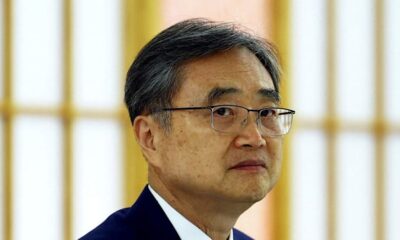
South Korea’s Foreign Minister Cho Hyun to Visit China This Week
-
 Business6 months ago
Starling Bank Plans Secondary Share Sale, Targeting $5.4 Billion Valuation
-
 Top Stories6 months ago
Munsang College Celebrates 100 Years with Grand Ceremony
-
 World6 months ago
PAS Aims to Expand Parliamentary Influence in Upcoming Election
-
 Sports8 months ago
De Minaur Triumphs at Washington Open After Thrilling Comeback
-
 Business8 months ago
Kenvue Dismisses CEO Thibaut Mongon as Strategic Review Advances
-
 Lifestyle8 months ago
Humanism Camp Engages 250 Youths in Summer Fest 2025
-
 Top Stories8 months ago
Colombian Senator Miguel Uribe Shows Signs of Recovery After Attack
-

 Sports8 months ago
Tupou and Daugunu Join First Nations Squad for Lions Clash
-

 World8 months ago
ASEAN Gears Up for Historic Joint Meeting of Foreign and Economic Ministers
-

 Health8 months ago
New Study Challenges Assumptions About Aging and Inflammation