
Science
Exploring Manifestation: Can Positive Thinking Shape Outcomes?

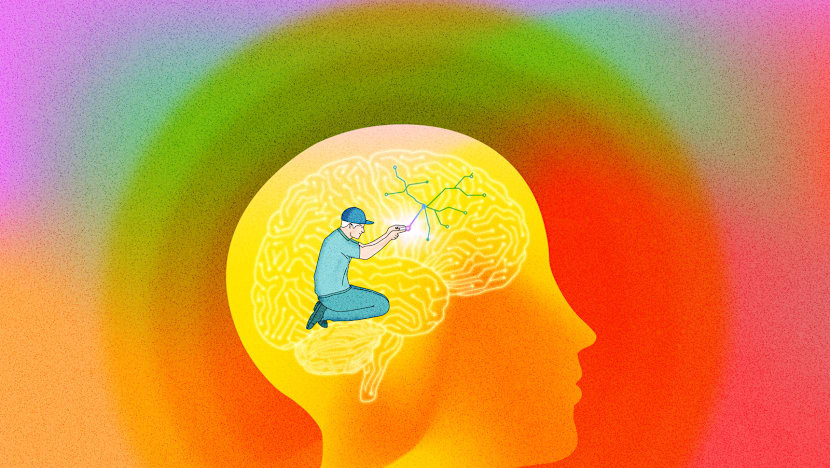
The concept of “manifestation,” a popular idea on social media platforms like TikTok and Instagram, suggests that individuals can achieve their desires—be it career success, love, or general happiness—simply by thinking, speaking, and visualising those aspirations. While this notion has attracted a following, it has also faced skepticism from critics who view it as pseudoscience. Yet, some neuroscientists and psychologists assert that there is a scientific foundation for manifestation, emphasizing how constructive thought patterns can influence actions and outcomes.
Dr. Natasha Mitter, a principal clinical psychologist at Us Therapy Singapore, acknowledges the skepticism surrounding manifestation but points out that its core practices—visualisation, affirmations, and intentional focus—align closely with established strategies in psychology and neuroscience. She explains, “The brain is not static; it is shaped by repeated thoughts, behaviours, and emotional experiences.” These techniques can activate motivation and reward pathways, reshaping neural circuits through neuroplasticity, and priming the brain for goal-directed action.
The Science Behind Positive Thinking
Dr. James Doty, a clinical professor of neurosurgery and founding director of the Stanford Center for Compassion and Altruism Research and Education, has explored this idea in his 2024 book, *Mind Magic: The Neuroscience of Manifestation and How It Changes Everything*. Doty argues that intentional attention can reshape the brain’s neural pathways, strengthening grey matter linked to learning and cognitive growth. This process may unlock greater potential in individuals seeking to achieve their goals.
Experts suggest that techniques such as positive affirmations and visualisation activate the brain’s reward and motivation circuits. Dr. Jean Liu from the Singapore Institute of Technology states, “It is well established that thoughts influence behaviour, which directly affects outcomes.” This principle is foundational to cognitive behaviour therapy, which aims to challenge negative beliefs and foster motivation.
Professor Annabel Chen, a clinical neuropsychologist at Nanyang Technological University, highlights brain imaging studies that demonstrate how positive thoughts activate areas related to motivation, particularly the ventral striatum and prefrontal cortex. “When visualising goals, your brain starts treating them as more important,” she says, indicating that positive thinking can spur individuals to take actionable steps toward achieving their objectives.
Dr. Mitter elaborates on the concept of visualisation, noting that it engages neural pathways similar to those activated during actual experiences. This technique is often employed by athletes, who mentally rehearse movements to enhance performance. “In essence, we are conditioning our minds to align with a desired reality,” she explains.
Practical Applications of Manifestation Techniques
To harness the benefits of manifestation without straying into pseudoscience, experts recommend practical strategies. Setting specific, realistic goals engages the brain’s motivation circuits and provides a clearer path to success. Professor Chen emphasizes the importance of establishing achievable objectives, explaining that unrealistic goals can diminish motivation. “Thinking through how you’ll get there and adjusting your plan keeps your brain motivated,” she advises.
The language used in affirmations plays a crucial role in their effectiveness. Dr. Mitter suggests that empowering language, focused on personal agency, is far more impactful than passive phrases. Affirmations like “I can handle challenges” or “I will take steps toward my goal” are more effective than vague statements such as “The universe will provide.” This approach activates brain regions associated with motivation and self-efficacy.
Consistency in practising affirmations is vital for fostering new beliefs and behaviours. Dr. Mitter compares this process to building muscle: the more often one activates a thought pattern, the stronger and more automatic it becomes. She notes, “The articulation of affirmations engages the brain’s linguistic processing centres, while their content stimulates neural regions associated with emotional regulation and memory.”
Ultimately, the journey to lasting change requires a combination of belief and concrete action. While positive thinking may initiate the process, it is the consistent application of effort that leads to tangible outcomes. Professor Chen asserts, “True change happens when thought becomes consistent, realistic action.”
Experts emphasize that the brain does not rewire itself overnight; substantial changes take time and repeated effort. The key to lasting transformation lies in pairing positive affirmations with sustained actions. Dr. Mitter summarizes this approach: “By repeatedly directing our attention and emotions toward a goal, we strengthen the brain pathways that make it easier to act in accordance with that goal.”
In conclusion, while manifestation may not be a mystical shortcut to success, it embodies principles of neuroplasticity in action. This perspective encourages individuals to take control of their thoughts and actions, ultimately paving the way for personal growth and achievement.

India Unveils Long-Range Hypersonic Missile Amid Regional Tensions

SK bioscience Launches Global Trial for Universal Sarbecovirus Vaccine

Senegal Coach Pape Thiaw Suspended and Fined After Final Disruption

PAS Denies Abolishing Chairman Post, Contradicts Muhyiddin’s Claim

Mbappé Critiques Real Madrid’s Effort After Benfica Defeat

Thailand’s December Factory Output Surges 2.52% Year-on-Year

Ishita Dutta Reveals Her Parenting Secret: Strong Coffee

Older GPs Express Concerns Over New Digital Health Record Mandate

Urban Jurgensen: A 252-Year Legacy Enters a New Era

South Korea’s Foreign Minister Cho Hyun to Visit China This Week

Starling Bank Plans Secondary Share Sale, Targeting $5.4 Billion Valuation

Munsang College Celebrates 100 Years with Grand Ceremony

PAS Aims to Expand Parliamentary Influence in Upcoming Election

Kenvue Dismisses CEO Thibaut Mongon as Strategic Review Advances

Humanism Camp Engages 250 Youths in Summer Fest 2025

De Minaur Triumphs at Washington Open After Thrilling Comeback

Tupou and Daugunu Join First Nations Squad for Lions Clash

Colombian Senator Miguel Uribe Shows Signs of Recovery After Attack
-
 World5 months ago
South Korea’s Foreign Minister Cho Hyun to Visit China This Week
-
 Business5 months ago
Starling Bank Plans Secondary Share Sale, Targeting $5.4 Billion Valuation
-
 Top Stories5 months ago
Munsang College Celebrates 100 Years with Grand Ceremony
-
 World5 months ago
PAS Aims to Expand Parliamentary Influence in Upcoming Election
-
 Business7 months ago
Kenvue Dismisses CEO Thibaut Mongon as Strategic Review Advances
-
 Lifestyle6 months ago
Humanism Camp Engages 250 Youths in Summer Fest 2025
-
 Sports6 months ago
De Minaur Triumphs at Washington Open After Thrilling Comeback
-
 Sports7 months ago
Tupou and Daugunu Join First Nations Squad for Lions Clash
-
 Top Stories7 months ago
Colombian Senator Miguel Uribe Shows Signs of Recovery After Attack
-

 World7 months ago
ASEAN Gears Up for Historic Joint Meeting of Foreign and Economic Ministers
-

 Health6 months ago
New Study Challenges Assumptions About Aging and Inflammation
-

 Business7 months ago
Oil Prices Surge Following New EU Sanctions on Russia