
Politics
Yunus Government Overhauls Bangladesh’s Banking System Amid Crisis

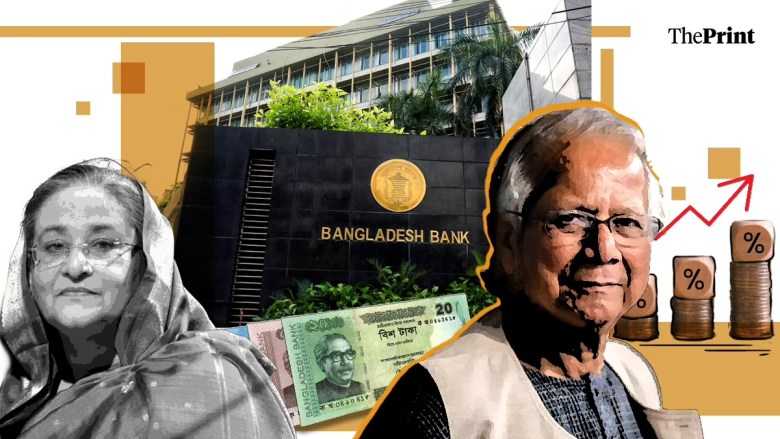
The interim government of Bangladesh, led by economist Muhammad Yunus, is undertaking significant reforms to stabilize the nation’s banking sector, which was on the brink of collapse following the end of Sheikh Hasina’s long-standing administration. As of March 2024, non-performing loans had reached over 1.7 trillion taka, equivalent to approximately $15.5 billion, representing nearly 11 percent of the total outstanding credit of about $140 billion. Analysts suggest that the actual figures could be much higher when factoring in rescheduled and evergreen loans.
The banking crisis has its roots in years of politically motivated lending practices, which resulted in significant governance failures and widespread regulatory indulgence. Many banks were effectively insolvent and continued to operate only due to substantial liquidity support from the Bangladesh Bank, amounting to billions of dollars, leading to a loss of depositor confidence. Some institutions, especially within the Islamic banking sector, exhibited alarmingly low capital adequacy ratios, failing to meet even the minimum standards set by Basel III.
In response, Yunus’s government quickly implemented reforms aimed at restoring the integrity and functionality of the banking system. The administration prioritized the reestablishment of the central bank’s supervisory authority, reconstituted boards of troubled banks, and made long-overdue decisions to address the crisis. Unlike previous attempts at reform, which offered short-term fixes, the current approach recognized the need for substantial changes in the banking landscape.
Significant Banking Mergers Initiated
Among the most notable actions was the decision to merge five struggling Islamic banks into a single, consolidated institution. This entity is set to manage deposits exceeding 1.1 trillion taka (around $10 billion) and will encompass combined assets of more than $13 billion. Previous administrations had avoided such mergers due to fears of political backlash and legal complications. The new framework established by the Yunus government enables the central bank to prioritize systemic stability over shareholder interests.
Under this reform, shareholders of the merged banks absorbed significant losses, and their balance sheets underwent restructuring under the oversight of the central bank. The state has committed substantial fiscal support, estimated between $1.8 billion to $2.2 billion, to protect depositors and restore stability. The reopening of withdrawal capabilities after months of restrictions has marked a critical psychological shift, bolstering depositor confidence and mitigating the risk of widespread financial contagion.
The rationale behind the consolidation is straightforward. With more than 60 commercial banks operating in a $460 billion economy, the banking sector had become overcrowded and excessively politicized, leading to weak governance. Mergers are expected to create economies of scale, simplify regulatory oversight, and reduce opportunities for regulatory arbitrage.
Yunus’s administration has also focused on enhancing regulations surrounding related-party lending and enforcing stricter loan classification standards. Additionally, a gradual move away from interest-rate caps has begun to address long-standing distortions in risk pricing.
A Shift in Political Context
The backdrop for these reforms has changed markedly with the fall of Hasina’s government, which had provided cover for influential borrowers responsible for substantial amounts of bad loans. The previous administration blurred the lines between political power and financial privilege, creating a precarious situation for the banking system. Although the interim government lacks an electoral mandate, it has gained legitimacy through its decisive actions in the wake of the political upheaval.
Despite these reforms, challenges remain. Merging banks is a complex process, particularly in a context where asset quality is disputed and recovery values are uncertain. Analysts project that cleaning up the legacy of bad loans could take five to seven years, potentially requiring several billion dollars in additional capital support. The sustainability of these reforms will largely depend on whether the next elected government remains committed to avoiding politically expedient banking practices.
The current shift represents a significant departure from the past. Under Hasina’s administration, financial stability was often achieved through regulatory suppression rather than genuine reform, imposing hidden costs on depositors and smaller borrowers while undermining the credibility of the financial system.
Yunus’s approach, while more transparent and disruptive in the short term, offers a credible path forward. Beyond banking, a robust financial system is vital for investment and growth, especially as Bangladesh faces external pressures from global monetary tightening and export uncertainties.
While the road ahead is fraught with risks, Yunus’s government has moved away from treating the banking sector as a political instrument. Instead, it emphasizes the necessity of a functional banking system that can either operate effectively or undergo necessary restructuring. For an interim government with limited time and no electoral base, this achievement could become a vital legacy of Bangladesh’s transition following the political uprising, demonstrating that meaningful structural change is possible even in times of uncertainty.

India Unveils Long-Range Hypersonic Missile Amid Regional Tensions

SK bioscience Launches Global Trial for Universal Sarbecovirus Vaccine

Senegal Coach Pape Thiaw Suspended and Fined After Final Disruption

PAS Denies Abolishing Chairman Post, Contradicts Muhyiddin’s Claim

Mbappé Critiques Real Madrid’s Effort After Benfica Defeat

Thailand’s December Factory Output Surges 2.52% Year-on-Year

Ishita Dutta Reveals Her Parenting Secret: Strong Coffee

Older GPs Express Concerns Over New Digital Health Record Mandate

Urban Jurgensen: A 252-Year Legacy Enters a New Era

Regina Martinez Breaks New Ground for Mexico in Cross-Country Skiing

South Korea’s Foreign Minister Cho Hyun to Visit China This Week

Starling Bank Plans Secondary Share Sale, Targeting $5.4 Billion Valuation

Munsang College Celebrates 100 Years with Grand Ceremony

PAS Aims to Expand Parliamentary Influence in Upcoming Election

De Minaur Triumphs at Washington Open After Thrilling Comeback

Kenvue Dismisses CEO Thibaut Mongon as Strategic Review Advances

Humanism Camp Engages 250 Youths in Summer Fest 2025

Colombian Senator Miguel Uribe Shows Signs of Recovery After Attack
-
 Sports3 months ago
Regina Martinez Breaks New Ground for Mexico in Cross-Country Skiing
-
 World7 months ago
South Korea’s Foreign Minister Cho Hyun to Visit China This Week
-
 Business7 months ago
Starling Bank Plans Secondary Share Sale, Targeting $5.4 Billion Valuation
-
 Top Stories7 months ago
Munsang College Celebrates 100 Years with Grand Ceremony
-
 World7 months ago
PAS Aims to Expand Parliamentary Influence in Upcoming Election
-
 Sports8 months ago
De Minaur Triumphs at Washington Open After Thrilling Comeback
-
 Business9 months ago
Kenvue Dismisses CEO Thibaut Mongon as Strategic Review Advances
-
 Lifestyle8 months ago
Humanism Camp Engages 250 Youths in Summer Fest 2025
-
 Top Stories9 months ago
Colombian Senator Miguel Uribe Shows Signs of Recovery After Attack
-

 Sports9 months ago
Tupou and Daugunu Join First Nations Squad for Lions Clash
-

 World9 months ago
ASEAN Gears Up for Historic Joint Meeting of Foreign and Economic Ministers
-

 Health8 months ago
New Study Challenges Assumptions About Aging and Inflammation