
Politics
US Foreign Policy Shift: After Maduro’s Ouster, Key Realities Emerge

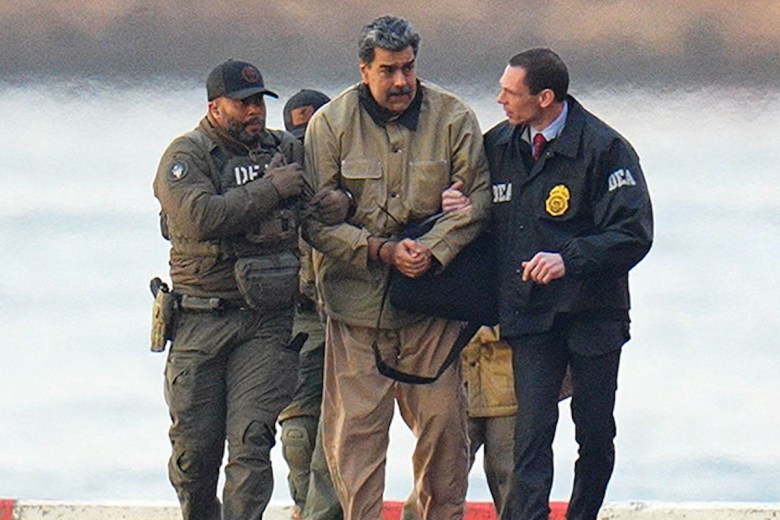
The removal of Nicolas Maduro from power in Venezuela marks a significant turning point in U.S. foreign policy, revealing the administration’s strategic intentions and operational principles. Reports indicate that U.S. forces encountered minimal resistance during the operation, highlighting not only the weakened state of Maduro’s regime but also his increasing reliance on Cuban security forces. This shift underscores a broader transformation in how the United States approaches global governance and diplomacy.
Binary Approach to Foreign Policy
The recent actions in Venezuela exemplify a binary worldview that classifies nations into two categories: those aligned with U.S. interests and those regarded as adversaries. President Donald Trump has adopted a foreign policy doctrine that is characterized by its starkness and directness, where diplomatic engagement is conditional and military might is a credible option. This clarity in approach serves to deter regimes accustomed to ambiguity. Yet, it also presents challenges, as many countries do not comfortably fit into the “friend” or “foe” dichotomy.
For instance, India continues to purchase oil from Russia while simultaneously seeking American investment. Similarly, while Taiwan is considered a strategic partner, the extent of U.S. commitment in the event of military tensions remains uncertain. A binary strategy can effectively isolate regimes but risks alienating potential allies and escalating confrontations prematurely.
Signaling Beyond Venezuela
The narrative surrounding Maduro’s fall is twofold. Domestically, it is framed around drug trafficking and criminality, portraying Venezuela as a “narco-state” that threatens American communities. Internationally, the implications are far-reaching. The removal of Maduro signals a shift in the Latin American landscape, particularly as other countries in the region have transitioned through elections. Here, the U.S. openly asserts its influence rather than masking it behind multilateral rhetoric.
The situation in Brazil, with upcoming presidential elections, poses another challenge. As questions arise about whether Washington will support candidates aligned with its interests, the interactions between U.S. officials and Brazilian politicians will be closely scrutinized. Senator Flavio Bolsonaro, for example, is cultivating connections in Washington as Brazil navigates its political future.
The Implications of Regime Change
The operation in Venezuela raises critical questions about the U.S. role in determining the legitimacy of foreign governments. The implications extend well beyond Latin America, particularly regarding potential actions toward Iran. The historical context of the 1979 Iranian revolution calls for caution, even as Israel’s military actions against Iranian proxies suggest a readiness to challenge old norms.
In Europe, U.S. rhetoric towards the European Union has become increasingly combative, with a willingness to engage with nationalist leaders. The U.S. relationship with Italy’s Giorgia Meloni indicates a shift, raising concerns about how American influence might complicate relationships with traditional allies.
Strategic Selectivity in Power Application
Critics of U.S. policy often point to the contrasting responses in Venezuela and Russia. The speed of action in Venezuela reflects a calculated approach, choosing battles where escalation risks are manageable. The Venezuelan regime, weakened by economic collapse, presented a more accessible target than Russia, which possesses significant military capabilities and nuclear arms. This selectivity suggests a hierarchy in U.S. foreign policy, prioritizing feasibility over moral imperatives, and fostering skepticism rather than trust.
The intersection of foreign policy and domestic politics further complicates the situation. Maduro’s downfall is likely to resonate in U.S. electoral politics, especially in Florida, where Venezuelan and Cuban-American communities have a storied history influencing Republican fortunes. The perception of toughness against authoritarianism may resonate with voters who have endured such regimes firsthand.
However, this blending of foreign policy with electoral strategy poses risks. Support among these communities is not guaranteed. Many who applaud action against Maduro may simultaneously oppose hardline immigration policies enacted by the current administration. The political calculus surrounding regime change becomes more complex when seeking electoral gains, particularly if the aftermath does not yield tangible improvements.
The transition following Maduro’s removal will be crucial. It will require efforts to rebuild Venezuelan society and ensure that institutions function effectively. As Kurt Davis Jr., a nonresident senior fellow at the Atlantic Council, notes, the challenge lies not just in the removal of a dictator but in fostering a stable, legitimate, and free Venezuela. How this transition unfolds will determine whether the U.S. response is viewed as a pragmatic solution or as a reckless gamble with long-term consequences.

India Unveils Long-Range Hypersonic Missile Amid Regional Tensions

SK bioscience Launches Global Trial for Universal Sarbecovirus Vaccine

Senegal Coach Pape Thiaw Suspended and Fined After Final Disruption

PAS Denies Abolishing Chairman Post, Contradicts Muhyiddin’s Claim

Mbappé Critiques Real Madrid’s Effort After Benfica Defeat

Thailand’s December Factory Output Surges 2.52% Year-on-Year

Ishita Dutta Reveals Her Parenting Secret: Strong Coffee

Older GPs Express Concerns Over New Digital Health Record Mandate

Urban Jurgensen: A 252-Year Legacy Enters a New Era

Regina Martinez Breaks New Ground for Mexico in Cross-Country Skiing

South Korea’s Foreign Minister Cho Hyun to Visit China This Week

Starling Bank Plans Secondary Share Sale, Targeting $5.4 Billion Valuation

Munsang College Celebrates 100 Years with Grand Ceremony

PAS Aims to Expand Parliamentary Influence in Upcoming Election

De Minaur Triumphs at Washington Open After Thrilling Comeback

Kenvue Dismisses CEO Thibaut Mongon as Strategic Review Advances

Humanism Camp Engages 250 Youths in Summer Fest 2025

Colombian Senator Miguel Uribe Shows Signs of Recovery After Attack
-
 Sports2 months ago
Regina Martinez Breaks New Ground for Mexico in Cross-Country Skiing
-
 World6 months ago
South Korea’s Foreign Minister Cho Hyun to Visit China This Week
-
 Business6 months ago
Starling Bank Plans Secondary Share Sale, Targeting $5.4 Billion Valuation
-
 Top Stories6 months ago
Munsang College Celebrates 100 Years with Grand Ceremony
-
 World6 months ago
PAS Aims to Expand Parliamentary Influence in Upcoming Election
-
 Sports8 months ago
De Minaur Triumphs at Washington Open After Thrilling Comeback
-
 Business8 months ago
Kenvue Dismisses CEO Thibaut Mongon as Strategic Review Advances
-
 Lifestyle8 months ago
Humanism Camp Engages 250 Youths in Summer Fest 2025
-
 Top Stories8 months ago
Colombian Senator Miguel Uribe Shows Signs of Recovery After Attack
-

 Sports8 months ago
Tupou and Daugunu Join First Nations Squad for Lions Clash
-
 World8 months ago
ASEAN Gears Up for Historic Joint Meeting of Foreign and Economic Ministers
-

 Health8 months ago
New Study Challenges Assumptions About Aging and Inflammation