
Politics
U.S. Tariffs Challenge India’s Strategic Investment in Iran’s Chabahar Port

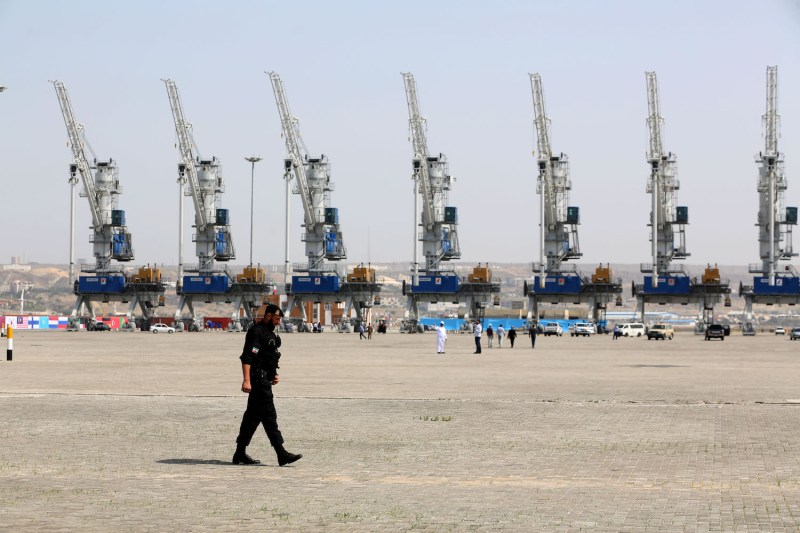
The recent announcement of a 25 percent tariff on countries conducting business with Iran by U.S. President Donald Trump has placed India in a precarious position regarding its significant investment in the Chabahar Port. This project, originally conceived as a vital transport corridor connecting India, Iran, and Afghanistan, is now under threat as New Delhi reassesses its future amid escalating tensions.
India’s Investment Dilemma
In May 2016, India committed $500 million to develop the Chabahar Port, located in southern Iran. This agreement aimed to enhance trade links with Afghanistan and provide India access to Central Asia, a region rich in resources. However, India has struggled to maintain its investment due to the reintroduction of U.S. sanctions against Iran, which intensified after Trump’s withdrawal from the Iran nuclear deal in 2018.
Following the recent tariff announcement, reports from India’s Economic Times suggested that New Delhi has already transferred its current financial commitment of $120 million to Tehran and indicated to U.S. authorities that it would “wind down all activities at the Port of Chabahar.” This development raises questions about the sustainability of India’s strategic ambitions in the region.
Despite these challenges, unnamed sources within the Indian government have disputed the notion that New Delhi plans to cease its involvement in the Chabahar project. They assert, “Exiting the port is not an option,” and emphasize that India is seeking a “middle-ground” approach with the United States.
Strategic Importance of Chabahar
The Chabahar Port project is critical for India, offering a viable route to Central Asia without relying on Pakistan, which does not permit Indian transit through its territory. Enhanced connectivity through Chabahar could facilitate India’s access to essential resources, including natural gas and critical minerals.
Moreover, the political landscape in Afghanistan, now under Taliban control, presents an opportunity for India to bolster its influence in the region. The Taliban’s relatively stable regime has been cultivating positive relations with India, making the Chabahar investment even more crucial.
While India could theoretically withdraw from the project, doing so would not only incur financial losses but also damage diplomatic ties with Iran. India’s relationship with Tehran has already weakened due to the reduction in Iranian oil imports, which were influenced by U.S. sanctions. Furthermore, New Delhi is exploring alternative partnerships in the Middle East, strengthening ties with the United Arab Emirates (UAE) and participating in initiatives like the India-Middle East-Europe Economic Corridor.
Despite the complexities surrounding the Chabahar Port, political pressures within India will likely deter a complete withdrawal. The ruling Bharatiya Janata Party (BJP) faces domestic backlash over perceived subservience to U.S. demands, especially against the backdrop of a challenging economic climate and public sentiment towards foreign policy.
Indian officials are currently considering new financing arrangements that could mitigate the impact of U.S. tariffs, potentially through third parties. As the expiration of India’s latest sanctions waiver approaches in April 2024, the government may seek an extension to maintain its involvement in Chabahar.
While the ambitious vision for Chabahar may be under threat, the strategic imperatives and political considerations could lead India to maintain a presence in the project. Balancing the geopolitical stakes with domestic political realities will be vital as New Delhi navigates this complex landscape.

India Unveils Long-Range Hypersonic Missile Amid Regional Tensions

SK bioscience Launches Global Trial for Universal Sarbecovirus Vaccine

Senegal Coach Pape Thiaw Suspended and Fined After Final Disruption

PAS Denies Abolishing Chairman Post, Contradicts Muhyiddin’s Claim

Mbappé Critiques Real Madrid’s Effort After Benfica Defeat

Thailand’s December Factory Output Surges 2.52% Year-on-Year

Ishita Dutta Reveals Her Parenting Secret: Strong Coffee

Older GPs Express Concerns Over New Digital Health Record Mandate

Urban Jurgensen: A 252-Year Legacy Enters a New Era

South Korea’s Foreign Minister Cho Hyun to Visit China This Week

Starling Bank Plans Secondary Share Sale, Targeting $5.4 Billion Valuation

Munsang College Celebrates 100 Years with Grand Ceremony

PAS Aims to Expand Parliamentary Influence in Upcoming Election

Kenvue Dismisses CEO Thibaut Mongon as Strategic Review Advances

Humanism Camp Engages 250 Youths in Summer Fest 2025

De Minaur Triumphs at Washington Open After Thrilling Comeback

Tupou and Daugunu Join First Nations Squad for Lions Clash

Colombian Senator Miguel Uribe Shows Signs of Recovery After Attack
-
 World5 months ago
South Korea’s Foreign Minister Cho Hyun to Visit China This Week
-
 Business5 months ago
Starling Bank Plans Secondary Share Sale, Targeting $5.4 Billion Valuation
-
 Top Stories5 months ago
Munsang College Celebrates 100 Years with Grand Ceremony
-
 World5 months ago
PAS Aims to Expand Parliamentary Influence in Upcoming Election
-
 Business7 months ago
Kenvue Dismisses CEO Thibaut Mongon as Strategic Review Advances
-
 Lifestyle6 months ago
Humanism Camp Engages 250 Youths in Summer Fest 2025
-
 Sports6 months ago
De Minaur Triumphs at Washington Open After Thrilling Comeback
-
 Sports7 months ago
Tupou and Daugunu Join First Nations Squad for Lions Clash
-
 Top Stories7 months ago
Colombian Senator Miguel Uribe Shows Signs of Recovery After Attack
-
 World7 months ago
ASEAN Gears Up for Historic Joint Meeting of Foreign and Economic Ministers
-

 Health6 months ago
New Study Challenges Assumptions About Aging and Inflammation
-
 Business7 months ago
Oil Prices Surge Following New EU Sanctions on Russia