
Politics
U.S. Policy Toward Venezuela Risks Unintended Consequences

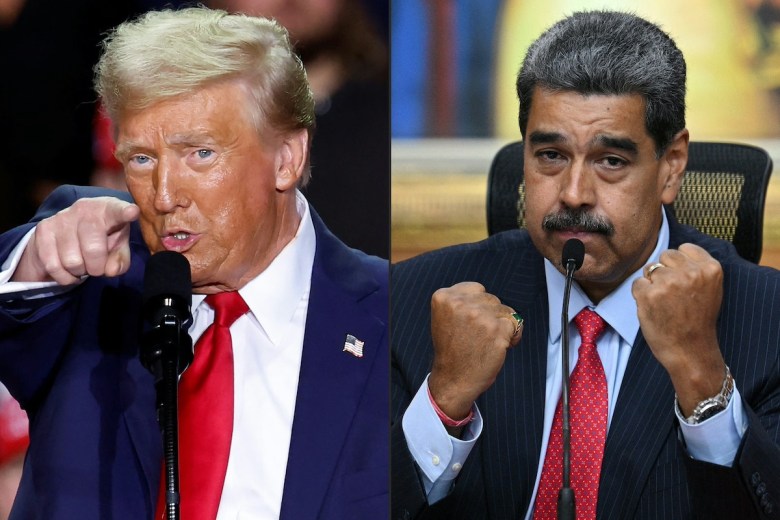
The U.S. administration’s approach to Venezuela could inadvertently lead to significant changes in the country’s political landscape, particularly regarding President Nicolás Maduro. While President Donald Trump has not explicitly approved military action, discussions are ongoing about potential strikes against drug cartels operating within Venezuela. This strategy, framed as a means to weaken Maduro’s regime, raises concerns about the lack of a clear endgame.
Pressure Without Clarity
The Trump administration has characterized its efforts as part of a broader counternarcotics and counterterrorism initiative rather than an outright attempt at regime change. According to Marco Rubio, Secretary of State and a key advocate for this hardline stance, Maduro’s government is propped up by Cuban intelligence, with Venezuelan oil playing a critical role in supporting Cuba’s economy. Rubio believes that removing Maduro is the initial step towards “cleaning up the hemisphere.”
Despite this narrative, contradictions persist. Trump has publicly denied intentions of regime change, even as military forces have amassed off Venezuela’s coast. This duality reflects a deeper confusion regarding U.S. objectives. Is the goal to encourage a negotiated exit for Maduro, incite a military coup, or leverage economic decline to instigate a popular uprising? The absence of a cohesive strategy complicates the situation further.
Potential Fallouts and Migration Concerns
The specter of regime change brings about serious concerns about Venezuela’s future. Unlike Iraq or Libya, Venezuela possesses a unique combination of oil wealth and fragile institutions. The opposition, while valid in its claims, remains divided and largely in exile. Furthermore, the military is entangled in narco-trafficking, raising questions about the legitimacy of any transitional government.
The current U.S. strategy might be backfiring. Maduro is reportedly preparing to declare a state of emergency, mobilizing civic-military forces to foster nationalist sentiment against perceived American aggression. History suggests that external pressures often bolster authoritarian regimes, as seen in countries like Cuba, Iran, and North Korea.
The irony is stark: while Trump campaigned on reducing immigration from Venezuela, destabilizing the country could lead to a surge in migration. Over seven million Venezuelans have already fled their homeland, and a scenario involving total state collapse could potentially double that number. Neighboring countries such as Colombia and Brazil are already struggling to manage the influx.
Realism in foreign policy necessitates confronting uncomfortable truths. Firstly, while Maduro’s regime is undeniably problematic, it does not pose an imminent threat to U.S. national security. His government is weak and losing support, but it is not on the brink of collapse without external intervention.
Secondly, U.S. influence is limited. The cancellation of sanctions waivers with a deadline of May 27, 2023, signifies an approach focused on maximum pressure, but military action could escalate the situation into a regional crisis. Lastly, the administration must clarify its actual interests in Venezuela. If the objective is to combat drug trafficking, there are more effective methods than military strikes, which could ultimately fragment operations and radicalize survivors.
The administration faces a critical choice: it can continue escalating pressure, risking unintended regime change without a plan for the aftermath, or shift towards targeted engagement. This engagement could prioritize achievable goals such as cooperation on counternarcotics, migration management, and a gradual normalization of economic relations in exchange for verifiable concessions.
While such an approach may seem distasteful and may involve legitimizing an authoritarian regime, it is essential to weigh the consequences. Realism in foreign policy often entails choosing between less desirable options and disastrous outcomes.
The current trajectory suggests that the Trump administration may be inadvertently moving toward regime change without the foresight required for reconstruction. If the administration genuinely seeks to avoid prolonged commitments abroad, it should resist the allure of regime change in Caracas, regardless of the framing. The people of Venezuela deserve better than the current leadership, but they also merit a thoughtful and strategic international response to their predicament.

Tisca Chopra Takes the Helm: Directs ‘Saali Mohabbat’ Debut

Dr. Richa Kumar Introduces Innovative Rhinoplasty Treatment in Delhi

Trump Awarded Inaugural FIFA Peace Prize for Global Mediation Efforts

Drashti Dhami Showcases Intense Workout Routine on Instagram

Experts Assess Risks of Occasional Binge Drinking During Holidays

Dr. Sandeep Marwah to Lead 18th Global Film Festival Noida 2025

Japan’s Missile Sale to Boost Philippines’ Defense Strategy

Singapore Commits S$37 Billion to Research and Innovation Over 5 Years

Australia Extends Lead to 116 Runs in Second Ashes Test

Kenvue Dismisses CEO Thibaut Mongon as Strategic Review Advances

Humanism Camp Engages 250 Youths in Summer Fest 2025

De Minaur Triumphs at Washington Open After Thrilling Comeback

Tupou and Daugunu Join First Nations Squad for Lions Clash

Colombian Senator Miguel Uribe Shows Signs of Recovery After Attack

ASEAN Gears Up for Historic Joint Meeting of Foreign and Economic Ministers

New Study Challenges Assumptions About Aging and Inflammation

Oil Prices Surge Following New EU Sanctions on Russia

Detaşe-Sabah Violin Ensemble Captivates at Gabala Music Festival
-
 Business5 months ago
Kenvue Dismisses CEO Thibaut Mongon as Strategic Review Advances
-
 Lifestyle4 months ago
Humanism Camp Engages 250 Youths in Summer Fest 2025
-
 Sports4 months ago
De Minaur Triumphs at Washington Open After Thrilling Comeback
-
 Sports5 months ago
Tupou and Daugunu Join First Nations Squad for Lions Clash
-
 Top Stories5 months ago
Colombian Senator Miguel Uribe Shows Signs of Recovery After Attack
-
 World5 months ago
ASEAN Gears Up for Historic Joint Meeting of Foreign and Economic Ministers
-
 Health4 months ago
New Study Challenges Assumptions About Aging and Inflammation
-
 Business5 months ago
Oil Prices Surge Following New EU Sanctions on Russia
-
 Entertainment4 months ago
Detaşe-Sabah Violin Ensemble Captivates at Gabala Music Festival
-

 Entertainment4 months ago
Baku Metro Extends Hours for Justin Timberlake Concert
-

 Top Stories5 months ago
Rethinking Singapore’s F&B Regulations Amid Business Closures
-
 Business5 months ago
U.S. House Approves Stablecoin Bill, Sends to Trump for Signature