
Politics
U.S. Military Deployment to Venezuela Raises Strategic Concerns

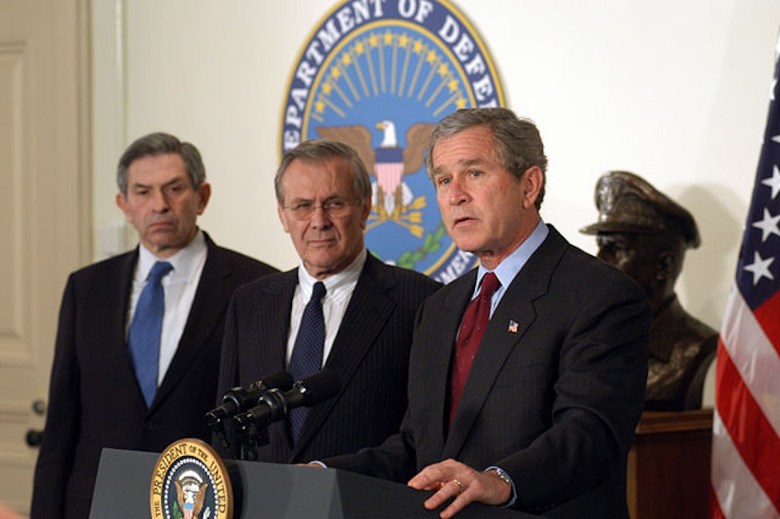
The United States has initiated military deployment to Venezuela with the explicit aim of ousting President Nicolás Maduro. This operation has reignited familiar themes in U.S. foreign policy, including the restoration of democracy and liberation of oppressed populations. Critics argue that this approach echoes past interventions in nations like Iraq and Libya, which promised swift resolutions but resulted in chaos and prolonged conflict.
The current military strategy reflects the enduring influence of neoconservative ideology within American foreign policy, which many believe has not adequately learned from previous failures. Despite the lessons of the last two decades, there exists a persistent inclination towards military intervention as a solution to complex political challenges.
Illusions of Quick Victory
Supporters of the Venezuelan intervention have employed rhetoric reminiscent of the prelude to the Iraq War. While it is true that Maduro’s regime has been associated with economic decline and humanitarian crises, the idea that U.S. forces will be welcomed as liberators is considered overly optimistic. Venezuela is a nation with nearly 30 million inhabitants, characterized by rugged geography and a history of political militarism, making it far more complex than earlier interventions in smaller nations.
The assumption that removing Maduro will lead to a democratic transition overlooks critical realities about Venezuela’s political landscape. The opposition is not only fragmented but also lacks the institutional capacity and territorial control necessary to govern effectively post-Maduro. Many Venezuelans, particularly those who benefited from Hugo Chávez‘s social programs, may not support an American-led transition, further complicating any potential resolution.
Regional and Global Implications
From a strategic standpoint, the intervention poses significant risks to U.S. interests across Latin America. It inadvertently validates anti-imperialist narratives that have historically shaped regional politics. Countries like Mexico, Brazil, and Argentina, while critical of Maduro, may face domestic pressures to oppose U.S. military actions. The sight of U.S. troops in Caracas could rekindle memories of past interventions, complicating diplomatic relations.
Additionally, the move may fortify alliances among leftist governments in the region, including Cuba and Nicaragua, which could use the intervention to justify their own authoritarian measures. This dynamic risks revitalizing anti-American coalitions that had weakened amidst Venezuela’s economic collapse.
The involvement of major geopolitical competitors like China and Russia further complicates the situation. Both nations have substantial investments in Venezuela and may use the U.S. intervention as an opportunity to increase their influence in the region. This could transform Venezuela into a proxy battleground, reminiscent of historical conflicts where superpowers vied for dominance.
As the U.S. military operation unfolds, the costs associated with such an intervention are significant. While initial military success may be achievable given the disparity in military capabilities, the subsequent challenges of occupation, infrastructure security, and institutional rebuilding are daunting. Estimates suggest that effective intervention could require years of commitment and potentially hundreds of billions of dollars.
The American public, fatigued by two decades of engagements in the Middle East, may be resistant to another prolonged military commitment. Congress is likely to scrutinize the financial implications, especially if public support begins to wane. Should the U.S. seek a rapid exit, it risks leaving behind a fragmented and unstable Venezuela, further undermining U.S. credibility in the region.
The potential for a more constructive approach exists. Instead of military intervention, a strategy of multilateral pressure combined with patience could have been pursued. The Venezuelan regime was already under pressure from its own mismanagement and corruption. By working through regional organizations and maintaining targeted sanctions, the U.S. could have allowed internal dynamics to unfold without resorting to military action.
The tragedy is that this military intervention may ultimately achieve the opposite of its intended goals. Rather than fostering democracy, the U.S. could exacerbate instability and facilitate a resurgence of anti-American sentiment throughout Latin America. The current trajectory suggests that the U.S. may be repeating past mistakes, a cycle that raises serious questions about the viability of its foreign policy.
This article was originally published on Leon Hadar’s Global Zeitgeist and is republished with kind permission.

India Unveils Long-Range Hypersonic Missile Amid Regional Tensions

SK bioscience Launches Global Trial for Universal Sarbecovirus Vaccine

Senegal Coach Pape Thiaw Suspended and Fined After Final Disruption

PAS Denies Abolishing Chairman Post, Contradicts Muhyiddin’s Claim

Mbappé Critiques Real Madrid’s Effort After Benfica Defeat

Thailand’s December Factory Output Surges 2.52% Year-on-Year

Ishita Dutta Reveals Her Parenting Secret: Strong Coffee

Older GPs Express Concerns Over New Digital Health Record Mandate

Urban Jurgensen: A 252-Year Legacy Enters a New Era

Regina Martinez Breaks New Ground for Mexico in Cross-Country Skiing

South Korea’s Foreign Minister Cho Hyun to Visit China This Week

Starling Bank Plans Secondary Share Sale, Targeting $5.4 Billion Valuation

Munsang College Celebrates 100 Years with Grand Ceremony

PAS Aims to Expand Parliamentary Influence in Upcoming Election

De Minaur Triumphs at Washington Open After Thrilling Comeback

Kenvue Dismisses CEO Thibaut Mongon as Strategic Review Advances

Humanism Camp Engages 250 Youths in Summer Fest 2025

Colombian Senator Miguel Uribe Shows Signs of Recovery After Attack
-
 Sports3 months ago
Regina Martinez Breaks New Ground for Mexico in Cross-Country Skiing
-
 World7 months ago
South Korea’s Foreign Minister Cho Hyun to Visit China This Week
-
 Business7 months ago
Starling Bank Plans Secondary Share Sale, Targeting $5.4 Billion Valuation
-
 Top Stories7 months ago
Munsang College Celebrates 100 Years with Grand Ceremony
-
 World7 months ago
PAS Aims to Expand Parliamentary Influence in Upcoming Election
-
 Sports8 months ago
De Minaur Triumphs at Washington Open After Thrilling Comeback
-
 Business9 months ago
Kenvue Dismisses CEO Thibaut Mongon as Strategic Review Advances
-
 Lifestyle8 months ago
Humanism Camp Engages 250 Youths in Summer Fest 2025
-
 Top Stories9 months ago
Colombian Senator Miguel Uribe Shows Signs of Recovery After Attack
-

 Sports9 months ago
Tupou and Daugunu Join First Nations Squad for Lions Clash
-
 World9 months ago
ASEAN Gears Up for Historic Joint Meeting of Foreign and Economic Ministers
-

 Health8 months ago
New Study Challenges Assumptions About Aging and Inflammation