
Politics
Trump’s Shift in Foreign Policy Creates Opportunities for Germany

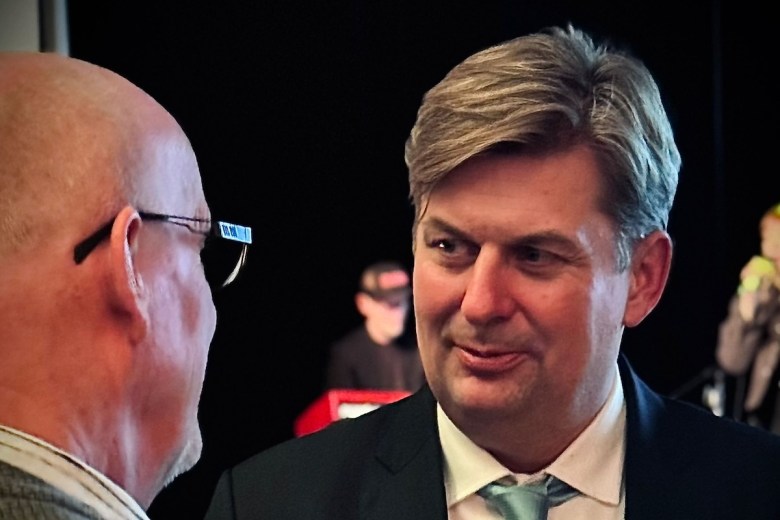
Donald Trump’s recent foreign policy shifts are reshaping international relations, moving away from multilateralism and towards bilateral agreements. This change presents both challenges and opportunities for Germany, which is currently grappling with its political elite’s inability to adapt to this evolving landscape. In a detailed analysis, Maximilian Krah, a member of the German Federal Parliament, explores how Germany can leverage this new order to restore its influence and economic standing.
Decline of Multilateralism and EU Implications
The United States’ pivot away from multilateralism directly impacts the European Union (EU). Trump’s skepticism towards the EU aligns with sentiments expressed by Germany’s right-wing Alternative for Germany (AfD) party, which has advocated for a restructured Europe since 2013. Central to this transformation is the ongoing conflict in Ukraine, which has forced Western European nations into a precarious position.
The U.S. has proposed peace plans that include immediate access for Ukraine to the EU market, creating a scenario where Western European countries will be held accountable for their promises to Ukraine. This situation is further complicated by Hungary’s Prime Minister Viktor Orban, who has stated that he will only support Ukraine’s EU accession if Serbia is admitted as well. Such conditions could lead to broader implications for the EU, which may struggle to incorporate new members without significant reforms.
Germany’s political establishment shows a lack of preparedness for these changes. Current leaders envision deeper integration within the EU, unaware of the region’s declining economic growth and increased regulatory burdens. The EU’s capacity to effectively govern and integrate new members like Ukraine is in question, risking its future stability.
Germany’s Strategic Realignment and Opportunities
In this evolving geopolitical landscape, Germany has the potential to redefine its role in Europe. Krah suggests that Germany should embrace a “South-East Strategy,” focusing on strengthening ties with Central and Southeastern European nations. This strategy leverages Germany’s historical connections and positions it as a leader in fostering economic and military cooperation in the region.
The resurgence of Turkey under President Recep Tayyip Erdogan offers another avenue for Germany to expand its influence. Turkey’s growing economic strength and strategic position make it a crucial partner in accessing Central Asia’s resources and markets. A closer German-Turkish alliance could reshape regional dynamics and promote stability in both Europe and the Middle East.
As Europe’s landscape shifts, the opportunity for Germany to act as a bridge between the West and emerging powers becomes evident. Krah argues that Germany must seize this moment to become “America’s best friend in Europe,” ensuring that it is not left behind in the new world order that Trump is creating.
This new paradigm also presents challenges for traditional alliances. The U.S.’s approach to Russia, moving from confrontation to potential collaboration, complicates the situation further. Germany’s historical ties with Russia offer a unique opportunity to reinvigorate partnerships that could benefit both nations economically and politically.
Krah highlights the need for Germany to adapt its foreign policy and economic strategies to align with these shifts, emphasizing that a failure to do so could result in missed opportunities for growth and influence.
In conclusion, as Trump’s foreign policy creates a new reality, Germany stands at a crossroads. By embracing a more flexible and proactive approach, it can navigate these changes effectively, transforming potential challenges into significant opportunities for the future of Europe.

India Unveils Long-Range Hypersonic Missile Amid Regional Tensions

SK bioscience Launches Global Trial for Universal Sarbecovirus Vaccine

Senegal Coach Pape Thiaw Suspended and Fined After Final Disruption

PAS Denies Abolishing Chairman Post, Contradicts Muhyiddin’s Claim

Mbappé Critiques Real Madrid’s Effort After Benfica Defeat

Thailand’s December Factory Output Surges 2.52% Year-on-Year

Ishita Dutta Reveals Her Parenting Secret: Strong Coffee

Older GPs Express Concerns Over New Digital Health Record Mandate

Urban Jurgensen: A 252-Year Legacy Enters a New Era

Regina Martinez Breaks New Ground for Mexico in Cross-Country Skiing

South Korea’s Foreign Minister Cho Hyun to Visit China This Week

Starling Bank Plans Secondary Share Sale, Targeting $5.4 Billion Valuation

Munsang College Celebrates 100 Years with Grand Ceremony

PAS Aims to Expand Parliamentary Influence in Upcoming Election

De Minaur Triumphs at Washington Open After Thrilling Comeback

Kenvue Dismisses CEO Thibaut Mongon as Strategic Review Advances

Humanism Camp Engages 250 Youths in Summer Fest 2025

Colombian Senator Miguel Uribe Shows Signs of Recovery After Attack
-
 Sports2 months ago
Regina Martinez Breaks New Ground for Mexico in Cross-Country Skiing
-
 World7 months ago
South Korea’s Foreign Minister Cho Hyun to Visit China This Week
-
 Business7 months ago
Starling Bank Plans Secondary Share Sale, Targeting $5.4 Billion Valuation
-
 Top Stories7 months ago
Munsang College Celebrates 100 Years with Grand Ceremony
-
 World7 months ago
PAS Aims to Expand Parliamentary Influence in Upcoming Election
-
 Sports8 months ago
De Minaur Triumphs at Washington Open After Thrilling Comeback
-
 Business9 months ago
Kenvue Dismisses CEO Thibaut Mongon as Strategic Review Advances
-
 Lifestyle8 months ago
Humanism Camp Engages 250 Youths in Summer Fest 2025
-
 Top Stories9 months ago
Colombian Senator Miguel Uribe Shows Signs of Recovery After Attack
-

 Sports9 months ago
Tupou and Daugunu Join First Nations Squad for Lions Clash
-
 World9 months ago
ASEAN Gears Up for Historic Joint Meeting of Foreign and Economic Ministers
-

 Health8 months ago
New Study Challenges Assumptions About Aging and Inflammation