
Politics
Trump Proposes Comprehensive Gaza Peace Plan Amid Tensions

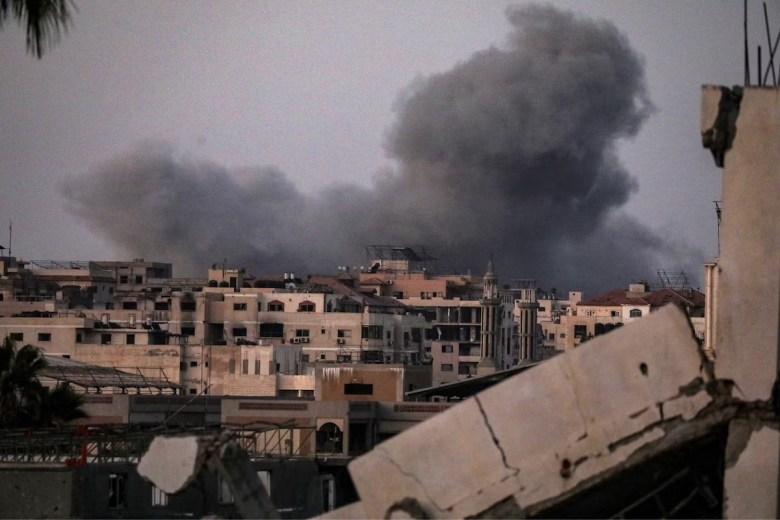
The United States has unveiled a comprehensive 20-point peace plan aimed at resolving the ongoing conflict in Gaza, with significant participation from Israel. This initiative marks one of the most detailed frameworks proposed by the Trump administration to address the situation involving Hamas. The plan reportedly enjoys support from several Arab states as well as the United Kingdom and France, potentially paving the way for a resolution to the hostilities that have plagued the region.
While the plan offers a detailed outline, it notably excludes Hamas from its development process. The militant group has not yet provided an official response but is reportedly reviewing the details. Complicating matters, Israeli Prime Minister Benjamin Netanyahu has stated that Israel will “forcibly resist” the establishment of a Palestinian state, seemingly contradicting the principles of the plan he has endorsed.
Key elements of the proposal include an immediate cessation of hostilities and the release of nearly 2,000 Palestinian prisoners, among them 1,700 Gazans detained since 2023. Furthermore, Hamas members who disarm and agree to coexist peacefully with Israel will receive amnesty and the option to leave if they choose. The plan stipulates that Israel will not annex or “occupy” Gaza, although it establishes a security perimeter around the enclave, leaving the timeline for troop withdrawal unclear.
Humanitarian aid is a focal point of the proposal, which aims to restore critical support for civilians. It acknowledges the pivotal role of the United Nations and the Red Crescent in administering this aid, marking a significant concession. Importantly, the plan emphasizes that no one will be forced to leave Gaza; instead, it encourages residents to remain, while also allowing those who wish to leave the freedom to return.
Despite these provisions, Hamas is likely to perceive numerous challenges within the plan. While some leaders within the organization have previously indicated a willingness to consider phased disarmament, the prospect of full disarmament poses significant difficulties. Many regions of Gaza, along with other parts of Palestine, remain under Israeli control, and Hamas will likely seek clearer timelines for Israeli Defense Forces (IDF) withdrawal before agreeing to any public disarmament.
The plan also falls short of providing guarantees that hostilities will not resume following the release of hostages. According to the outline, hostilities will cease upon signing the agreement, followed by a 72-hour period designated for the release of all hostages. Hamas is expected to demand further assurances from the United States and regional partners that renewed conflict will not erupt once hostages are returned.
Additionally, the governance structure proposed in the plan raises concerns for Hamas. It suggests a two-tiered model where a technocratic Palestinian committee would manage daily services, overseen by a new international transitional body led by Donald Trump alongside other prominent figures such as Tony Blair. Blair’s previous tenure as Prime Minister and his role in the Quartet mediating the Israel-Palestine peace process have made him a controversial figure among Palestinians, raising questions about the acceptability of this governance model.
The future role of the Palestinian Authority (PA) in governing Gaza remains contentious. The plan states that the PA will not assume governance until it has completed a reform process outlined in Trump’s earlier proposals. However, Netanyahu has explicitly rejected any role for the PA in Gaza’s future, further complicating the landscape.
The proposal is also vague regarding Palestinian statehood, acknowledging the aspiration for self-determination without outlining a clear path forward. Netanyahu has made it clear that he will resist any initiatives aimed at advancing Palestinian statehood, leaving a significant void in the negotiations.
As the people of Gaza continue to endure tremendous hardships, it is clear that Trump’s plan, despite its flaws, may represent the best opportunity Hamas will receive from the United States and Israel. The critical question remains whether the involved parties are willing to address the existing obstacles or whether they will use any objections as justification to prolong the conflict.
Julie M. Norman, a senior associate fellow on the Middle East at RUSI and an associate professor in politics and international relations at UCL, provides insights into the complexities surrounding the proposal. The future of Gaza hangs in the balance as stakeholders consider their next steps in this challenging geopolitical landscape.

India Unveils Long-Range Hypersonic Missile Amid Regional Tensions

SK bioscience Launches Global Trial for Universal Sarbecovirus Vaccine

Senegal Coach Pape Thiaw Suspended and Fined After Final Disruption

PAS Denies Abolishing Chairman Post, Contradicts Muhyiddin’s Claim

Mbappé Critiques Real Madrid’s Effort After Benfica Defeat

Thailand’s December Factory Output Surges 2.52% Year-on-Year

Ishita Dutta Reveals Her Parenting Secret: Strong Coffee

Older GPs Express Concerns Over New Digital Health Record Mandate

Urban Jurgensen: A 252-Year Legacy Enters a New Era

South Korea’s Foreign Minister Cho Hyun to Visit China This Week

Starling Bank Plans Secondary Share Sale, Targeting $5.4 Billion Valuation

Munsang College Celebrates 100 Years with Grand Ceremony

PAS Aims to Expand Parliamentary Influence in Upcoming Election

Kenvue Dismisses CEO Thibaut Mongon as Strategic Review Advances

Humanism Camp Engages 250 Youths in Summer Fest 2025

De Minaur Triumphs at Washington Open After Thrilling Comeback

Tupou and Daugunu Join First Nations Squad for Lions Clash

Colombian Senator Miguel Uribe Shows Signs of Recovery After Attack
-
 World5 months ago
South Korea’s Foreign Minister Cho Hyun to Visit China This Week
-
 Business5 months ago
Starling Bank Plans Secondary Share Sale, Targeting $5.4 Billion Valuation
-
 Top Stories5 months ago
Munsang College Celebrates 100 Years with Grand Ceremony
-
 World5 months ago
PAS Aims to Expand Parliamentary Influence in Upcoming Election
-
 Business7 months ago
Kenvue Dismisses CEO Thibaut Mongon as Strategic Review Advances
-
 Lifestyle6 months ago
Humanism Camp Engages 250 Youths in Summer Fest 2025
-
 Sports6 months ago
De Minaur Triumphs at Washington Open After Thrilling Comeback
-
 Sports7 months ago
Tupou and Daugunu Join First Nations Squad for Lions Clash
-
 Top Stories7 months ago
Colombian Senator Miguel Uribe Shows Signs of Recovery After Attack
-

 World7 months ago
ASEAN Gears Up for Historic Joint Meeting of Foreign and Economic Ministers
-

 Health6 months ago
New Study Challenges Assumptions About Aging and Inflammation
-

 Business7 months ago
Oil Prices Surge Following New EU Sanctions on Russia