
Politics
Tensions Rise as Israel-Lebanon Ceasefire Faces Breakdown

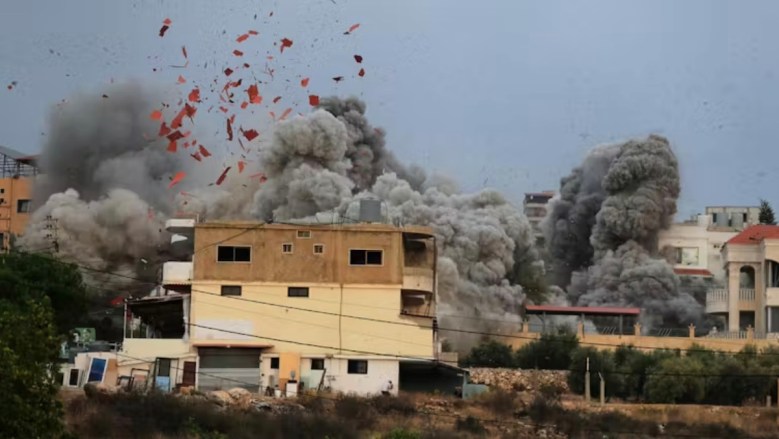
The ceasefire agreement between Israel and Lebanon, established on November 27, 2024, is under increasing strain. Since the announcement, over 10,000 Israeli air and ground violations have been reported within Lebanese territory, according to the latest findings from UNIFIL, the United Nations peacekeeping mission in Lebanon. As the first anniversary of the ceasefire approaches, escalating Israeli military actions, including the assassination of a prominent Hezbollah military leader and an attack on a Palestinian refugee camp, threaten to unravel the fragile peace.
Israel maintains that its military operations are targeted solely at Hezbollah, aiming to disrupt the group’s rearmament and recovery efforts. Reports from Israeli military sources indicate preparations to intensify action against Hezbollah, suggesting a desire to “finish the job” following the group’s substantial losses in the wake of the October 7, 2023, conflict with Hamas. Observers note that the ongoing military dominance of Israel in the region has not resulted in the desired stability, highlighting the limitations of relying solely on military power without a diplomatic framework.
Background of the Ceasefire Agreement
The ceasefire was designed to conclude the most recent hostilities between Israel and Hezbollah, which erupted after Hamas’s initial attack on Israel. The agreement called for the withdrawal of Israeli forces from occupied areas in southern Lebanon within 60 days and mandated the Lebanese government to disarm all nonstate military entities, starting from the southern region. A significant aspect of the deal was the intention for indirect negotiations, facilitated by the United States, to delineate the contested land borders between Israel and Lebanon.
Despite these objectives, a year later, Israel continues to occupy five border posts in Lebanon and conducts frequent military incursions. These operations not only target Hezbollah but also endanger UNIFIL personnel, who have faced fire during these raids. The failure to achieve the ceasefire’s goals further exacerbates tensions and complicates the security landscape in Lebanon.
Political Dynamics in Lebanon
Following the formation of a new Lebanese government in February 2025, there emerged a political opportunity for the state to reassert its authority, as Hezbollah no longer held veto power. Many Lebanese citizens viewed this development as a potential turning point for state stability and economic recovery, especially in light of the financial crisis that began in October 2019.
Disarming Hezbollah poses a significant challenge, given the group’s entrenched status as Lebanon’s most formidable military force. Its military capabilities not only provide a deterrent against Israeli aggression but also establish Hezbollah as a key player in Lebanese politics. Surrendering arms would require a fundamental shift in the group’s identity and power within the political landscape.
The Lebanese army, tasked with implementing the disarmament in line with the ceasefire agreement, has historically functioned more as a symbol of the nation’s sovereignty than as an effective military force. Since its establishment in 1945, the army has lacked the capacity to confront Hezbollah directly, and any coercive attempt to disarm the group risks igniting further conflict, potentially leading to a resurgence of civil war.
The United States has historically supported the Lebanese state through security cooperation and has urged the Lebanese army to disarm Hezbollah. However, this pressure has often been met with resistance. For instance, when the Lebanese army’s chief of staff criticized Israel for its violations of Lebanese sovereignty, he faced backlash from US officials for failing to address Hezbollah’s actions. This dynamic complicates the relationship between the US and Lebanon as the latter grapples with internal challenges.
Implications and Risks of Renewed Conflict
The current state of affairs places both Israel and Hezbollah on a precarious path, with the risk of renewed hostilities looming. Since the 2006 war, Hezbollah had established a perceived balance of deterrence with Israel, which was disrupted by the events of October 7, 2023. In response, Israeli security doctrine has shifted to a zero-tolerance approach towards threats, heightening the potential for renewed conflict.
Domestic political considerations in Israel further complicate the situation. Prime Minister Benjamin Netanyahu faces declining popularity and accusations of extending military operations in Gaza to divert attention from his legal issues. This precarious political climate raises concerns that similar tactics could be employed in relation to Lebanon.
Resolving border disputes, a fundamental aspect of the ceasefire agreement, remains unresolved. Since 2000, these disputes have been exploited by Hezbollah to justify its armed resistance against Israel. The lack of clear borders with both Syria and Israel continues to fuel tensions, and diplomatic efforts have largely stalled amid mutual distrust.
Long-term stability in Lebanon hinges on addressing the power dynamics between the state and Hezbollah, as well as managing Israel’s military actions. A strong Lebanese state, with exclusive control over arms and foreign policy, is essential for breaking the cycle of violence that has characterized Israel-Lebanon relations for decades. The role of the US administration, potentially in collaboration with regional partners, is crucial in facilitating a balanced approach to diplomacy that could lead to a more stable and peaceful Lebanon.
As Asher Kaufman, a professor of history and peace studies at the University of Notre Dame, notes, the resolution of these complex issues requires an internal Lebanese political process—one where the state emerges as the sole authority on arms within its territory. Without such a transformation, military pressure from Israel alone will not lead to lasting peace.

India Unveils Long-Range Hypersonic Missile Amid Regional Tensions

SK bioscience Launches Global Trial for Universal Sarbecovirus Vaccine

Senegal Coach Pape Thiaw Suspended and Fined After Final Disruption

PAS Denies Abolishing Chairman Post, Contradicts Muhyiddin’s Claim

Mbappé Critiques Real Madrid’s Effort After Benfica Defeat

Thailand’s December Factory Output Surges 2.52% Year-on-Year

Ishita Dutta Reveals Her Parenting Secret: Strong Coffee

Older GPs Express Concerns Over New Digital Health Record Mandate

Urban Jurgensen: A 252-Year Legacy Enters a New Era

Regina Martinez Breaks New Ground for Mexico in Cross-Country Skiing

South Korea’s Foreign Minister Cho Hyun to Visit China This Week

Starling Bank Plans Secondary Share Sale, Targeting $5.4 Billion Valuation

Munsang College Celebrates 100 Years with Grand Ceremony

PAS Aims to Expand Parliamentary Influence in Upcoming Election

De Minaur Triumphs at Washington Open After Thrilling Comeback

Kenvue Dismisses CEO Thibaut Mongon as Strategic Review Advances

Humanism Camp Engages 250 Youths in Summer Fest 2025

Colombian Senator Miguel Uribe Shows Signs of Recovery After Attack
-
 Sports1 month ago
Regina Martinez Breaks New Ground for Mexico in Cross-Country Skiing
-
 World6 months ago
South Korea’s Foreign Minister Cho Hyun to Visit China This Week
-
 Business6 months ago
Starling Bank Plans Secondary Share Sale, Targeting $5.4 Billion Valuation
-
 Top Stories6 months ago
Munsang College Celebrates 100 Years with Grand Ceremony
-
 World6 months ago
PAS Aims to Expand Parliamentary Influence in Upcoming Election
-
 Sports7 months ago
De Minaur Triumphs at Washington Open After Thrilling Comeback
-
 Business8 months ago
Kenvue Dismisses CEO Thibaut Mongon as Strategic Review Advances
-
 Lifestyle7 months ago
Humanism Camp Engages 250 Youths in Summer Fest 2025
-
 Top Stories8 months ago
Colombian Senator Miguel Uribe Shows Signs of Recovery After Attack
-

 Sports8 months ago
Tupou and Daugunu Join First Nations Squad for Lions Clash
-
 World8 months ago
ASEAN Gears Up for Historic Joint Meeting of Foreign and Economic Ministers
-

 Health7 months ago
New Study Challenges Assumptions About Aging and Inflammation