
Politics
Singapore’s Role Crucial in Deterring China-Taiwan Conflict

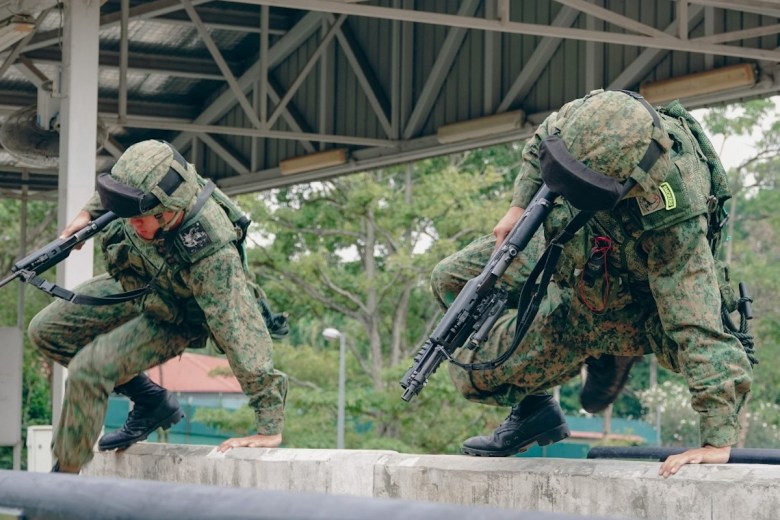
Singapore plays a pivotal role in the evolving dynamics of the Taiwan Strait, primarily through its military presence in Taiwan. Each year, approximately 3,000 Singapore Armed Forces (SAF) personnel are stationed on the island under Project Starlight, a defense agreement established in 1975. While this relationship is often understated by Singaporean officials, it is essential to the city-state’s delicate balance in cross-Strait affairs. The significance of this partnership has become increasingly apparent amid rising tensions between China and Taiwan.
Relations between Taiwan and mainland China have deteriorated notably under Taiwanese President Lai Ching-te. His administration’s assertive stance against Beijing has coincided with a record number of Chinese military incursions, with over 2,000 sorties by Chinese warplanes reported in the first ten months of Lai’s presidency. Such aggressive posturing has heightened concerns about regional stability and the potential for conflict.
The implications of a conflict over Taiwan extend beyond the island itself. An invasion by China could place Singapore in a precarious position, as its SAF personnel could become leverage in a broader military confrontation. A logistical intervention from the U.S. 7th Fleet would likely call upon Singapore’s support, potentially exposing the city-state to retaliatory actions from the People’s Liberation Army (PLA). Furthermore, a blockade of the Taiwan Strait could disrupt approximately 20% of global maritime trade, severely impacting Singapore’s bustling port operations.
To mitigate these risks, Singapore must actively engage in cross-Strait discussions, leveraging its military ties with Taiwan to help defuse tensions. Remaining a passive observer could leave Singapore vulnerable should hostilities escalate. Project Starlight serves as a critical deterrent against any aggressive maneuvers from Beijing, despite not providing the same assurances as the U.S. Taiwan Relations Act.
A surprise military action against Singaporean forces in Taiwan would create a compelling justification for U.S. intervention, protecting a key ally in Southeast Asia and maintaining regional stability. Singapore is China’s largest cumulative source of foreign direct investment and a vital financial hub for businesses seeking to expand internationally. Thus, any aggressive action against Singaporean assets or personnel would strain China’s relations with the city-state.
The enduring military cooperation between Singapore and Taiwan reflects a mutual understanding of the deterrent value that SAF personnel bring to the region. Successive Taiwanese administrations have continued to lease military facilities to Singapore, recognizing that their presence contributes to regional security. Despite pressures from Beijing, Singapore has remained steadfast in its commitment to Project Starlight, demonstrating its resolve to maintain a stable presence in Taiwan.
Yet, Singapore must navigate the complexities of Lai’s administration and its increasingly confrontational rhetoric towards China. The Democratic Progressive Party’s (DPP) failure to secure legislative majority in the 2024 general election underscores the challenges Taiwan faces. Lai’s aggressive stance has not yielded political dividends, leading to a backlash against his administration’s policies.
As Singapore considers its strategic position, it must communicate to Taiwan’s government that provocations will be viewed as threats to the safety of its personnel on the island. High-level negotiations should be initiated to address Lai’s pro-independence sentiments, reflecting Singapore’s commitment to regional stability. The objective should be clear: to reduce cross-Strait tensions, Lai may need to adopt a more conciliatory approach towards China and abandon his nationalist rhetoric.
Historically, Singapore has emphasized the importance of peace in the Taiwan Strait, as articulated in remarks by former Deputy Prime Minister Lee Hsien Loong. He stated, “A move towards independence is not in Singapore’s interest. Neither is it in the region’s interest.” This sentiment remains relevant today as Singapore seeks to safeguard the interests of its forces while avoiding entrapment in an escalating conflict.
As tensions continue to simmer, Singapore’s approach to its defense posture in Taiwan may need to evolve. While it currently maintains a presence of 3,000 troops, the city-state must consider the implications of increasing its military footprint or even relocating its forces to safer jurisdictions like Brunei or Australia.
This assertive shift in policy could significantly influence the regional landscape, potentially steering away from conflict while protecting Singapore’s strategic interests. Remaining neutral while thousands of SAF personnel face heightened risks is no longer a viable strategy, as inaction itself poses existential risks to the city-state. As such, Singapore must balance its military commitments with diplomatic efforts to ensure stability in a region increasingly threatened by geopolitical tensions.

India Unveils Long-Range Hypersonic Missile Amid Regional Tensions

SK bioscience Launches Global Trial for Universal Sarbecovirus Vaccine

Senegal Coach Pape Thiaw Suspended and Fined After Final Disruption

PAS Denies Abolishing Chairman Post, Contradicts Muhyiddin’s Claim

Mbappé Critiques Real Madrid’s Effort After Benfica Defeat

Thailand’s December Factory Output Surges 2.52% Year-on-Year

Ishita Dutta Reveals Her Parenting Secret: Strong Coffee

Older GPs Express Concerns Over New Digital Health Record Mandate

Urban Jurgensen: A 252-Year Legacy Enters a New Era

South Korea’s Foreign Minister Cho Hyun to Visit China This Week

Starling Bank Plans Secondary Share Sale, Targeting $5.4 Billion Valuation

Munsang College Celebrates 100 Years with Grand Ceremony

PAS Aims to Expand Parliamentary Influence in Upcoming Election

Kenvue Dismisses CEO Thibaut Mongon as Strategic Review Advances

Humanism Camp Engages 250 Youths in Summer Fest 2025

De Minaur Triumphs at Washington Open After Thrilling Comeback

Tupou and Daugunu Join First Nations Squad for Lions Clash

Colombian Senator Miguel Uribe Shows Signs of Recovery After Attack
-
 World5 months ago
South Korea’s Foreign Minister Cho Hyun to Visit China This Week
-
 Business5 months ago
Starling Bank Plans Secondary Share Sale, Targeting $5.4 Billion Valuation
-
 Top Stories5 months ago
Munsang College Celebrates 100 Years with Grand Ceremony
-
 World5 months ago
PAS Aims to Expand Parliamentary Influence in Upcoming Election
-
 Business7 months ago
Kenvue Dismisses CEO Thibaut Mongon as Strategic Review Advances
-
 Lifestyle6 months ago
Humanism Camp Engages 250 Youths in Summer Fest 2025
-
 Sports6 months ago
De Minaur Triumphs at Washington Open After Thrilling Comeback
-
 Sports7 months ago
Tupou and Daugunu Join First Nations Squad for Lions Clash
-
 Top Stories7 months ago
Colombian Senator Miguel Uribe Shows Signs of Recovery After Attack
-

 World7 months ago
ASEAN Gears Up for Historic Joint Meeting of Foreign and Economic Ministers
-

 Health6 months ago
New Study Challenges Assumptions About Aging and Inflammation
-

 Business7 months ago
Oil Prices Surge Following New EU Sanctions on Russia