
Politics
Singapore’s Lee Hsien Loong Critiques US Military Actions in Venezuela

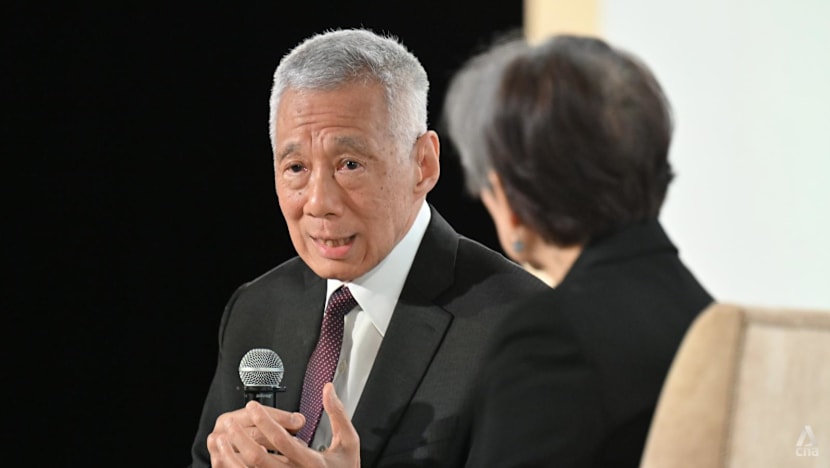
Singapore’s Senior Minister Lee Hsien Loong expressed serious concerns regarding the United States’ recent military actions in Venezuela, emphasizing their implications for international law and the global order. Speaking at the ISEAS-Yusof Ishak Institute’s Regional Outlook Forum on January 8, 2026, Lee stated that such unilateral interventions undermine the principles outlined in the United Nations Charter.
On January 3, the US military operation resulted in the capture of Venezuelan President Nicolas Maduro and his wife, Cilia Flores. Maduro, who faces multiple charges including narco-terrorism, has pleaded not guilty in a New York federal court. While Lee acknowledged the complex situation in Venezuela, he firmly opposed military intervention without proper international authorization, stating, “that does not justify military intervention by one country into another.”
International Law and Its Implications
Lee stressed that the consequences of the US intervention extend beyond immediate military success. He noted that while short-term results might appear favorable, the long-term ramifications for the international system are concerning. “If that is the way the world works, we have a problem,” he remarked, highlighting the potential for destabilization.
Singapore’s Ministry of Foreign Affairs reiterated its commitment to upholding international law, underscoring the importance of state sovereignty and territorial integrity. On January 4, the ministry emphasized that it consistently opposes actions that contravene international law, including military interventions. Lee pointed out that Singapore has previously taken a stand on similar issues, notably supporting a UN resolution condemning Russian aggression against Ukraine in March 2022 and opposing the US invasion of Grenada in 1983.
Shifts in Global Strategy
During his dialogue with Professor Chan Heng Chee, chairperson of the ISEAS board, Lee outlined significant shifts in global strategies over the past year. He indicated that the US has become increasingly willing to act unilaterally when its national interests are at stake. Specific examples include military actions in the Middle East, Nigeria, and more recently, Venezuela.
Lee acknowledged that while these actions may yield immediate results, they pose risks to the broader international framework based on cooperation and coexistence. He warned, “Going to war has grievous and very unpredictable consequences.”
As European nations grapple with their security policies in light of a changing global landscape, Lee noted that they are seeking greater autonomy from US influence. He highlighted that Ukraine, currently engaged in conflict with Russia, must navigate its path forward in this new context.
Looking ahead, Lee remarked that countries in the Asia-Pacific region are also reevaluating their positions. While the US remains a crucial ally in security and economics, China’s growing influence cannot be overlooked. He expressed hope that China would commit to multilateralism and a rules-based international system as it engages with its neighbors.
As the geopolitical landscape evolves, Singapore remains vigilant, aiming to uphold the values of international law and cooperation. Lee underscored the need for stability, stating, “We hope we don’t have any tectonic shocks again,” and emphasized the unpredictable nature of global events ahead.

India Unveils Long-Range Hypersonic Missile Amid Regional Tensions

SK bioscience Launches Global Trial for Universal Sarbecovirus Vaccine

Senegal Coach Pape Thiaw Suspended and Fined After Final Disruption

PAS Denies Abolishing Chairman Post, Contradicts Muhyiddin’s Claim

Mbappé Critiques Real Madrid’s Effort After Benfica Defeat

Thailand’s December Factory Output Surges 2.52% Year-on-Year

Ishita Dutta Reveals Her Parenting Secret: Strong Coffee

Older GPs Express Concerns Over New Digital Health Record Mandate

Urban Jurgensen: A 252-Year Legacy Enters a New Era

South Korea’s Foreign Minister Cho Hyun to Visit China This Week

Starling Bank Plans Secondary Share Sale, Targeting $5.4 Billion Valuation

Munsang College Celebrates 100 Years with Grand Ceremony

PAS Aims to Expand Parliamentary Influence in Upcoming Election

Kenvue Dismisses CEO Thibaut Mongon as Strategic Review Advances

Humanism Camp Engages 250 Youths in Summer Fest 2025

De Minaur Triumphs at Washington Open After Thrilling Comeback

Tupou and Daugunu Join First Nations Squad for Lions Clash

Colombian Senator Miguel Uribe Shows Signs of Recovery After Attack
-
 World5 months ago
South Korea’s Foreign Minister Cho Hyun to Visit China This Week
-
 Business5 months ago
Starling Bank Plans Secondary Share Sale, Targeting $5.4 Billion Valuation
-
 Top Stories5 months ago
Munsang College Celebrates 100 Years with Grand Ceremony
-
 World5 months ago
PAS Aims to Expand Parliamentary Influence in Upcoming Election
-
 Business7 months ago
Kenvue Dismisses CEO Thibaut Mongon as Strategic Review Advances
-
 Lifestyle6 months ago
Humanism Camp Engages 250 Youths in Summer Fest 2025
-
 Sports6 months ago
De Minaur Triumphs at Washington Open After Thrilling Comeback
-
 Sports7 months ago
Tupou and Daugunu Join First Nations Squad for Lions Clash
-
 Top Stories7 months ago
Colombian Senator Miguel Uribe Shows Signs of Recovery After Attack
-

 World7 months ago
ASEAN Gears Up for Historic Joint Meeting of Foreign and Economic Ministers
-

 Health6 months ago
New Study Challenges Assumptions About Aging and Inflammation
-

 Business7 months ago
Oil Prices Surge Following New EU Sanctions on Russia