
Politics
Singapore’s Leaders Remember Lessons from Merger and Separation

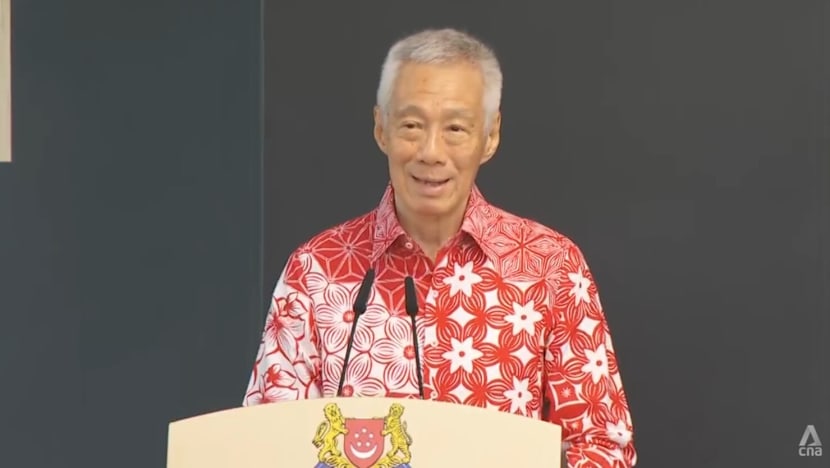
Singapore’s Senior Minister Lee Hsien Loong emphasized the resilience of the nation’s founding leaders during the launch of the Albatross File exhibition at the National Library on December 7, 2023. He highlighted that Singaporeans had confidence in founding Prime Minister Lee Kuan Yew and his team, believing they could not be intimidated into compromising the nation’s interests. This conviction was a critical lesson drawn from Singapore’s historical merger and eventual separation from Malaysia.
Mr. Lee noted that both Mr. Kuan Yew and his team were resolute in the face of pressure from federal leaders, particularly from the radical factions of the United Malays National Organisation (UMNO). “Singaporeans realized that he was prepared to risk all, including his life, to secure their future,” Mr. Lee Hsien Loong stated. He further added that this experience solidified the support of Singapore’s pioneer generation for the People’s Action Party (PAP), a sentiment that has persisted through successive administrations.
The Albatross File Unveiled
In 2023, the Singaporean government made a significant decision to declassify and release documents from the “Albatross File,” a collection of materials compiled by Dr. Goh Keng Swee, who played a key role in negotiating Singapore’s separation from Malaysia in 1965. The file includes handwritten notes and Cabinet papers that Dr. Goh kept during a tumultuous period for the nation. He deemed Malaysia an “albatross” around Singapore’s neck, drawing a parallel to Samuel Taylor Coleridge’s poem, “The Rime of the Ancient Mariner.”
The Albatross File was initially misplaced but rediscovered in a Ministry of Defence storeroom in the 1980s, with its existence being revealed to the public in 1996. Mr. Lee Hsien Loong explained that he made the decision to publish this file and relevant oral histories to document the pivotal separation event comprehensively.
At the exhibition launch, notable figures such as Mr. Ong Pang Boon and Mr. Ng Kah Ting, both surviving members of Singapore’s first parliament, were present. Mr. Ong was among the ten ministers who signed the Separation Agreement, embodying the historical significance of the occasion.
Valuing Racial and Religious Harmony
Mr. Lee Hsien Loong also underscored the importance of not taking Singapore’s racial and religious harmony for granted. He recounted that following the PAP’s election victories in Malay-majority constituencies in September 1963, tensions escalated, culminating in race riots in 1964. Mr. Kuan Yew had expressed profound concern that years of efforts to foster unity among races could be undermined in a brief period.
“From the experience of separation, we learned that identity politics based on race and religion can threaten our unity,” Mr. Lee Hsien Loong remarked. “We will never allow race or religion to break up Singapore.”
Discussing the contentious nature of Singapore’s separation from Malaysia, Mr. Lee Hsien Loong addressed the question of whether Singapore was expelled or chose to leave. While the common narrative suggests Singapore was “kicked out,” he clarified that multiple factors influenced the decision, including Mr. Kuan Yew’s push for a “Malaysian Malaysia,” which was met with resistance from Malaysian authorities.
He illustrated a significant moment from May 27, 1965, when Mr. Kuan Yew delivered a speech in fluent Malay in the Malaysian parliament, a performance that the then-Malaysian Prime Minister Tunku Abdul Rahman later described as “the straw that broke the camel’s back.”
Mr. Lee Hsien Loong recounted personal memories of the days leading to Singapore’s independence. He recalled a conversation between his father and Dr. Goh just days before the separation, emphasizing the gravity of the situation as they discussed the future of the nation. The potential for arrest loomed over Mr. Kuan Yew, but international diplomatic pressure, particularly from British Prime Minister Harold Wilson, helped avert that crisis.
The culmination of these events led to a series of negotiations that ultimately resulted in Singapore’s separation on August 9, 1965. Mr. Lee mentioned that while separating was not Mr. Kuan Yew’s preferred outcome, he worked diligently to ensure a united leadership team as Singapore embarked on its path as an independent nation.
Reflecting on the historical context, Mr. Lee Hsien Loong remarked, “It was hardly foreordained that Singapore would emerge as an independent state. The contradictions between our two societies were profound, and it is likely that had the separation not occurred peacefully, a more tumultuous breakup would have ensued.”
He encouraged Singaporeans to engage with the newly published contents of the Albatross File and visit the exhibition to appreciate the arduous journey towards becoming a sovereign, democratic nation. “You will realize it was hardly foreordained. It was, and still is, a miracle,” Mr. Lee Hsien Loong concluded.

Trump’s National Security Strategy Sparks Controversy and Criticism

Vivacta Bio Unveils Promising Results for GT801 in Non-Hodgkin’s Lymphoma

Piastri Celebrates Summer Sun After Mixed F1 Season in Abu Dhabi

Water Leak at Louvre Damages Rare Egyptian Antiquities Books

Australia Implements Groundbreaking Social Media Ban for Teens

Taiwan’s TAIEX Poised to Approach 35,000 Points Driven by AI Boom

Water Leak at Louvre Damages 400 Egyptian Antiquity Books

Rutter’s Late Equaliser Secures Draw for Brighton Against West Ham

Bank of Maharashtra Lowers Retail Loan Rates After RBI Cut

Kenvue Dismisses CEO Thibaut Mongon as Strategic Review Advances

Humanism Camp Engages 250 Youths in Summer Fest 2025

De Minaur Triumphs at Washington Open After Thrilling Comeback

Tupou and Daugunu Join First Nations Squad for Lions Clash

Colombian Senator Miguel Uribe Shows Signs of Recovery After Attack

ASEAN Gears Up for Historic Joint Meeting of Foreign and Economic Ministers

New Study Challenges Assumptions About Aging and Inflammation

Oil Prices Surge Following New EU Sanctions on Russia

Detaşe-Sabah Violin Ensemble Captivates at Gabala Music Festival
-
 Business5 months ago
Kenvue Dismisses CEO Thibaut Mongon as Strategic Review Advances
-
 Lifestyle4 months ago
Humanism Camp Engages 250 Youths in Summer Fest 2025
-
 Sports4 months ago
De Minaur Triumphs at Washington Open After Thrilling Comeback
-
 Sports5 months ago
Tupou and Daugunu Join First Nations Squad for Lions Clash
-
 Top Stories5 months ago
Colombian Senator Miguel Uribe Shows Signs of Recovery After Attack
-
 World5 months ago
ASEAN Gears Up for Historic Joint Meeting of Foreign and Economic Ministers
-
 Health4 months ago
New Study Challenges Assumptions About Aging and Inflammation
-
 Business5 months ago
Oil Prices Surge Following New EU Sanctions on Russia
-
 Entertainment4 months ago
Detaşe-Sabah Violin Ensemble Captivates at Gabala Music Festival
-

 Entertainment4 months ago
Baku Metro Extends Hours for Justin Timberlake Concert
-
 Business5 months ago
U.S. House Approves Stablecoin Bill, Sends to Trump for Signature
-
 Top Stories5 months ago
Rethinking Singapore’s F&B Regulations Amid Business Closures