
Politics
Revisiting Hannah Arendt’s Insights on Modern Populism

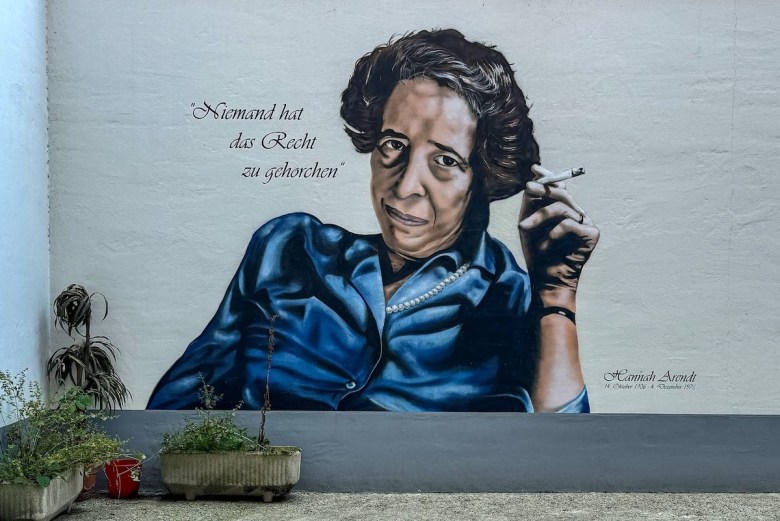
The surge in interest surrounding Hannah Arendt’s seminal work, The Origins of Totalitarianism, reflects an ongoing concern about the rise of far-right populism, particularly in the wake of Donald Trump‘s election in 2016. As the United States approaches the next presidential election in 2025, revisiting Arendt’s analysis offers valuable insights into the political landscape of today.
Arendt, born in 1906 to a secular Jewish family in Germany, became a prominent philosopher and political theorist. Her experiences, particularly her escape from the Gestapo and her subsequent move to the United States in 1941, shaped her understanding of totalitarianism. In her research for Origins, Arendt identified totalitarianism as a new form of governance, characterized by an ideological manipulation of history. For Nazis, history was a battle of races, while Stalinism viewed it through the lens of class struggle. Totalitarian regimes aimed to reshape society by enforcing their distorted vision of reality, thereby undermining individual humanity and personhood.
The implications of her work resonate today, as the political climate reflects similar dynamics. Arendt argued that totalitarianism sought to isolate individuals, erasing the connections that empower communities. She noted that the concentration camps exemplified this ideology by dehumanizing inmates, reducing them to mere numbers, and rendering their lives expendable. This process of isolation and dehumanization is increasingly relevant in current political discourse, where individuals often feel alienated and powerless.
Understanding Today’s Political Landscape
Arendt’s analysis helps illuminate the gradual normalization of extremist views in contemporary politics. A prime example is political antisemitism, once relegated to fringe groups but now increasingly influential in mainstream discourse. This evolution reflects a broader trend where ideas once considered radical gain traction, shaping the agenda of democratic politics.
Anti-immigrant sentiment and growing xenophobia have become prominent features of political rhetoric, paralleling the rise of Islamophobia and antisemitism. Arendt warned that such shifts often begin with seemingly trivial developments that converge into a political catastrophe. The mainstreaming of fringe ideologies indicates a dangerous trend where common sense is replaced by ideological fantasy and paranoia.
The impact of isolation and frustration is palpable in communities feeling left behind, a theme explored in Fiona Hill’s work, There Is Nothing For You Here. These communities, much like those in early 20th-century Europe, are drawn to leaders who promise power and validation, regardless of the violence that may accompany such pursuits.
Arendt’s insights on the dynamics of power and the appeal of authoritarianism provide a crucial framework for understanding contemporary political movements. As governments employ military force domestically while conducting operations abroad, the echoes of Arendt’s warnings about the relentless pursuit of power resonate with alarming clarity.
Lessons for the Future
A critical lesson from Origins is the danger of misinterpreting emerging political phenomena through outdated frameworks. Arendt cautioned against simplifying complex issues as mere nationalistic fervor or economic discontent. Instead, she emphasized the need to confront and understand the unique challenges of the present.
Totalitarianism, as a concept, offers a lens for understanding current realities, but it should not serve as a crutch that distracts from the real issues at hand. The political climate of 2025 demands a nuanced approach that recognizes the distinct nature of contemporary threats.
Arendt advocated for a vigilant and responsive engagement with reality, urging individuals to resist complacency. The greatest lesson is the importance of actively engaging with the present, recognizing that the forces shaping our political landscape are often more complex and insidious than they appear.
As society grapples with the implications of rising populism, the insights of Hannah Arendt remain vital. Her call for an attentive and unpremeditated approach to understanding political realities serves as a reminder that vigilance and critical thinking are essential in safeguarding democracy against the erosion of its foundational principles.

India Unveils Long-Range Hypersonic Missile Amid Regional Tensions

SK bioscience Launches Global Trial for Universal Sarbecovirus Vaccine

Senegal Coach Pape Thiaw Suspended and Fined After Final Disruption

PAS Denies Abolishing Chairman Post, Contradicts Muhyiddin’s Claim

Mbappé Critiques Real Madrid’s Effort After Benfica Defeat

Thailand’s December Factory Output Surges 2.52% Year-on-Year

Ishita Dutta Reveals Her Parenting Secret: Strong Coffee

Older GPs Express Concerns Over New Digital Health Record Mandate

Urban Jurgensen: A 252-Year Legacy Enters a New Era

Regina Martinez Breaks New Ground for Mexico in Cross-Country Skiing

South Korea’s Foreign Minister Cho Hyun to Visit China This Week

Starling Bank Plans Secondary Share Sale, Targeting $5.4 Billion Valuation

Munsang College Celebrates 100 Years with Grand Ceremony

PAS Aims to Expand Parliamentary Influence in Upcoming Election

De Minaur Triumphs at Washington Open After Thrilling Comeback

Kenvue Dismisses CEO Thibaut Mongon as Strategic Review Advances

Humanism Camp Engages 250 Youths in Summer Fest 2025

Colombian Senator Miguel Uribe Shows Signs of Recovery After Attack
-
 Sports2 months ago
Regina Martinez Breaks New Ground for Mexico in Cross-Country Skiing
-
 World7 months ago
South Korea’s Foreign Minister Cho Hyun to Visit China This Week
-
 Business7 months ago
Starling Bank Plans Secondary Share Sale, Targeting $5.4 Billion Valuation
-
 Top Stories7 months ago
Munsang College Celebrates 100 Years with Grand Ceremony
-
 World7 months ago
PAS Aims to Expand Parliamentary Influence in Upcoming Election
-
 Sports8 months ago
De Minaur Triumphs at Washington Open After Thrilling Comeback
-
 Business9 months ago
Kenvue Dismisses CEO Thibaut Mongon as Strategic Review Advances
-
 Lifestyle8 months ago
Humanism Camp Engages 250 Youths in Summer Fest 2025
-
 Top Stories9 months ago
Colombian Senator Miguel Uribe Shows Signs of Recovery After Attack
-

 Sports9 months ago
Tupou and Daugunu Join First Nations Squad for Lions Clash
-

 World9 months ago
ASEAN Gears Up for Historic Joint Meeting of Foreign and Economic Ministers
-

 Health8 months ago
New Study Challenges Assumptions About Aging and Inflammation