
Politics
Parliament Set to Debate Conduct of Workers’ Party Leaders in January

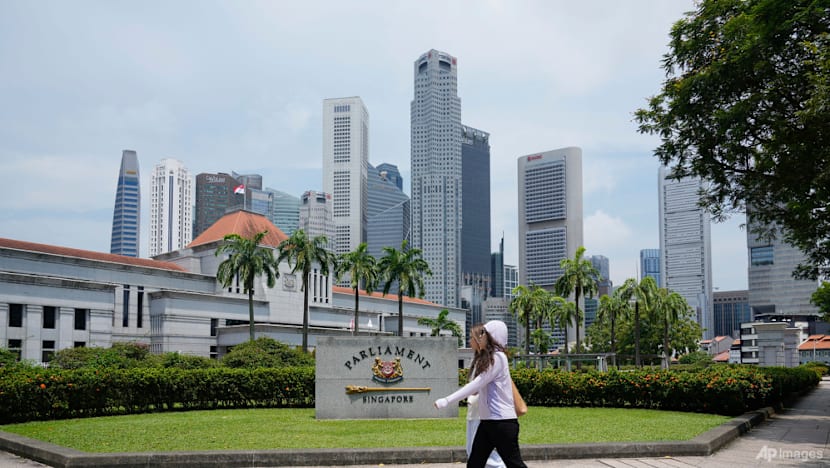
Political analysts anticipate a significant parliamentary debate in January concerning the conduct of leaders from the Workers’ Party (WP). This discussion may lead to various punitive actions, including fines, jail terms, or suspension from Parliament if a motion is passed that criticizes WP leaders for their handling of former member Raeesah Khan’s false statements made in the House.
Last week, Indranee Rajah, the Leader of the House, emphasized the need for Parliament to deliberate on an “appropriate response” to the conviction of WP chief Pritam Singh for lying under oath to a parliamentary committee. On Monday, she confirmed that the conduct of party chair Sylvia Lim and vice-chair Faisal Manap would also be discussed during the next parliamentary sitting.
Experts predict that Parliament will likely debate and vote on a motion regarding this issue. A motion is defined as “a proposal for the House to do something, to order something to be done or to express an opinion on a matter,” according to the Parliament’s official website. The Parliament holds the authority to impose sanctions on Members of Parliament (MPs) who are found in contempt, abuse their privileges, or engage in dishonourable conduct.
Potential Motion Against Pritam Singh
Speaking to Channel News Asia, Eugene Tan, an associate professor of law at Singapore Management University, described the upcoming debate as the “logical conclusion” to a previous parliamentary committee’s investigation into Raeesah Khan’s falsehoods in 2021. The committee had previously withheld sanctions against Mr. Singh and other WP leaders until investigations concluded.
Parliament is expected to address unresolved matters stemming from resolutions passed on February 15, 2022, which pertain to the roles of the three leaders in connection with the untruths spoken by Ms. Khan and subsequent falsehoods communicated to the Committee of Privileges (COP) by Ms. Lim and Mr. Manap. “With the COP’s findings supported by two court judgments, it is likely that Parliament will exercise its punitive powers,” explained Assoc Prof Tan, highlighting the unprecedented nature of the situation.
Another law lecturer, Ben Chester Cheong from the Singapore University of Social Sciences, noted that a formal motion allowing for debate seems to be the most appropriate route, given the public framing of the issue. This approach would enable the House to collectively consider the matter and express a formal view, thus reinforcing parliamentary standards and integrity.
Parliament’s Authority and Responsibilities
Experts also highlighted the separation between the judicial and legislative branches, noting that Parliament’s actions towards WP leaders are distinct from the legal proceedings that determine criminal liability. “Such a motion would likely be framed in institutional terms, focusing on privilege, accountability, and public trust in Parliament,” Mr. Cheong stated.
Assoc Prof Tan clarified that while police or court actions do not limit Parliament’s ability to address its members, the Parliament (Privileges, Immunities and Powers) Act provides the framework for punitive measures in cases of dishonourable conduct. Parliament is unable to remove an MP; only the WP can trigger a resignation or expulsion, which would result in Mr. Singh and Ms. Lim losing their MP seats.
The Act outlines Parliament’s punitive powers for dishonourable conduct, which include reprimands, fines, or suspensions from parliamentary service. The question of Mr. Singh’s position as Leader of the Opposition remains under the purview of Prime Minister Lawrence Wong, who affirmed on May 5, 2023, that Mr. Singh would retain his role. As Leader of the Opposition, Mr. Singh receives confidential briefings from the government on key national security matters, and he is entitled to additional legislative support.
Although Mr. Faisal is not an MP, Parliament retains the authority to take action against him. The Parliament (Privileges, Immunities and Powers) Act states that any contempt by a non-MP may result in a maximum fine of S$50,000 and potential exclusion from parliamentary premises.
Observers note the challenge facing the 15th Parliament in balancing procedural integrity with perceptions of political motivations. Assoc Prof Tan remarked that the House has a responsibility to maintain discipline and decorum while ensuring that breaches are addressed without bias. “Parliament would be remiss in its duty if it did not follow up on the resolutions passed in 2022,” he concluded.

India Unveils Long-Range Hypersonic Missile Amid Regional Tensions

SK bioscience Launches Global Trial for Universal Sarbecovirus Vaccine

Senegal Coach Pape Thiaw Suspended and Fined After Final Disruption

PAS Denies Abolishing Chairman Post, Contradicts Muhyiddin’s Claim

Mbappé Critiques Real Madrid’s Effort After Benfica Defeat

Thailand’s December Factory Output Surges 2.52% Year-on-Year

Ishita Dutta Reveals Her Parenting Secret: Strong Coffee

Older GPs Express Concerns Over New Digital Health Record Mandate

Urban Jurgensen: A 252-Year Legacy Enters a New Era

Regina Martinez Breaks New Ground for Mexico in Cross-Country Skiing

South Korea’s Foreign Minister Cho Hyun to Visit China This Week

Starling Bank Plans Secondary Share Sale, Targeting $5.4 Billion Valuation

Munsang College Celebrates 100 Years with Grand Ceremony

PAS Aims to Expand Parliamentary Influence in Upcoming Election

De Minaur Triumphs at Washington Open After Thrilling Comeback

Kenvue Dismisses CEO Thibaut Mongon as Strategic Review Advances

Humanism Camp Engages 250 Youths in Summer Fest 2025

Colombian Senator Miguel Uribe Shows Signs of Recovery After Attack
-
 Sports2 months ago
Regina Martinez Breaks New Ground for Mexico in Cross-Country Skiing
-
 World6 months ago
South Korea’s Foreign Minister Cho Hyun to Visit China This Week
-
 Business6 months ago
Starling Bank Plans Secondary Share Sale, Targeting $5.4 Billion Valuation
-
 Top Stories6 months ago
Munsang College Celebrates 100 Years with Grand Ceremony
-
 World6 months ago
PAS Aims to Expand Parliamentary Influence in Upcoming Election
-
 Sports8 months ago
De Minaur Triumphs at Washington Open After Thrilling Comeback
-
 Business8 months ago
Kenvue Dismisses CEO Thibaut Mongon as Strategic Review Advances
-
 Lifestyle8 months ago
Humanism Camp Engages 250 Youths in Summer Fest 2025
-
 Top Stories8 months ago
Colombian Senator Miguel Uribe Shows Signs of Recovery After Attack
-

 Sports8 months ago
Tupou and Daugunu Join First Nations Squad for Lions Clash
-

 World8 months ago
ASEAN Gears Up for Historic Joint Meeting of Foreign and Economic Ministers
-

 Health8 months ago
New Study Challenges Assumptions About Aging and Inflammation