
Politics
Pakistan Restructures Nuclear Command Amid 27th Amendment Debate

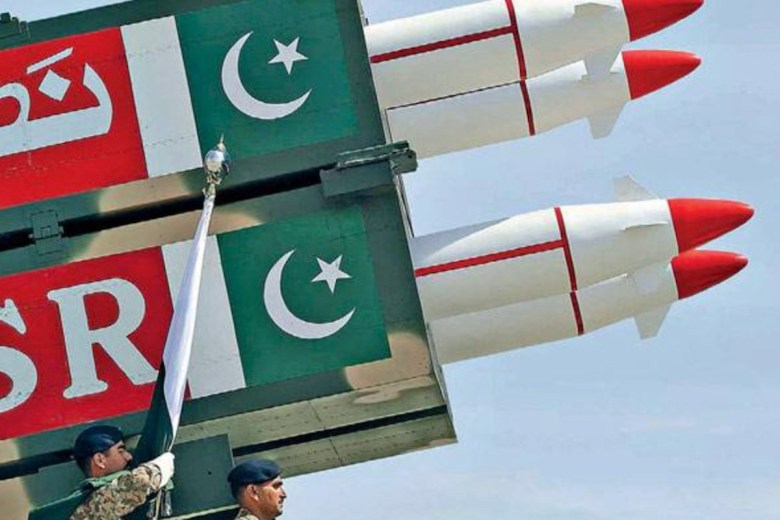
The discussion surrounding Pakistan’s nuclear command has intensified following the introduction of the 27th Amendment and its implications for Article 243. This amendment has sparked debates focused on the reorganization of the National Command Authority (NCA) and the strategic oversight of the country’s nuclear arsenal. Despite the surrounding speculation, the core structure of Pakistan’s nuclear command remains intact, with the federal government maintaining “control and command” of the armed forces.
The current framework designates the Prime Minister as the chair of the NCA, supported by the Strategic Plans Division (SPD), which acts as its secretariat. With the forthcoming amendments to the NCA Act (2010), which are set to align with constitutional changes, the centralized nuclear command will continue to function effectively. The authority to use nuclear weapons remains located at the highest level, specifically under the prime minister-led NCA, ensuring that decisions are made collectively and with robust authentication measures in place.
Understanding the Changes in Command Structure
Since the establishment of the NCA framework in 1998, the command structure has remained consistent. The role of oversight has traditionally been held by the Chairman Joint Chiefs of Staff Committee (CJCSC), typically an Army officer, while the SPD has also been led by an Army general. The recent amendment abolishes the CJCSC role and recognizes the Chief of Army Staff (COAS) as the Chief of Defence Forces (CDF). This change aims to enhance integration across military branches without altering the civilian oversight of nuclear authority.
The amendment introduces a new position, the Commander, National Strategic Command (CNSC), appointed by the Prime Minister. This adjustment is viewed as an organizational update rather than a shift in nuclear authority. The amendment does not transfer nuclear command from civilian to military hands; instead, it seeks to streamline operations in a rapidly evolving military landscape.
Critics have expressed concern regarding the need for the law to align with the constitutional text. While the NCA Act still references the now-abolished CJCSC, this is a standard procedure that does not signify a lapse in command integrity. Pakistan has a history of successfully navigating similar changes without jeopardizing its nuclear command structure.
Clarifying Misconceptions About Nuclear Authority
Some commentators, notably in a recent article in Foreign Policy, have characterized the 27th Amendment as a fundamental alteration of Pakistan’s nuclear command. They assert that it jeopardizes the neutrality of inter-service relations by diminishing the roles of the Air Force and Navy in favor of an Army-centric structure. However, the amendment is designed to promote jointness among the armed services, ensuring that integration enhances operational effectiveness without sacrificing service autonomy.
The argument that removing the CJCSC undermines a neutral bridge between services misrepresents the intent behind the changes. The establishment of a high-level integrator is aimed at fostering collaboration while retaining the civilian apex of nuclear authority, which remains a cornerstone of Pakistan’s nuclear policy.
Moreover, the critique that military training institutions lack the necessary nuclear literacy overlooks the specialized nature of training programs. The Command & Staff College (C&SC) focuses on operational strategies rather than nuclear development specifics, while the National Defence University (NDU) provides advanced instruction on national security policies, including nuclear strategy at a conceptual level.
As Pakistan moves forward with implementing the 27th Amendment, the emphasis should be on the continuous improvement of its strategic command structure. Integration among services is essential for modern military operations, enabling each branch to function effectively within its designated purview.
In conclusion, the adjustments introduced by the 27th Amendment represent an evolution in Pakistan’s military command rather than a radical shift in nuclear authority. The foundational principles that govern the country’s nuclear posture remain firmly in place, ensuring that the capabilities are both accessible when required and safeguarded against unauthorized use. As the legal alignment progresses, it is vital to recognize that Pakistan’s nuclear command will continue to be characterized by stable civilian oversight and institutional discipline.

India Unveils Long-Range Hypersonic Missile Amid Regional Tensions

SK bioscience Launches Global Trial for Universal Sarbecovirus Vaccine

Senegal Coach Pape Thiaw Suspended and Fined After Final Disruption

PAS Denies Abolishing Chairman Post, Contradicts Muhyiddin’s Claim

Mbappé Critiques Real Madrid’s Effort After Benfica Defeat

Thailand’s December Factory Output Surges 2.52% Year-on-Year

Ishita Dutta Reveals Her Parenting Secret: Strong Coffee

Older GPs Express Concerns Over New Digital Health Record Mandate

Urban Jurgensen: A 252-Year Legacy Enters a New Era

Regina Martinez Breaks New Ground for Mexico in Cross-Country Skiing

South Korea’s Foreign Minister Cho Hyun to Visit China This Week

Starling Bank Plans Secondary Share Sale, Targeting $5.4 Billion Valuation

Munsang College Celebrates 100 Years with Grand Ceremony

PAS Aims to Expand Parliamentary Influence in Upcoming Election

De Minaur Triumphs at Washington Open After Thrilling Comeback

Kenvue Dismisses CEO Thibaut Mongon as Strategic Review Advances

Humanism Camp Engages 250 Youths in Summer Fest 2025

Colombian Senator Miguel Uribe Shows Signs of Recovery After Attack
-
 Sports3 months ago
Regina Martinez Breaks New Ground for Mexico in Cross-Country Skiing
-
 World7 months ago
South Korea’s Foreign Minister Cho Hyun to Visit China This Week
-
 Business7 months ago
Starling Bank Plans Secondary Share Sale, Targeting $5.4 Billion Valuation
-
 Top Stories7 months ago
Munsang College Celebrates 100 Years with Grand Ceremony
-
 World7 months ago
PAS Aims to Expand Parliamentary Influence in Upcoming Election
-
 Sports8 months ago
De Minaur Triumphs at Washington Open After Thrilling Comeback
-
 Business9 months ago
Kenvue Dismisses CEO Thibaut Mongon as Strategic Review Advances
-
 Lifestyle8 months ago
Humanism Camp Engages 250 Youths in Summer Fest 2025
-
 Top Stories9 months ago
Colombian Senator Miguel Uribe Shows Signs of Recovery After Attack
-

 Sports9 months ago
Tupou and Daugunu Join First Nations Squad for Lions Clash
-

 World9 months ago
ASEAN Gears Up for Historic Joint Meeting of Foreign and Economic Ministers
-

 Health8 months ago
New Study Challenges Assumptions About Aging and Inflammation