
Politics
Myanmar Holds Controversial Elections Amid Ongoing Conflict

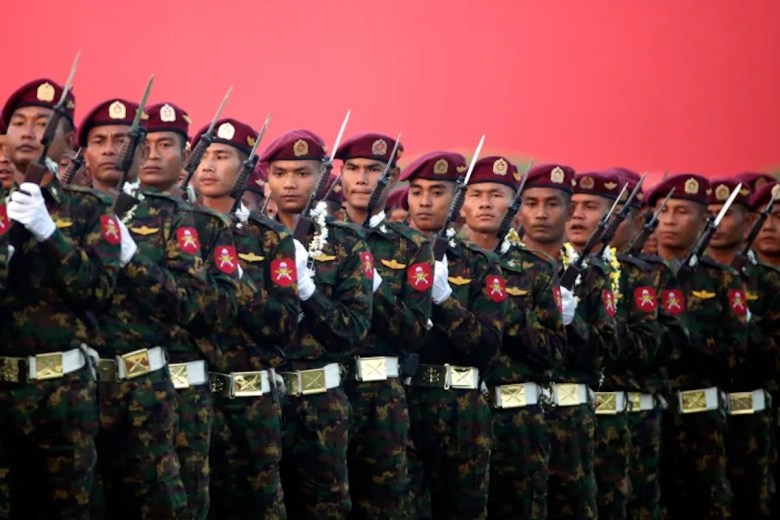
On December 28, 2025, Myanmar will conduct the first phase of its general elections since the military coup on February 1, 2021. Following several extensions, the State Administration Council, which is under military control, lifted the state of emergency on July 31. This action led to the creation of a State Security and Peace Commission and a caretaker cabinet, with Prime Minister Nyo Saw at the helm. Senior General Min Aung Hlaing remains the commander-in-chief and acting president. The Union Election Commission was reconstituted on the same day to facilitate the election process, which aims to conclude by January 25, 2026.
Despite this timeline, the elections are already facing significant credibility issues. ASEAN has opted not to send observers, raising questions about the legitimacy of the electoral process. Official statements indicate that elections will not be held in approximately 15% of constituencies. A large number of political parties have either been dissolved or disqualified, leaving the military’s proxy, the Union Solidarity and Development Party (USDP), as the only major party participating. The USDP had previously been rejected in the 2015 and 2020 elections, where the National League for Democracy (NLD) won over 80% of the seats.
The upcoming elections are rooted in the aftermath of the 2021 coup, which ousted the NLD government led by Aung San Suu Kyi. The military’s actions have ignited widespread protests and violence across the country, leading to a civil conflict that includes the newly formed People’s Defense Forces (PDFs) and various ethnic armed organizations. The violence remains pervasive, particularly in regions like Sagaing, Chin, Kachin, and Rakhine states, where heavy fighting continues and large areas remain outside military control. A tragic incident on December 10, 2025, when an airstrike hit a hospital in Mrauk-U, resulted in the deaths of 33 to 34 civilians and injuries to approximately 70 to 80 others, highlighting the ongoing humanitarian crisis.
Myanmar has over 34 million eligible voters according to the 2024 provisional census, but many may not be able to participate due to security concerns or political repression. The Election Commission recently released voter lists that have faced public skepticism. In contrast to the 71% voter turnout in the 2020 elections, early indicators suggest a significant decline in interest for the forthcoming elections, driven by insecurity and intimidation.
The political landscape for the 2025 elections is severely restricted by legal and administrative challenges. Under the 2023 Political Party Registration Law, political parties must meet strict criteria to register, effectively sidelining many dissident and pro-democracy organizations. The NLD was dissolved in 2023 after declining to re-register, which automatically disenfranchised one of Myanmar’s most popular political entities. Other ethnic and opposition parties have similarly faced disqualification, leaving only a few parties, primarily aligned with the military, to contest in the elections.
Reports indicate that as few as nine out of 61 registered parties may participate. Among them are military-aligned parties like the USDP and the National Unity Party (NUP), along with a small number of lesser-known groups. The only non-military entity permitted to run is the People’s Party, led by activist Ko Ko Gyi, although its independence remains in question. This restrictive environment ensures that the electoral outcomes will likely favor pro-military forces, limiting any meaningful opposition in the future national assembly.
To further suppress dissent, the junta has implemented the Law on the Protection of Multiparty Democratic General Elections, which penalizes nearly all criticism of the electoral process. Offenders can face sentences ranging from three years to life imprisonment, with severe penalties for violence against election workers or polling disruptions, including the death penalty. According to Amnesty International, at least 229 individuals have already been charged under this law for alleged electoral sabotage, including artists and social media users.
In a pre-election gesture, the military released over 3,000 political prisoners and dropped charges against several thousand more, framing this as a move to promote voter participation. However, the situation of high-profile detainees like Aung San Suu Kyi remains uncertain. Her son has expressed concerns over her safety, noting a lack of communication for years, despite junta claims of her good health.
International reactions to the elections are sharply divided. Western democracies and human rights organizations have denounced the electoral process as a means of legitimizing military rule. In October 2025, over 300 civil society and labor unions urged ASEAN and other governments to reject the elections entirely. The United Nations Office of the High Commissioner for Human Rights (OHCHR) condemned the elections as a “charade,” warning that they could exacerbate divisions and deepen repression.
While ASEAN has emphasized the need for fair, credible, and transparent elections, it has also acknowledged that “no substantial progress” has been made on its Five-Point Consensus established in 2021, which calls for an end to violence and inclusive dialogue. The lack of ASEAN observers has further diminished any claims to legitimacy.
In contrast, China has emerged as the lone supporter of the military-run elections, asserting that negotiated truces with rebels have improved conditions for voting. This aligns with Beijing’s strategic interest in maintaining stability along its borders, and there are reports of Chinese support for military airstrikes against rebel positions.
As Myanmar prepares for this highly contentious electoral exercise, significant challenges lie ahead. The elections are marred by geographical exclusions, party deregistrations, and a backdrop of civil war, casting serious doubts on their democratic integrity. Although these elections could signal a return to electoral politics, they are fundamentally about the military’s effort to maintain control under conditions deemed incompatible with democratic norms. The outcome will likely serve as an indicator of the junta’s enduring grip on power in Myanmar.

India Unveils Long-Range Hypersonic Missile Amid Regional Tensions

SK bioscience Launches Global Trial for Universal Sarbecovirus Vaccine

Senegal Coach Pape Thiaw Suspended and Fined After Final Disruption

PAS Denies Abolishing Chairman Post, Contradicts Muhyiddin’s Claim

Mbappé Critiques Real Madrid’s Effort After Benfica Defeat

Thailand’s December Factory Output Surges 2.52% Year-on-Year

Ishita Dutta Reveals Her Parenting Secret: Strong Coffee

Older GPs Express Concerns Over New Digital Health Record Mandate

Urban Jurgensen: A 252-Year Legacy Enters a New Era

Regina Martinez Breaks New Ground for Mexico in Cross-Country Skiing

South Korea’s Foreign Minister Cho Hyun to Visit China This Week

Starling Bank Plans Secondary Share Sale, Targeting $5.4 Billion Valuation

Munsang College Celebrates 100 Years with Grand Ceremony

PAS Aims to Expand Parliamentary Influence in Upcoming Election

De Minaur Triumphs at Washington Open After Thrilling Comeback

Kenvue Dismisses CEO Thibaut Mongon as Strategic Review Advances

Humanism Camp Engages 250 Youths in Summer Fest 2025

Colombian Senator Miguel Uribe Shows Signs of Recovery After Attack
-
 Sports2 months ago
Regina Martinez Breaks New Ground for Mexico in Cross-Country Skiing
-
 World6 months ago
South Korea’s Foreign Minister Cho Hyun to Visit China This Week
-
 Business7 months ago
Starling Bank Plans Secondary Share Sale, Targeting $5.4 Billion Valuation
-
 Top Stories7 months ago
Munsang College Celebrates 100 Years with Grand Ceremony
-
 World6 months ago
PAS Aims to Expand Parliamentary Influence in Upcoming Election
-
 Sports8 months ago
De Minaur Triumphs at Washington Open After Thrilling Comeback
-
 Business8 months ago
Kenvue Dismisses CEO Thibaut Mongon as Strategic Review Advances
-
 Lifestyle8 months ago
Humanism Camp Engages 250 Youths in Summer Fest 2025
-
 Top Stories8 months ago
Colombian Senator Miguel Uribe Shows Signs of Recovery After Attack
-

 Sports8 months ago
Tupou and Daugunu Join First Nations Squad for Lions Clash
-
 World8 months ago
ASEAN Gears Up for Historic Joint Meeting of Foreign and Economic Ministers
-

 Health8 months ago
New Study Challenges Assumptions About Aging and Inflammation