
Politics
Mark Carney Aims to Revive Canada-China Relations During Visit

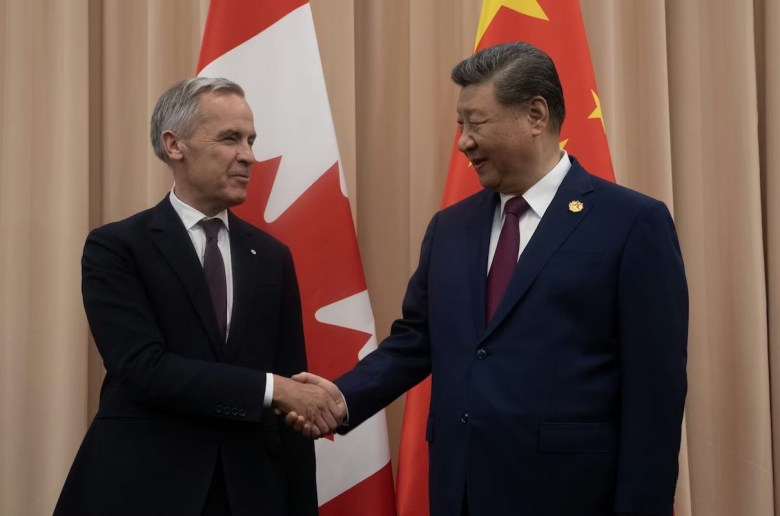
Prime Minister Mark Carney arrived in Beijing this week, aiming to stabilize and improve the strained relations between Canada and China. This visit comes more than three years after Chinese President Xi Jinping told Canadian Prime Minister Justin Trudeau that the two nations needed to “create the conditions first” for constructive collaboration. Despite some diplomatic engagements since then, significant progress remains elusive, primarily due to ongoing issues such as the Meng Wanzhou case and other disputes relating to foreign interference.
Carney’s visit follows recent diplomatic activities, including Foreign Minister Anita Anand‘s trip to Beijing and an informal meeting between Carney and Xi during the APEC summit in October 2023. These events suggest a potential thaw in relations, providing a backdrop for Carney’s discussions in China.
Trade Talks at the Forefront
Trade is expected to dominate Carney’s agenda, particularly the push for China to lift anti-dumping duties on Canadian canola oil. While there is cautious optimism for positive outcomes, experts emphasize that immediate breakthroughs are unlikely. Historical precedents show that economic sanctions typically require extensive negotiations rather than instant resolutions.
For example, Australia faced prolonged challenges in its trade dealings with China, where restrictions on coal and barley were not lifted during high-level visits but rather followed sustained diplomatic efforts. Carney’s visit may serve as an opening for dialogue, facilitating future discussions rather than delivering instant results.
The canola oil dispute exemplifies the complexities of the Canada-China relationship. China’s tariffs were a reaction to Canada’s duties on Chinese electric vehicles, indicating that reciprocal actions are central to any progress. Consequently, Canada must signal its willingness to negotiate before expecting concessions from China.
Navigating Domestic and International Pressures
Carney’s engagement with China places his government under scrutiny at home, where Canadians are keen to see if this approach can both advance economic interests and safeguard national security. China anticipates a sustained commitment from Ottawa to improve relations, all while balancing the pressures of the ongoing American strategy toward China, which continues to influence Canada’s policy decisions.
Middle powers like Canada face the challenge of balancing competing national interests. Australia’s recent approach to China, characterized by pragmatic engagement without strategic concessions, illustrates that such a balance is achievable. For Canada, this means investing in effective diplomacy rather than resorting to inflammatory rhetoric for domestic political gain.
To achieve this, Carney’s administration will need to focus on coherent messaging, strengthen cabinet unity regarding China policy, and manage domestic political narratives that could affect diplomatic relations. Re-established communication channels should be prioritized for addressing disagreements, facilitating negotiated solutions rather than relying on public pressure.
The shift in Canada’s diplomatic strategy does not suggest a retreat from its core strategic commitments. The Carney government must reinforce that stabilizing ties with China aligns with upholding national security and democratic values. This involves integrating China policy within Canada’s broader Indo-Pacific strategy and continuing to bolster security cooperation with regional partners.
As Canada moves forward, it must also enhance institutional safeguards against foreign interference, ensuring transparent communication that builds public confidence in its institutions while addressing concerns about China.
Ultimately, Carney’s visit to China represents a significant step toward stabilizing bilateral relations, emphasizing engagement from a position of institutional strength rather than strategic compromise. The coming months will reveal how effectively Canada can navigate this complex landscape while advancing its national interests.

India Unveils Long-Range Hypersonic Missile Amid Regional Tensions

SK bioscience Launches Global Trial for Universal Sarbecovirus Vaccine

Senegal Coach Pape Thiaw Suspended and Fined After Final Disruption

PAS Denies Abolishing Chairman Post, Contradicts Muhyiddin’s Claim

Mbappé Critiques Real Madrid’s Effort After Benfica Defeat

Thailand’s December Factory Output Surges 2.52% Year-on-Year

Ishita Dutta Reveals Her Parenting Secret: Strong Coffee

Older GPs Express Concerns Over New Digital Health Record Mandate

Urban Jurgensen: A 252-Year Legacy Enters a New Era

Regina Martinez Breaks New Ground for Mexico in Cross-Country Skiing

South Korea’s Foreign Minister Cho Hyun to Visit China This Week

Starling Bank Plans Secondary Share Sale, Targeting $5.4 Billion Valuation

Munsang College Celebrates 100 Years with Grand Ceremony

PAS Aims to Expand Parliamentary Influence in Upcoming Election

De Minaur Triumphs at Washington Open After Thrilling Comeback

Kenvue Dismisses CEO Thibaut Mongon as Strategic Review Advances

Humanism Camp Engages 250 Youths in Summer Fest 2025

Colombian Senator Miguel Uribe Shows Signs of Recovery After Attack
-
 Sports2 months ago
Regina Martinez Breaks New Ground for Mexico in Cross-Country Skiing
-
 World7 months ago
South Korea’s Foreign Minister Cho Hyun to Visit China This Week
-
 Business7 months ago
Starling Bank Plans Secondary Share Sale, Targeting $5.4 Billion Valuation
-
 Top Stories7 months ago
Munsang College Celebrates 100 Years with Grand Ceremony
-
 World7 months ago
PAS Aims to Expand Parliamentary Influence in Upcoming Election
-
 Sports8 months ago
De Minaur Triumphs at Washington Open After Thrilling Comeback
-
 Business9 months ago
Kenvue Dismisses CEO Thibaut Mongon as Strategic Review Advances
-
 Lifestyle8 months ago
Humanism Camp Engages 250 Youths in Summer Fest 2025
-
 Top Stories9 months ago
Colombian Senator Miguel Uribe Shows Signs of Recovery After Attack
-

 Sports9 months ago
Tupou and Daugunu Join First Nations Squad for Lions Clash
-

 World9 months ago
ASEAN Gears Up for Historic Joint Meeting of Foreign and Economic Ministers
-

 Health8 months ago
New Study Challenges Assumptions About Aging and Inflammation