
Politics
Lee Hsien Loong Reflects on Singapore’s Founding Leaders’ Legacy

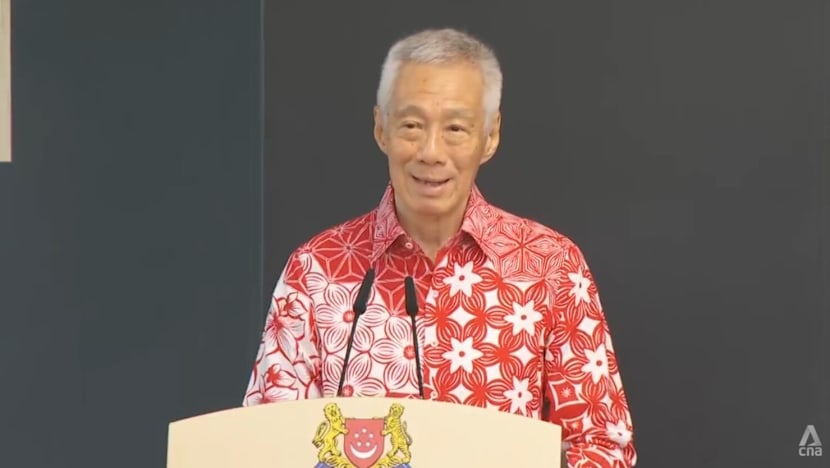
Singapore’s Senior Minister, Lee Hsien Loong, underscored the resilience of the nation’s founding leaders during the launch of the Albatross File exhibition on December 7, 2023, at the National Library. He asserted that the founding Prime Minister, Lee Kuan Yew, and his team could not be intimidated into compromising Singapore’s interests, especially during the critical period surrounding the country’s merger and separation from Malaysia.
During his address, Lee Hsien Loong recalled how Lee Kuan Yew was prepared to risk everything, including his life, for the future of Singapore. He emphasized that this determination garnered significant support from the early generation of Singaporeans, particularly as they witnessed the political tensions with the United Malays National Organisation (UMNO) and the challenges posed by its more radical factions, known as the “ultras.”
Lee Hsien Loong remarked, “No Prime Minister of Singapore has ever allowed any force or power, whether foreign or domestic, to intimidate us into compromising our national interest or sovereignty.” This commitment to sovereignty has been a guiding principle for Singapore’s leadership since its inception.
The Albatross File: A Historical Insight
The Albatross File, a collection of crucial documents and notes kept by the late Dr Goh Keng Swee, was declassified earlier this year. Dr Goh, a pivotal figure in negotiating Singapore’s separation from Malaysia in 1965, had labeled the association with Malaysia as an “albatross” around Singapore’s neck, drawing inspiration from Samuel Taylor Coleridge’s poem, The Rime of the Ancient Mariner.
Initially lost, the file resurfaced in a Ministry of Defence storeroom during the 1980s, with the public first learning about it in 1996. Lee Hsien Loong made the decision to release these documents in an effort to provide a comprehensive account of Singapore’s journey toward independence. He stated that this initiative aims to document a “seminal event in our independence journey.”
At the exhibition’s launch, notable figures included Ong Pang Boon, one of the original signatories of the Separation Agreement, and Ng Kah Ting, both of whom represent the early parliament that convened in December 1965. Family members of other signatories also attended, emphasizing the ongoing significance of this historical moment.
The Fragility of Harmony
During his speech, Lee Hsien Loong also highlighted a critical lesson from Singapore’s separation: the importance of maintaining racial and religious harmony. He reflected on the period from September 1963, when the People’s Action Party (PAP) won all three Malay-majority seats, during which the UMNO ultras instigated deep-seated distrust between the Malay and Chinese communities, culminating in race riots in 1964.
Lee Kuan Yew had previously expressed concern over the fragility of communal harmony, stating, “This air of inter-racial harmony and trust is very fragile. It can be snapped, broken, smashed.” Lee Hsien Loong reiterated this sentiment, affirming Singapore’s commitment to ensuring that race and religion would never lead to division within the nation.
A pivotal question around the separation is whether Singapore was forcibly ejected from Malaysia or actively sought independence. Lee Hsien Loong indicated that while the popular belief is that Singapore was kicked out, the reality was more complex.
He referred to statements made by then-Malaysian Prime Minister Tunku Abdul Rahman, who claimed the decision to expel Singapore was his alone. However, numerous factors influenced this decision, such as Lee Kuan Yew’s advocacy for a “Malaysian Malaysia,” which ultimately strained relations between the two nations.
In a significant address in the Malaysian parliament on May 27, 1965, Lee Kuan Yew spoke fluently in Malay. This moment was later described by Tunku Abdul Rahman as “the straw that broke the camel’s back,” leading to increased tensions between Singapore and the Malaysian federal government.
Remembering those tense days, Lee Hsien Loong recounted a personal anecdote from his youth, reflecting on conversations with his father regarding the potential dangers Lee Kuan Yew faced from federal authorities. Fortunately, warnings from then-British Prime Minister Harold Wilson regarding the repercussions of arresting Lee Kuan Yew led to a decision to negotiate the separation.
By the end of June 1965, discussions between Tunku’s deputy, Tun Razak, and Dr Goh began, leading to the drafting of separation documents. Despite initial ambitions for a looser federation, Lee Kuan Yew ultimately recognized the necessity of a clean break, as Tun Razak advocated for a “total hiving off” of Singapore.
As the situation unfolded, Lee Kuan Yew remained conflicted about the separation, a sentiment that Lee Hsien Loong vividly illustrated through memories of his father’s late-night deliberations before Singapore’s independence on August 9, 1965.
The emotional weight of separation was palpable, with Lee Kuan Yew famously breaking down at a press conference, marking a moment of profound anguish for Singapore’s founding leader.
“Singapore was on its own,” Lee Hsien Loong stated, encapsulating the gravity of the moment. “The albatross had finally loosed off our neck.” He noted that historians have characterized separation as a mutually negotiated outcome, acknowledging that it was not the preferred choice for Lee Kuan Yew, who sought to maintain unity.
Reflecting on independence, Lee Hsien Loong remarked that it was “hardly preordained.” He acknowledged that, had separation not occurred in 1965, the outcome might have been more turbulent. “The contradictions between the two societies were so profound that they could not have been resolved without a parting of ways,” he stated.
In conclusion, the declassified contents of the Albatross File have been published in a book, and Lee Hsien Loong encouraged Singaporeans to explore the exhibition to understand the complex journey toward sovereignty. “It was, and still is, a miracle,” he affirmed, advocating for a deeper appreciation of Singapore’s unique history and achievements.

Baku Welcomes Premiere of Film “Sermon into the Void”

Taiwan Continues Universal Hepatitis B Vaccination for Newborns

Uttar Pradesh Becomes Startup Powerhouse with 18,568 Active Ventures

Baku Hosts Premiere of “Sermon into the Void” Film

Taiwan Continues Universal Hepatitis B Vaccination for Newborns

Uttar Pradesh Surges with 18,568 Startups, Becomes Startup Hub

Singapore’s Leaders Remember Lessons from Merger and Separation

Vivacta Bio Reveals Positive Phase 1 Results for GT801 at ASH 2025

Michael Neser Claims Five Wickets in Ashes Comeback at Gabba

Kenvue Dismisses CEO Thibaut Mongon as Strategic Review Advances

Humanism Camp Engages 250 Youths in Summer Fest 2025

De Minaur Triumphs at Washington Open After Thrilling Comeback

Tupou and Daugunu Join First Nations Squad for Lions Clash

Colombian Senator Miguel Uribe Shows Signs of Recovery After Attack

ASEAN Gears Up for Historic Joint Meeting of Foreign and Economic Ministers

New Study Challenges Assumptions About Aging and Inflammation

Oil Prices Surge Following New EU Sanctions on Russia

Detaşe-Sabah Violin Ensemble Captivates at Gabala Music Festival
-
 Business5 months ago
Kenvue Dismisses CEO Thibaut Mongon as Strategic Review Advances
-
 Lifestyle4 months ago
Humanism Camp Engages 250 Youths in Summer Fest 2025
-
 Sports4 months ago
De Minaur Triumphs at Washington Open After Thrilling Comeback
-
 Sports5 months ago
Tupou and Daugunu Join First Nations Squad for Lions Clash
-
 Top Stories5 months ago
Colombian Senator Miguel Uribe Shows Signs of Recovery After Attack
-
 World5 months ago
ASEAN Gears Up for Historic Joint Meeting of Foreign and Economic Ministers
-
 Health4 months ago
New Study Challenges Assumptions About Aging and Inflammation
-
 Business5 months ago
Oil Prices Surge Following New EU Sanctions on Russia
-
 Entertainment4 months ago
Detaşe-Sabah Violin Ensemble Captivates at Gabala Music Festival
-

 Entertainment4 months ago
Baku Metro Extends Hours for Justin Timberlake Concert
-
 Business5 months ago
U.S. House Approves Stablecoin Bill, Sends to Trump for Signature
-

 Top Stories5 months ago
Rethinking Singapore’s F&B Regulations Amid Business Closures