
Politics
Japanese Shogi Player Challenges Association’s Pregnancy Policy

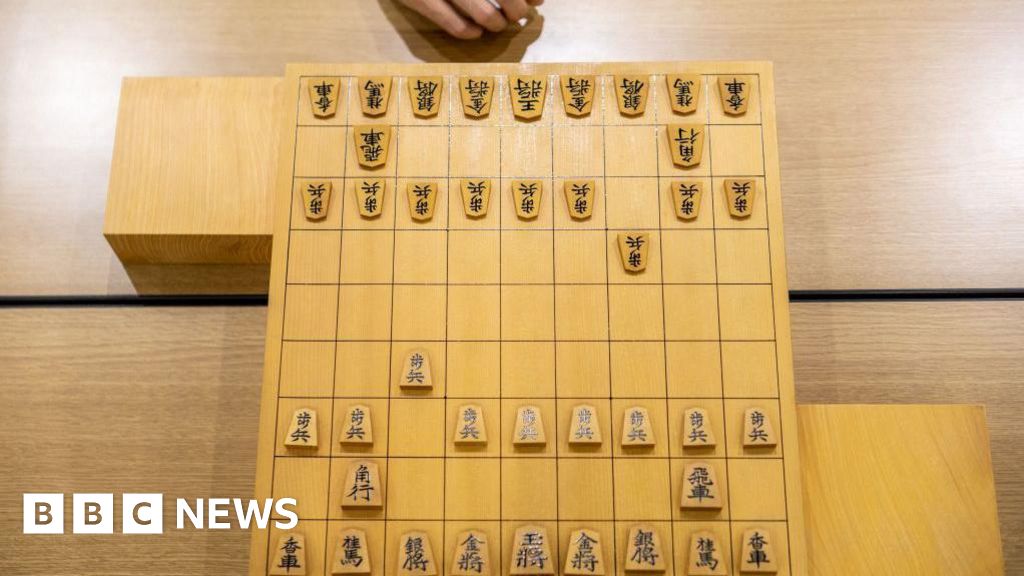
A prominent Japanese shogi player, Kana Fukuma, has drawn attention to the Shogi Association’s controversial policy that prohibits pregnant players from competing in title matches during a critical period around their expected due dates. Currently, the rules dictate that female players who become pregnant must withdraw from competitions, leading to the loss of titles and opportunities. Fukuma has publicly criticized this policy, stating it significantly limits reproductive rights for female players.
At a news conference on Wednesday, Fukuma expressed her concerns about the implications of the rule. “I hope the body will consider allowing female players to take time off before their due dates without suffering demotion,” she stated. According to the existing regulations, a pregnant player cannot compete during a 14-week period, which includes six weeks before childbirth and eight weeks after.
Fukuma, who has enjoyed a successful career in shogi since 2003, revealed the personal impact of the policy. “I hesitated to have a child while pursuing my career in shogi, which is everything to me,” she shared with reporters, as reported by Kyodo News. The 33-year-old faced health-related challenges during her pregnancy, which forced her to withdraw from several tournaments. She is expecting her first child in December 2024.
In a formal request to the Shogi Association, Fukuma outlined her recommendations for policy changes. She urged the association to adjust match schedules or locations to accommodate pregnant players and suggested that women should be allowed to compete if their health permits. Furthermore, she called for measures to ensure that female competitors do not forfeit titles during their maternity leave.
The Shogi Association has acknowledged Fukuma’s concerns and indicated a willingness to reconsider the rules following discussions with experts. They emphasized that any changes will take into account the safety of the mother and the fairness of title matches.
Responses to this issue have varied on social media, with some users labeling the current rules as “misogynistic.” Others have drawn parallels to policies in other sports, such as tennis, where players are often granted “protected rankings” to assist those returning from maternity leave or long-term injuries. This approach allows them to enter major tournaments using their previous rankings.
As discussions continue within the Shogi Association, Fukuma’s advocacy highlights the ongoing challenges faced by female athletes in balancing career aspirations with family planning. The outcome of this dialogue may have significant implications for the future of women in the sport.

India Unveils Long-Range Hypersonic Missile Amid Regional Tensions

SK bioscience Launches Global Trial for Universal Sarbecovirus Vaccine

Senegal Coach Pape Thiaw Suspended and Fined After Final Disruption

PAS Denies Abolishing Chairman Post, Contradicts Muhyiddin’s Claim

Mbappé Critiques Real Madrid’s Effort After Benfica Defeat

Thailand’s December Factory Output Surges 2.52% Year-on-Year

Ishita Dutta Reveals Her Parenting Secret: Strong Coffee

Older GPs Express Concerns Over New Digital Health Record Mandate

Urban Jurgensen: A 252-Year Legacy Enters a New Era

South Korea’s Foreign Minister Cho Hyun to Visit China This Week

Starling Bank Plans Secondary Share Sale, Targeting $5.4 Billion Valuation

Munsang College Celebrates 100 Years with Grand Ceremony

PAS Aims to Expand Parliamentary Influence in Upcoming Election

Kenvue Dismisses CEO Thibaut Mongon as Strategic Review Advances

Humanism Camp Engages 250 Youths in Summer Fest 2025

De Minaur Triumphs at Washington Open After Thrilling Comeback

Tupou and Daugunu Join First Nations Squad for Lions Clash

Colombian Senator Miguel Uribe Shows Signs of Recovery After Attack
-
 World5 months ago
South Korea’s Foreign Minister Cho Hyun to Visit China This Week
-
 Business5 months ago
Starling Bank Plans Secondary Share Sale, Targeting $5.4 Billion Valuation
-
 Top Stories5 months ago
Munsang College Celebrates 100 Years with Grand Ceremony
-
 World5 months ago
PAS Aims to Expand Parliamentary Influence in Upcoming Election
-
 Business7 months ago
Kenvue Dismisses CEO Thibaut Mongon as Strategic Review Advances
-
 Lifestyle6 months ago
Humanism Camp Engages 250 Youths in Summer Fest 2025
-
 Sports6 months ago
De Minaur Triumphs at Washington Open After Thrilling Comeback
-
 Sports7 months ago
Tupou and Daugunu Join First Nations Squad for Lions Clash
-
 Top Stories7 months ago
Colombian Senator Miguel Uribe Shows Signs of Recovery After Attack
-

 World7 months ago
ASEAN Gears Up for Historic Joint Meeting of Foreign and Economic Ministers
-

 Health6 months ago
New Study Challenges Assumptions About Aging and Inflammation
-

 Business7 months ago
Oil Prices Surge Following New EU Sanctions on Russia