
Politics
India’s Strategic Autonomy Faces Growing Challenges in Global Landscape

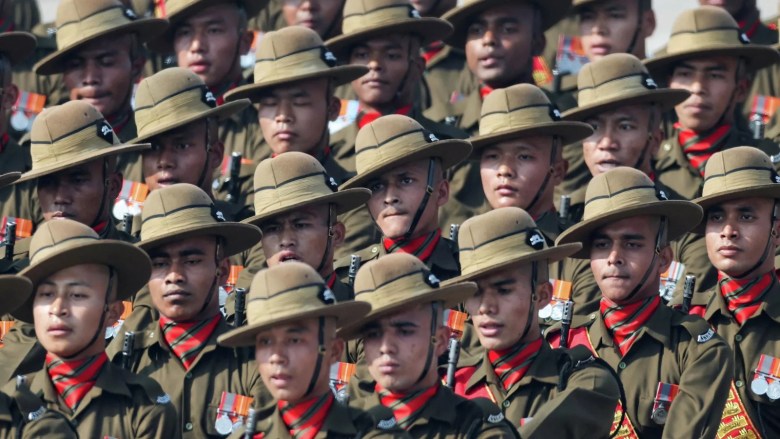
India’s long-standing doctrine of strategic autonomy is increasingly viewed as a liability. Once a hallmark of post-colonial independence, this approach is evolving into a state of strategic drift, accumulating costs across economic, military, and diplomatic fronts without yielding significant leverage. The current global landscape, marked by rising polarization, presents challenges that make this imbalance difficult to sustain.
Strategic autonomy, rooted in the Nehruvian era through a non-alignment policy, aimed to avoid entanglement in Cold War blocs while securing developmental assistance from both sides. Today, this concept has transformed into “multi-alignment,” which involves strengthening defense and technological ties with the United States, maintaining military and energy relationships with Russia, and fostering substantial economic engagement with China. While this multifaceted strategy was intended to optimize India’s position in a multipolar world, it is becoming increasingly incoherent.
India’s reluctance to fully align with Western sanctions against Russia has allowed access to discounted energy. However, this choice has attracted scrutiny from Washington, where trade and security are tightly interlinked. Diplomatic relations are now strained, complicating India’s strategic positioning. The US has begun to impose tougher tariffs, questioning India’s commitment to its political alignments.
Economic ties with China continue despite tensions stemming from border disputes. India’s trade deficit with China has surpassed US$100 billion, reinforcing dependencies in critical sectors, including electronics and pharmaceuticals. This reliance leaves India vulnerable to supply disruptions, particularly as Beijing consolidates its manufacturing dominance.
Military engagements along the Line of Actual Control have seen some reduction in immediate friction, yet these measures have not altered the strategic balance. China’s infrastructural developments in disputed areas remain unchallenged, limiting India’s leverage.
Diplomatically, India’s strategic autonomy is drawing criticism without yielding meaningful concessions. The nation’s cautious stance on major global conflicts has alienated some Western partners, and India’s influence in multilateral forums, while amplified, has not translated into material gains like market access or defense technology.
The core issue lies not in the concept of autonomy itself, but in the lack of prioritization. Flexibility can create advantages only when backed by credible alternatives. Currently, India faces constraints from legacy dependencies and unresolved vulnerabilities. Despite its economic mass, India has yet to convert this into effective bargaining power, and its strategic partnerships have not led to enforceable commitments.
To recalibrate its approach, India does not necessarily need formal alliances but must make sharper choices. Accelerating defense indigenization beyond mere rhetoric is critical to reducing reliance on single suppliers. Trade diversification should be treated as a strategic imperative, not only an economic necessity. Collaborations with the US, Japan, and Europe need to be explicitly leveraged for technology access and supply-chain resilience, rather than assumed as mere by-products of goodwill.
Engagement with Russia should be carefully managed within defined limits, avoiding historical sentiments that may cloud judgment. In a challenging international environment, ambiguity can lead to significant costs.
India’s strategic autonomy was intended as a means to secure sovereignty through leverage. When these means begin to undermine the ultimate goal, a course correction becomes essential. Without greater clarity and discipline in its foreign policy, India risks turning what was once a protective shield into a liability it can ill afford.
Colonel Maqbool Shah, an Indian Army veteran, emphasizes that the need for recalibration is pressing as India navigates this complex geopolitical terrain.

India Unveils Long-Range Hypersonic Missile Amid Regional Tensions

SK bioscience Launches Global Trial for Universal Sarbecovirus Vaccine

Senegal Coach Pape Thiaw Suspended and Fined After Final Disruption

PAS Denies Abolishing Chairman Post, Contradicts Muhyiddin’s Claim

Mbappé Critiques Real Madrid’s Effort After Benfica Defeat

Thailand’s December Factory Output Surges 2.52% Year-on-Year

Ishita Dutta Reveals Her Parenting Secret: Strong Coffee

Older GPs Express Concerns Over New Digital Health Record Mandate

Urban Jurgensen: A 252-Year Legacy Enters a New Era

Regina Martinez Breaks New Ground for Mexico in Cross-Country Skiing

South Korea’s Foreign Minister Cho Hyun to Visit China This Week

Starling Bank Plans Secondary Share Sale, Targeting $5.4 Billion Valuation

Munsang College Celebrates 100 Years with Grand Ceremony

PAS Aims to Expand Parliamentary Influence in Upcoming Election

De Minaur Triumphs at Washington Open After Thrilling Comeback

Kenvue Dismisses CEO Thibaut Mongon as Strategic Review Advances

Humanism Camp Engages 250 Youths in Summer Fest 2025

Colombian Senator Miguel Uribe Shows Signs of Recovery After Attack
-
 Sports2 months ago
Regina Martinez Breaks New Ground for Mexico in Cross-Country Skiing
-
 World6 months ago
South Korea’s Foreign Minister Cho Hyun to Visit China This Week
-
 Business7 months ago
Starling Bank Plans Secondary Share Sale, Targeting $5.4 Billion Valuation
-
 Top Stories7 months ago
Munsang College Celebrates 100 Years with Grand Ceremony
-
 World6 months ago
PAS Aims to Expand Parliamentary Influence in Upcoming Election
-
 Sports8 months ago
De Minaur Triumphs at Washington Open After Thrilling Comeback
-
 Business8 months ago
Kenvue Dismisses CEO Thibaut Mongon as Strategic Review Advances
-
 Lifestyle8 months ago
Humanism Camp Engages 250 Youths in Summer Fest 2025
-
 Top Stories9 months ago
Colombian Senator Miguel Uribe Shows Signs of Recovery After Attack
-

 Sports8 months ago
Tupou and Daugunu Join First Nations Squad for Lions Clash
-
 World8 months ago
ASEAN Gears Up for Historic Joint Meeting of Foreign and Economic Ministers
-

 Health8 months ago
New Study Challenges Assumptions About Aging and Inflammation