
Politics
Hanwha Group’s Lobbying Efforts Backfire in US-China Dynamics

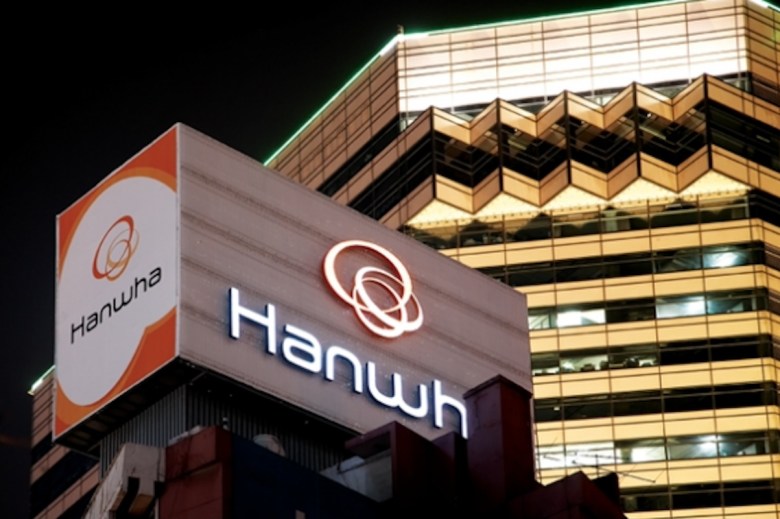
The South Korean conglomerate, Hanwha Group, has faced significant backlash following its lobbying efforts in the United States aimed at imposing tariffs on Chinese solar modules. The campaign, which framed the tariffs as crucial for “US energy security,” has not only backfired but also jeopardized relationships with American developers and risked destabilizing regional supply chains.
Hanwha Group, one of Asia’s largest industrial conglomerates, sought to leverage the ongoing tensions between the US and China to gain market share. However, the move has instead led to a deterioration of its standing as a reliable partner. The lobbying efforts were particularly focused on solar panels exported through Southeast Asian countries, including Malaysia and Vietnam, which the US relies on to diversify its supply chains away from China.
Qcells, Hanwha’s US solar subsidiary, once epitomized the success of foreign investment in America. It built factories in Georgia, created local jobs, and qualified for generous incentives under the Inflation Reduction Act. This positioning symbolized how foreign firms could support US supply chain resilience. But as Chinese companies began exporting low-cost solar panels through Southeast Asia, Hanwha opted for a political strategy rather than innovating.
The company’s call for new tariffs was not merely a defense of American jobs, but rather an instance of “rent-seeking” disguised as patriotism. This approach overlooked a critical aspect of US trade policy: the importance of Southeast Asia as a strategic partner. Imposing tariffs could fracture the very networks that facilitate US diversification from China and maintain alignment with the Association of Southeast Asian Nations (ASEAN).
The response from the US solar market was swift and severe. Developers warned of potential project cancellations and increased costs, while utilities expressed hesitation in their contracts. Questions arose within Washington regarding whether South Korea was prioritizing protectionist policies over cooperative partnership.
Hanwha’s misstep is indicative of a broader issue among middle powers that misinterpret US intentions. The US is not pursuing a full decoupling from China but is instead seeking a managed interdependence that allows for flexibility in lower-stakes sectors. When allies, like South Korea, advocate for stringent measures against China, they risk crossing a delicate line from being a valuable partner to becoming a political nuisance.
The economic stakes for South Korea are particularly high. The nation has thrived through access to US technology while maintaining substantial trade relations with China. An over-identification with one side can invite retaliation from the other. When corporations act without a unified strategic approach, they can undermine the trust that is essential for sustaining international partnerships.
Hanwha’s recent actions are not isolated examples. Other middle powers are also navigating similar challenges. For instance, Turkey’s arms dealings with Russia have raised suspicions within NATO, while Saudi Arabia has skillfully played Washington and Beijing against each other to secure concessions. India, on the other hand, has managed a delicate balancing act by engaging with both the Quad and China.
Success in this geopolitical landscape requires restraint. Middle powers can gain influence not by aggressively challenging larger nations, but by adapting to the prevailing dynamics. Hanwha’s ambition to exploit US-China tensions ultimately led to a lack of awareness regarding the broader implications of their actions.
South Korea now faces a critical juncture. While its prosperity relies on globalization, domestic politics increasingly reward nationalist sentiments. When private firms act unilaterally in the geopolitical arena, they risk creating contradictions within national policy. Washington must also reevaluate its industrial strategies, which encourage allied participation but may inadvertently promote protectionism.
The episode involving Hanwha underscores a vital lesson: corporate profit motives can diverge from national interests, potentially turning allies into unintentional saboteurs. As the world becomes more fragmented into rival blocs, the temptation to exploit great-power rivalries will intensify.
To remain relevant in this evolving order, nations must prioritize reliability over opportunism. Those that overreach may find themselves isolated, while those that adopt a long-term perspective will cultivate trust, investment, and influence. The missteps of Hanwha serve as a reminder that in an era of uncertainty, restraint can often be the most powerful strategy. Understanding when to assert influence and when to collaborate is crucial for navigating the complex landscape of international relations.

India Unveils Long-Range Hypersonic Missile Amid Regional Tensions

SK bioscience Launches Global Trial for Universal Sarbecovirus Vaccine

Senegal Coach Pape Thiaw Suspended and Fined After Final Disruption

PAS Denies Abolishing Chairman Post, Contradicts Muhyiddin’s Claim

Mbappé Critiques Real Madrid’s Effort After Benfica Defeat

Thailand’s December Factory Output Surges 2.52% Year-on-Year

Ishita Dutta Reveals Her Parenting Secret: Strong Coffee

Older GPs Express Concerns Over New Digital Health Record Mandate

Urban Jurgensen: A 252-Year Legacy Enters a New Era

Regina Martinez Breaks New Ground for Mexico in Cross-Country Skiing

South Korea’s Foreign Minister Cho Hyun to Visit China This Week

Starling Bank Plans Secondary Share Sale, Targeting $5.4 Billion Valuation

Munsang College Celebrates 100 Years with Grand Ceremony

PAS Aims to Expand Parliamentary Influence in Upcoming Election

De Minaur Triumphs at Washington Open After Thrilling Comeback

Kenvue Dismisses CEO Thibaut Mongon as Strategic Review Advances

Humanism Camp Engages 250 Youths in Summer Fest 2025

Colombian Senator Miguel Uribe Shows Signs of Recovery After Attack
-
 Sports2 months ago
Regina Martinez Breaks New Ground for Mexico in Cross-Country Skiing
-
 World6 months ago
South Korea’s Foreign Minister Cho Hyun to Visit China This Week
-
 Business6 months ago
Starling Bank Plans Secondary Share Sale, Targeting $5.4 Billion Valuation
-
 Top Stories6 months ago
Munsang College Celebrates 100 Years with Grand Ceremony
-
 World6 months ago
PAS Aims to Expand Parliamentary Influence in Upcoming Election
-
 Sports8 months ago
De Minaur Triumphs at Washington Open After Thrilling Comeback
-
 Business8 months ago
Kenvue Dismisses CEO Thibaut Mongon as Strategic Review Advances
-
 Lifestyle8 months ago
Humanism Camp Engages 250 Youths in Summer Fest 2025
-
 Top Stories8 months ago
Colombian Senator Miguel Uribe Shows Signs of Recovery After Attack
-

 Sports8 months ago
Tupou and Daugunu Join First Nations Squad for Lions Clash
-
 World8 months ago
ASEAN Gears Up for Historic Joint Meeting of Foreign and Economic Ministers
-

 Health8 months ago
New Study Challenges Assumptions About Aging and Inflammation