
Politics
Europe Must Shift Strategy in Response to U.S. Actions

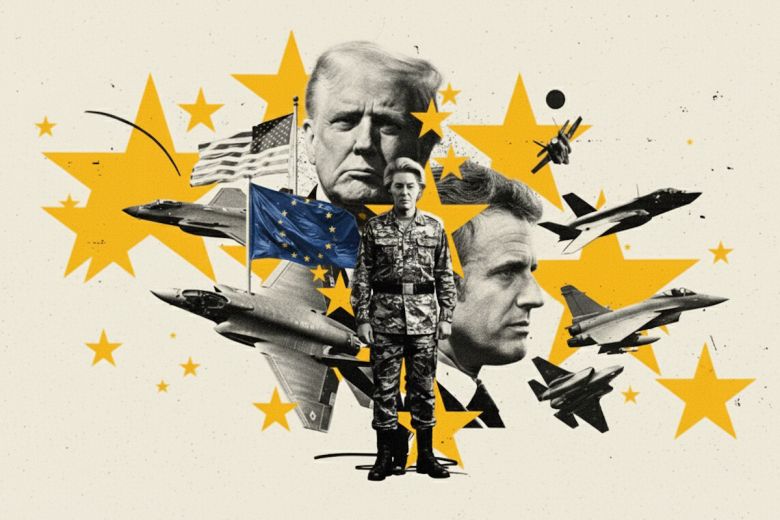
European leaders face a pivotal moment as rising tensions with the United States prompt discussions about a more assertive stance. In April 2025, the U.S. imposed its highest tariffs in a century on imports from the European Union, a move that many believed justified a reciprocal response. Instead of retaliating, the EU opted for restraint, aiming to maintain support for Ukraine amid ongoing conflict. However, recent actions by the U.S. suggest that this approach may need reevaluation.
As the year draws to a close, the U.S. has undertaken two significant actions that have raised eyebrows among its European allies. First, President Donald Trump appointed a “special envoy” to Greenland, a territory of Denmark, without prior consultation with either the Danish or Greenlandic governments. This appointment, made in late December, was perceived as a unilateral move that undermined diplomatic norms.
On December 23, the U.S. also imposed travel bans on three EU citizens and two British citizens, including former EU commissioner Thierry Breton. The U.S. government claimed these individuals were involved in supporting the EU’s Digital Services Act, enacted in 2022, which it argued could undermine American free speech rights. Such sanctions against allies are unusual and signal a troubling shift in U.S. foreign policy.
The backdrop to these developments includes the imposition of sanctions in August against Judge Nicolas Guillou of France and Judge Kimberley Prost of Canada. These judges faced penalties for participating in the International Criminal Court‘s decision to issue arrest warrants against Israeli Prime Minister Benjamin Netanyahu. The U.S. has historically refrained from engaging with the ICC, yet it has asserted its influence by challenging the court’s decisions.
Europe’s decision to avoid retaliation in light of these provocations raises crucial questions about the future of transatlantic relations. While the initial restraint might have been driven by the imperative of supporting Ukraine, the recent actions from the U.S. imply a growing willingness to exert pressure on European allies. The lack of reciprocal respect in diplomatic relations could embolden further unilateral measures from Washington.
European leaders now face the challenge of determining how to respond effectively to what many perceive as increasing bullying from the U.S. The notion of deterrence, previously focused on Russia, must now extend to managing relations with America. A coordinated response could involve travel bans on certain U.S. officials or a unified stand against American policies perceived as aggressive.
One immediate consideration is for Denmark, Greenland, and other EU member states to impose travel restrictions on Trump’s appointee, Governor Jeff Landry of Louisiana. Such a move would send a clear message that unilateral actions without consultation are unacceptable. Historical precedents exist for such responses; for instance, India effectively barred U.S. Ambassador Richard Holbrooke from entering the country in 2009 after his controversial appointment.
Additionally, European nations could explore tit-for-tat measures similar to those used in dealing with Russian and Chinese espionage cases. This might include restricting entry for outspoken critics of Europe in the U.S., such as prominent figures who have made incendiary remarks about political stability in the region.
While some argue that Europe should maintain its commitment to high diplomatic standards, the reality of the current geopolitical landscape necessitates a strategic reassessment. The growing perception of U.S. interference in European domestic affairs means that European governments must consider robust measures to assert their sovereignty and interests.
As the new year approaches, it is crucial for European leaders to develop a coherent strategy that balances diplomatic civility with the need for effective deterrence. The time for passive responses may have passed, and a more proactive approach could prove essential for safeguarding European interests in an increasingly complex international environment.
The evolving relationship between Europe and the United States highlights the necessity for a nuanced yet firm response to actions perceived as hostile. As discussions continue, the need for a unified European front against unwarranted U.S. actions becomes increasingly clear, ensuring that Europe remains a respected player on the global stage.

India Unveils Long-Range Hypersonic Missile Amid Regional Tensions

SK bioscience Launches Global Trial for Universal Sarbecovirus Vaccine

Senegal Coach Pape Thiaw Suspended and Fined After Final Disruption

PAS Denies Abolishing Chairman Post, Contradicts Muhyiddin’s Claim

Mbappé Critiques Real Madrid’s Effort After Benfica Defeat

Thailand’s December Factory Output Surges 2.52% Year-on-Year

Ishita Dutta Reveals Her Parenting Secret: Strong Coffee

Older GPs Express Concerns Over New Digital Health Record Mandate

Urban Jurgensen: A 252-Year Legacy Enters a New Era

Regina Martinez Breaks New Ground for Mexico in Cross-Country Skiing

South Korea’s Foreign Minister Cho Hyun to Visit China This Week

Starling Bank Plans Secondary Share Sale, Targeting $5.4 Billion Valuation

Munsang College Celebrates 100 Years with Grand Ceremony

PAS Aims to Expand Parliamentary Influence in Upcoming Election

De Minaur Triumphs at Washington Open After Thrilling Comeback

Kenvue Dismisses CEO Thibaut Mongon as Strategic Review Advances

Humanism Camp Engages 250 Youths in Summer Fest 2025

Colombian Senator Miguel Uribe Shows Signs of Recovery After Attack
-
 Sports3 months ago
Regina Martinez Breaks New Ground for Mexico in Cross-Country Skiing
-
 World7 months ago
South Korea’s Foreign Minister Cho Hyun to Visit China This Week
-
 Business7 months ago
Starling Bank Plans Secondary Share Sale, Targeting $5.4 Billion Valuation
-
 Top Stories7 months ago
Munsang College Celebrates 100 Years with Grand Ceremony
-
 World7 months ago
PAS Aims to Expand Parliamentary Influence in Upcoming Election
-
 Sports8 months ago
De Minaur Triumphs at Washington Open After Thrilling Comeback
-
 Business9 months ago
Kenvue Dismisses CEO Thibaut Mongon as Strategic Review Advances
-
 Lifestyle8 months ago
Humanism Camp Engages 250 Youths in Summer Fest 2025
-
 Top Stories9 months ago
Colombian Senator Miguel Uribe Shows Signs of Recovery After Attack
-

 Sports9 months ago
Tupou and Daugunu Join First Nations Squad for Lions Clash
-
 World9 months ago
ASEAN Gears Up for Historic Joint Meeting of Foreign and Economic Ministers
-

 Health8 months ago
New Study Challenges Assumptions About Aging and Inflammation