
Politics
Eastern Flank Summit Unites Leaders Against Russian Ambitions

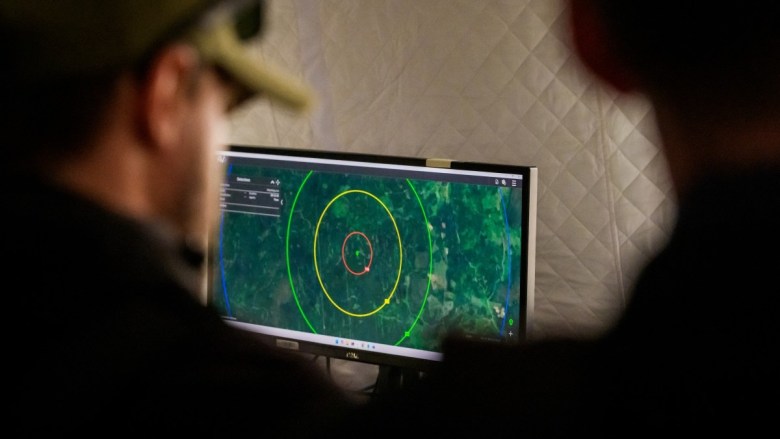
Leaders from the Baltic States, Sweden, Finland, Poland, Romania, and Bulgaria gathered in Helsinki last month for the inaugural Eastern Flank Summit. The summit culminated in a joint declaration, addressing the ongoing threat posed by Russia’s strategic ambitions, which the leaders assert remain unchanged. They expressed concerns that Russia aims to create a buffer zone extending from the Arctic region through the Baltic and Black Seas to the Mediterranean. In response, the nations reaffirmed their commitment to militarization in the Eastern Flank.
During the summit, the attendees highlighted their support for “Strengthening the European Defence Technological and Industrial Base.” They welcomed the new “Eastern Flank Watch” initiative, which was proposed by European Commission President Ursula von der Leyen in September. The Prime Ministers of Poland and Finland announced plans for their countries to jointly lead this initiative, aligning with Polish President Karol Nawrocki‘s vision of enhancing NATO’s Eastern Flank capabilities.
President Nawrocki articulated his aspirations during his inaugural address, stating, “I dream that in the long term, the Bucharest Nine will become the Bucharest Eleven, together with the Scandinavian countries.” The Eastern Flank Summit plays a pivotal role in advancing this goal, as it brings together Poland with Finland and Sweden, NATO’s two newest members. Notably, despite political rivalries, there is bipartisan support in Poland for this strategic direction.
The newly established Eastern Flank Watch is anticipated to complement the EU’s Black Sea Maritime Security Hub. The summit also acknowledged the “Baltic Defense Line” and “East Shield,” previously referred to as the “EU Defense Line” (EDL). These initiatives are expected to serve as the flagship project of the Watch. While not explicitly mentioned in the joint statement, it can be inferred that the EDL will extend along the Finnish-Russian border to the Norwegian tripoint, given Finland’s leadership role.
The outcomes of the Eastern Flank Summit signal a significant shift in the region’s security architecture. The leaders’ commitment to militarization indicates that Russia’s envisioned buffer zone may be increasingly difficult to realize. As these nations continue to strengthen their defenses, they plan to develop the EDL with integrated “Drone Wall” capabilities.
From Russia’s perspective, the best possible outcome might involve negotiating a Non-Aggression Pact (NAP) with NATO, which would include assurances that the United States will reduce its military presence in this strategically important area. Such a pact would need to incorporate the roles of Poland and Finland, given their leadership in the Eastern Flank Watch. Without their involvement, tensions in the region could escalate.
The summit’s developments impede Russia and the United States’ ability to reshape the European security framework, which is crucial for addressing the continent’s current security challenges. Consequently, this may reduce the Kremlin’s willingness to make significant concessions in the ongoing conflict in Ukraine. The prospect of achieving Russia’s strategic goals appears dim, potentially prolonging the conflict unless substantial changes occur in the geopolitical landscape.
This article was first published on Andrew Korybko’s Substack and is republished with kind permission.

India Unveils Long-Range Hypersonic Missile Amid Regional Tensions

SK bioscience Launches Global Trial for Universal Sarbecovirus Vaccine

Senegal Coach Pape Thiaw Suspended and Fined After Final Disruption

PAS Denies Abolishing Chairman Post, Contradicts Muhyiddin’s Claim

Mbappé Critiques Real Madrid’s Effort After Benfica Defeat

Thailand’s December Factory Output Surges 2.52% Year-on-Year

Ishita Dutta Reveals Her Parenting Secret: Strong Coffee

Older GPs Express Concerns Over New Digital Health Record Mandate

Urban Jurgensen: A 252-Year Legacy Enters a New Era

Regina Martinez Breaks New Ground for Mexico in Cross-Country Skiing

South Korea’s Foreign Minister Cho Hyun to Visit China This Week

Starling Bank Plans Secondary Share Sale, Targeting $5.4 Billion Valuation

Munsang College Celebrates 100 Years with Grand Ceremony

PAS Aims to Expand Parliamentary Influence in Upcoming Election

De Minaur Triumphs at Washington Open After Thrilling Comeback

Kenvue Dismisses CEO Thibaut Mongon as Strategic Review Advances

Humanism Camp Engages 250 Youths in Summer Fest 2025

Colombian Senator Miguel Uribe Shows Signs of Recovery After Attack
-
 Sports2 months ago
Regina Martinez Breaks New Ground for Mexico in Cross-Country Skiing
-
 World6 months ago
South Korea’s Foreign Minister Cho Hyun to Visit China This Week
-
 Business6 months ago
Starling Bank Plans Secondary Share Sale, Targeting $5.4 Billion Valuation
-
 Top Stories6 months ago
Munsang College Celebrates 100 Years with Grand Ceremony
-
 World6 months ago
PAS Aims to Expand Parliamentary Influence in Upcoming Election
-
 Sports8 months ago
De Minaur Triumphs at Washington Open After Thrilling Comeback
-
 Business8 months ago
Kenvue Dismisses CEO Thibaut Mongon as Strategic Review Advances
-
 Lifestyle8 months ago
Humanism Camp Engages 250 Youths in Summer Fest 2025
-
 Top Stories8 months ago
Colombian Senator Miguel Uribe Shows Signs of Recovery After Attack
-

 Sports8 months ago
Tupou and Daugunu Join First Nations Squad for Lions Clash
-
 World8 months ago
ASEAN Gears Up for Historic Joint Meeting of Foreign and Economic Ministers
-

 Health8 months ago
New Study Challenges Assumptions About Aging and Inflammation