
Politics
Bougival Accord Stalled as Kanak Participation Remains Crucial

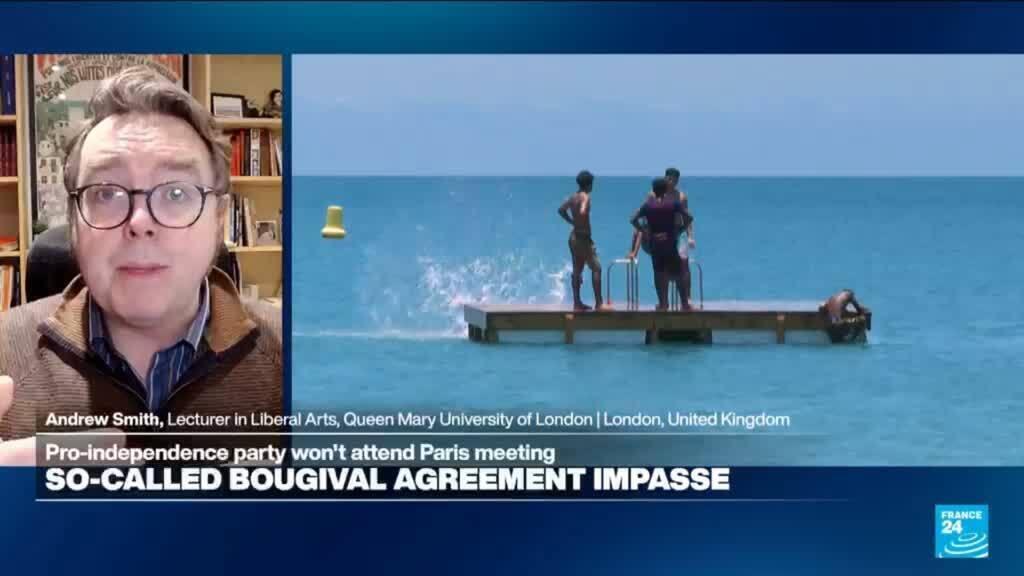
The Bougival Accord has reached a critical impasse, with experts asserting that progress cannot occur without the active participation of the Kanak people. Dr. Andrew Smith, a historian specializing in modern France and a lecturer at Queen Mary University of London, provides insights into the complex dynamics surrounding this agreement, which aims to redefine the political framework in New Caledonia.
The Bougival Accord, established in 2023, aims to recognize a distinct “state” within France, marking a significant step in addressing the historical grievances of the Indigenous Kanak community. Yet, as Dr. Smith highlights, this recognition is accompanied by mechanisms that many Kanak leaders fear will perpetuate their political marginalization rather than empower them.
Historical Context and Mistrust
The legacy of colonialism looms large over the discussions surrounding the Bougival Accord. The Kanak people, who have long fought for self-determination, view the accord with skepticism. Dr. Smith emphasizes that the deep-seated mistrust between the Kanak and French authorities is rooted in a history of exploitation and broken promises.
“The Kanak population remains wary,” Dr. Smith states. “They have witnessed numerous agreements that have failed to deliver on their aspirations, leading to a profound sense of betrayal.” This historical context is essential for understanding the current political landscape and the challenges facing the implementation of the Bougival Accord.
Despite the accord’s intentions to create a more inclusive political framework, the lack of Kanak involvement in the decision-making process has sparked concerns. Many Kanak leaders argue that without their input, the accord risks becoming another tool for maintaining colonial control instead of a genuine path toward autonomy.
The Path Forward
As negotiations continue, the need for dialogue between the French government and the Kanak representatives has never been more urgent. Both sides must engage in meaningful discussions to address the concerns of the Kanak people and ensure their voices are heard in the governance of New Caledonia.
Dr. Smith suggests that creating a platform for open communication is essential for moving forward. “The French government must actively involve Kanak leaders in the implementation of the Bougival Accord,” he explains. “Only then can trust be rebuilt, and a sustainable political solution be achieved.”
The international community is closely watching the developments in New Caledonia, as the outcomes of the Bougival Accord could serve as a precedent for Indigenous rights and self-governance in other post-colonial contexts. The future of New Caledonia hinges on a balanced approach that recognizes the rights and aspirations of the Kanak people while navigating the complexities of governance within the framework of the French state.
In conclusion, the Bougival Accord’s current standstill highlights the pivotal role of Indigenous participation in shaping political agreements. As discussions progress, the commitment to inclusivity and respect for historical grievances will be crucial for achieving a lasting resolution in New Caledonia.

India Unveils Long-Range Hypersonic Missile Amid Regional Tensions

SK bioscience Launches Global Trial for Universal Sarbecovirus Vaccine

Senegal Coach Pape Thiaw Suspended and Fined After Final Disruption

PAS Denies Abolishing Chairman Post, Contradicts Muhyiddin’s Claim

Mbappé Critiques Real Madrid’s Effort After Benfica Defeat

Thailand’s December Factory Output Surges 2.52% Year-on-Year

Ishita Dutta Reveals Her Parenting Secret: Strong Coffee

Older GPs Express Concerns Over New Digital Health Record Mandate

Urban Jurgensen: A 252-Year Legacy Enters a New Era

South Korea’s Foreign Minister Cho Hyun to Visit China This Week

Starling Bank Plans Secondary Share Sale, Targeting $5.4 Billion Valuation

Munsang College Celebrates 100 Years with Grand Ceremony

PAS Aims to Expand Parliamentary Influence in Upcoming Election

Kenvue Dismisses CEO Thibaut Mongon as Strategic Review Advances

Humanism Camp Engages 250 Youths in Summer Fest 2025

De Minaur Triumphs at Washington Open After Thrilling Comeback

Tupou and Daugunu Join First Nations Squad for Lions Clash

Colombian Senator Miguel Uribe Shows Signs of Recovery After Attack
-
 World5 months ago
South Korea’s Foreign Minister Cho Hyun to Visit China This Week
-
 Business5 months ago
Starling Bank Plans Secondary Share Sale, Targeting $5.4 Billion Valuation
-
 Top Stories5 months ago
Munsang College Celebrates 100 Years with Grand Ceremony
-
 World5 months ago
PAS Aims to Expand Parliamentary Influence in Upcoming Election
-
 Business7 months ago
Kenvue Dismisses CEO Thibaut Mongon as Strategic Review Advances
-
 Lifestyle6 months ago
Humanism Camp Engages 250 Youths in Summer Fest 2025
-
 Sports6 months ago
De Minaur Triumphs at Washington Open After Thrilling Comeback
-
 Sports7 months ago
Tupou and Daugunu Join First Nations Squad for Lions Clash
-
 Top Stories7 months ago
Colombian Senator Miguel Uribe Shows Signs of Recovery After Attack
-

 World7 months ago
ASEAN Gears Up for Historic Joint Meeting of Foreign and Economic Ministers
-

 Health6 months ago
New Study Challenges Assumptions About Aging and Inflammation
-

 Business7 months ago
Oil Prices Surge Following New EU Sanctions on Russia