
Politics
Analysts Urge Workers’ Party to Nominate New Opposition Leader

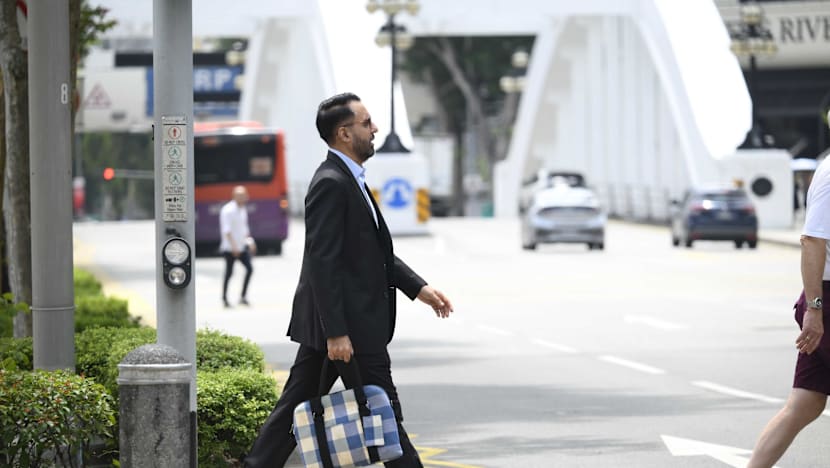
Prime Minister Lawrence Wong has invited the Workers’ Party (WP) to nominate a new Leader of the Opposition, a move that analysts believe the party should embrace rather than leave the position unfilled. With the call made on January 15, 2024, political experts have identified four potential candidates: Gerald Giam, Dennis Tan, He Ting Ru, and Jamus Lim.
In his letter to the WP Central Executive Committee, Wong specified that the nominee must be an elected Member of Parliament (MP) who has not been implicated in the findings related to former MP Raeesah Khan. The nominee is also expected to meet the “high standards” associated with the role. While the WP is not obligated to select a new leader, analysts argue that accepting Wong’s invitation would provide significant advantages, including enhanced resources and opportunities in parliament.
According to Chong Ja Ian, an associate professor of political science at the National University of Singapore, parliament can function without a designated Leader of the Opposition. He noted that historically, the Singapore parliament managed without this position until recently. “The Singapore parliament did not have a Leader of the Opposition until very recently and it continued to debate and pass laws,” he said.
Tan Ern Ser, an adjunct principal research fellow at the Institute of Policy Studies, suggested that failing to nominate a new leader could indicate the WP’s continued support for Pritam Singh, the former Leader of the Opposition. Independent analyst Felix Tan echoed this sentiment, stating that leaving the position vacant may reflect the party’s alignment with Singh and showcase a stance of “partisan politics.”
The role of Leader of the Opposition was formally established by former Prime Minister Lee Hsien Loong after the 2020 general election, with Singh serving in that capacity for over five years. The position comes with several advantages, including confidential government briefings, additional staff support, and a more substantial allowance compared to regular MPs. Importantly, the Leader of the Opposition has the right to respond first during parliamentary discussions and enjoys extended speaking time.
Wong expressed his hope that the WP would make a nomination soon to ensure the position does not remain vacant for an extended period. The WP confirmed receipt of the letter and stated it would deliberate on its contents internally before responding.
The decision to invite the WP to nominate a successor followed a parliamentary vote that deemed Singh unsuitable for the role. Although Wong was not required to adhere to this vote, analysts believe that doing so respects the legislature’s majority sentiment and avoids setting a precedent where the executive may disregard legislative decisions.
Dr. Mustafa Izzuddin, a senior international affairs analyst, highlighted that Wong’s invitation reflects the importance of the Leader of the Opposition role in Singapore’s political landscape. “He recognises that the Leader of the Opposition position has become a mainstay of the political landscape in Singapore,” Mustafa noted, suggesting that public sentiment may have influenced Wong’s decision to keep the role available.
Political analysts have narrowed down the list of potential successors, emphasizing that the new nominee must be a sitting WP MP, a senior member of the party’s Central Executive Committee, and must not be associated with the circumstances surrounding Singh’s removal. This disqualifies WP chair Sylvia Lim from consideration due to the implications of the parliamentary vote.
Among the remaining eligible candidates, Giam and Tan are viewed as frontrunners. Giam, who has served both as a Non-constituency MP and an elected MP, is recognized for his active participation in parliamentary debates. Tan, representing Hougang, also has a strong base of support due to the WP’s long-standing presence in that constituency.
Other candidates under consideration include He Ting Ru, the party treasurer, and Jamus Lim, who has been vocal in parliament as part of the WP’s policy research team. Both are seen as viable options given their senior roles within the party.
While Singh has held the Leader of the Opposition position since its inception, analysts note that the role does not necessarily have to align with the party’s secretary-general. The rules governing the position remain somewhat ambiguous. Chong pointed out that unlike the Speaker of the House, which has clearly defined criteria, the guidelines for the Leader of the Opposition are not codified.
The ongoing discussions within the WP will likely shape the future of the Leader of the Opposition role, which continues to evolve within Singapore’s political framework. As the party deliberates, the implications of their decision will resonate within the broader context of Singaporean politics.

India Unveils Long-Range Hypersonic Missile Amid Regional Tensions

SK bioscience Launches Global Trial for Universal Sarbecovirus Vaccine

Senegal Coach Pape Thiaw Suspended and Fined After Final Disruption

PAS Denies Abolishing Chairman Post, Contradicts Muhyiddin’s Claim

Mbappé Critiques Real Madrid’s Effort After Benfica Defeat

Thailand’s December Factory Output Surges 2.52% Year-on-Year

Ishita Dutta Reveals Her Parenting Secret: Strong Coffee

Older GPs Express Concerns Over New Digital Health Record Mandate

Urban Jurgensen: A 252-Year Legacy Enters a New Era

Regina Martinez Breaks New Ground for Mexico in Cross-Country Skiing

South Korea’s Foreign Minister Cho Hyun to Visit China This Week

Starling Bank Plans Secondary Share Sale, Targeting $5.4 Billion Valuation

Munsang College Celebrates 100 Years with Grand Ceremony

PAS Aims to Expand Parliamentary Influence in Upcoming Election

De Minaur Triumphs at Washington Open After Thrilling Comeback

Kenvue Dismisses CEO Thibaut Mongon as Strategic Review Advances

Humanism Camp Engages 250 Youths in Summer Fest 2025

Colombian Senator Miguel Uribe Shows Signs of Recovery After Attack
-
 Sports2 months ago
Regina Martinez Breaks New Ground for Mexico in Cross-Country Skiing
-
 World7 months ago
South Korea’s Foreign Minister Cho Hyun to Visit China This Week
-
 Business7 months ago
Starling Bank Plans Secondary Share Sale, Targeting $5.4 Billion Valuation
-
 Top Stories7 months ago
Munsang College Celebrates 100 Years with Grand Ceremony
-
 World7 months ago
PAS Aims to Expand Parliamentary Influence in Upcoming Election
-
 Sports8 months ago
De Minaur Triumphs at Washington Open After Thrilling Comeback
-
 Business9 months ago
Kenvue Dismisses CEO Thibaut Mongon as Strategic Review Advances
-
 Lifestyle8 months ago
Humanism Camp Engages 250 Youths in Summer Fest 2025
-
 Top Stories9 months ago
Colombian Senator Miguel Uribe Shows Signs of Recovery After Attack
-

 Sports9 months ago
Tupou and Daugunu Join First Nations Squad for Lions Clash
-

 World9 months ago
ASEAN Gears Up for Historic Joint Meeting of Foreign and Economic Ministers
-

 Health8 months ago
New Study Challenges Assumptions About Aging and Inflammation