
Lifestyle
Taiwanese Scientists Achieve Breakthrough in Octopus Breeding

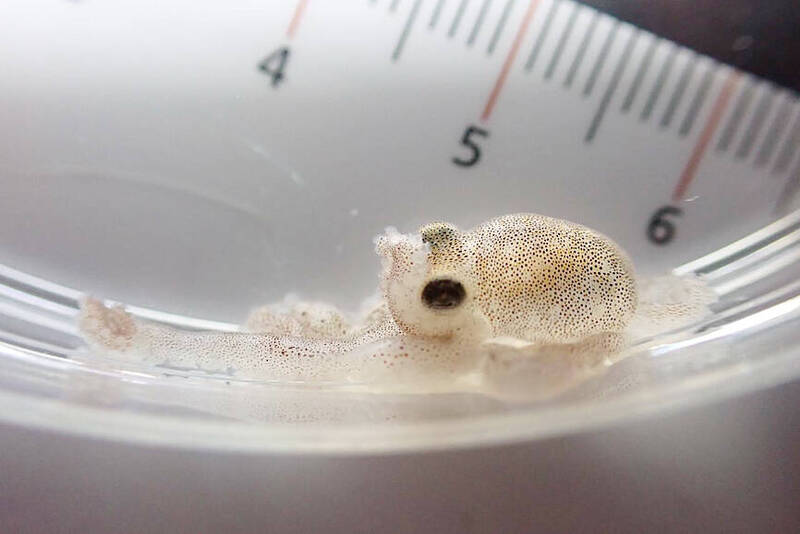
Taiwanese scientists have successfully hatched the first eggs of the Penghu Island octopus in a laboratory setting, marking a significant breakthrough in the effort to artificially breed this endangered species. The octopus, designated as octopus sp. TW-10, was identified as a previously undocumented species in 2006. According to the National Penghu University of Science and Technology, this species is threatened due to declining populations from overfishing.
The octopuses are known for their elusive nature, typically only observed during their spawning season, which occurs between March 29 and April 12. Lee Meng-fang, an associate professor of aquaculture at the university, explained that the species has a short lifespan of about one year. Additionally, female octopuses retreat to deeper waters immediately after mating, making them challenging to study.
The research team took a decade to achieve successful breeding in captivity. They utilized specimens captured during the spring spawning season. Female octopuses of this species carry approximately 100 tiny eggs, measuring only 16 mm long, which is significantly fewer than many other small cephalopods that can lay thousands of eggs at once. Until recently, no eggs had been documented until four were discovered by the Penghu branch of the Fisheries Research Institute caught in a tank’s filter.
The gestation period for the female octopuses lasts between three and four months, during which they protect their clutches of eggs for an additional three months. This lengthy reproductive cycle accounts for nearly half of the octopuses’ life span. During the study, researchers found that female octopuses are highly sensitive to light and disturbances while guarding their eggs, often opting to discard them if disrupted. This behavior raises concerns that light pollution in the waters surrounding Penghu may contribute to the species’ population decline.
The successful breeding program resulted in the production of 30 octopus larvae, which matured quickly and attached themselves to a simulated ocean floor immediately after hatching. Notably, this bypassing of the typical planktonic phase seen in most octopods could indicate a unique aspect of their development.
The preliminary success in breeding the Penghu octopus in captivity opens the door for potential farming of the species throughout its lifecycle for food, similar to the cultivation of sea urchins currently practiced in Penghu. This breakthrough not only holds promise for the species but also for local economies that rely on marine resources. The ongoing research emphasizes the importance of sustainable practices to protect and preserve marine biodiversity.

Shah Rukh Khan Expresses Interest in Portraying James Bond

Taiwan Stands Firm on Hepatitis B Vaccination for Newborns

Taiwanese Scientists Achieve Breakthrough in Octopus Breeding

Taiwan Proposes Fines for Unsafe Railway Behavior Amid Safety Concerns

Vivacta Bio Reveals Promising GT801 Results for Non-Hodgkin’s Lymphoma

Verstappen Aims for Victory as McLaren Promises Fair Race in Abu Dhabi

US Central Command Deploys Iranian Drone Clone for Tactical Use

Vivacta Bio Unveils Promising Results for GT801 in Non-Hodgkin’s Lymphoma

Bournemouth and Chelsea Battle to a Stalemate in Premier League Clash

Kenvue Dismisses CEO Thibaut Mongon as Strategic Review Advances

Humanism Camp Engages 250 Youths in Summer Fest 2025

De Minaur Triumphs at Washington Open After Thrilling Comeback

Tupou and Daugunu Join First Nations Squad for Lions Clash

Colombian Senator Miguel Uribe Shows Signs of Recovery After Attack

ASEAN Gears Up for Historic Joint Meeting of Foreign and Economic Ministers

New Study Challenges Assumptions About Aging and Inflammation

Oil Prices Surge Following New EU Sanctions on Russia

Detaşe-Sabah Violin Ensemble Captivates at Gabala Music Festival
-
 Business5 months ago
Kenvue Dismisses CEO Thibaut Mongon as Strategic Review Advances
-
 Lifestyle4 months ago
Humanism Camp Engages 250 Youths in Summer Fest 2025
-
 Sports4 months ago
De Minaur Triumphs at Washington Open After Thrilling Comeback
-
 Sports5 months ago
Tupou and Daugunu Join First Nations Squad for Lions Clash
-
 Top Stories5 months ago
Colombian Senator Miguel Uribe Shows Signs of Recovery After Attack
-
 World5 months ago
ASEAN Gears Up for Historic Joint Meeting of Foreign and Economic Ministers
-
 Health4 months ago
New Study Challenges Assumptions About Aging and Inflammation
-
 Business5 months ago
Oil Prices Surge Following New EU Sanctions on Russia
-
 Entertainment4 months ago
Detaşe-Sabah Violin Ensemble Captivates at Gabala Music Festival
-

 Entertainment4 months ago
Baku Metro Extends Hours for Justin Timberlake Concert
-

 Top Stories5 months ago
Rethinking Singapore’s F&B Regulations Amid Business Closures
-

 Business5 months ago
U.S. House Approves Stablecoin Bill, Sends to Trump for Signature