
Lifestyle
Singapore Reports 6.4% Drop in Rough Sleeper Count, Launches Fund

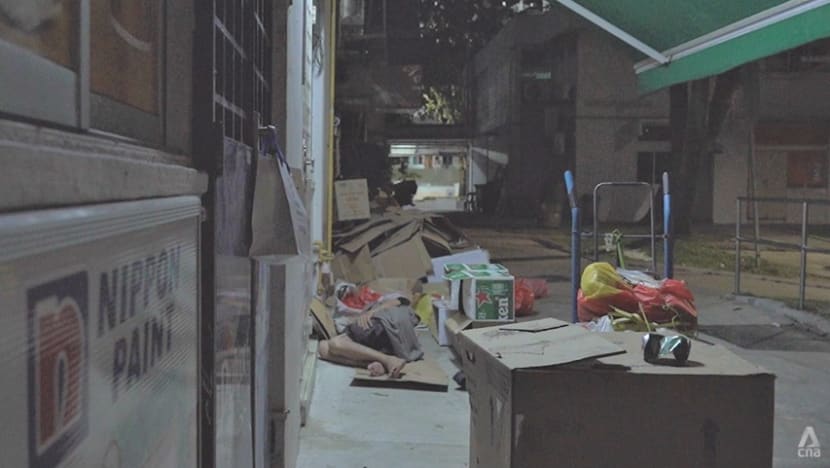
The number of rough sleepers in Singapore decreased by 6.4% in 2025 compared to 2022, as revealed in a report from the Ministry of Social and Family Development (MSF) on January 9, 2026. The report indicated that a total of 496 rough sleepers were counted during a single-night street count on July 18, 2025, down from 530 in 2022. To support efforts addressing homelessness, MSF will launch a new fund amounting to S$450,000 (US$350,489) aimed at assisting community organizations.
The count, which took place overnight, aims to capture a comprehensive snapshot of rough sleeping across the city. Rough sleepers are defined as individuals who sleep in public spaces, regardless of their housing situation. This includes both those without a home and those who may have housing but are unable to return to it. The report emphasized that not all homeless individuals sleep rough; some may reside in temporary accommodations while seeking permanent housing solutions.
At a media briefing held at the Yio Chu Kang transitional shelter, Eric Chua, Senior Parliamentary Secretary for Law, Social and Family Development, addressed misconceptions surrounding rough sleeping, asserting that it is not a crime. He urged the public to view rough sleepers with empathy, stating that they should not be regarded as a “menace to be dealt with.” Encouraging community engagement, he suggested that individuals could interact with rough sleepers to offer assistance.
Details from the 2025 Street Count
The initial count recorded 573 observations, but 77 were excluded from the final tally due to not meeting the criteria or being confirmed foreign nationals. The count covered all Urban Redevelopment Authority (URA) planning areas that were accessible on foot at night, excluding areas such as military zones and poorly lit industrial sites. The report highlighted that rough sleepers were identified in 35 out of 36 URA planning areas, with significant concentrations found in Bukit Merah and Jurong West, each reporting 39 individuals, followed by Bedok with 38.
The majority of rough sleepers counted were male, representing 85% of the total. Over half of those counted were over the age of 50, while 36% fell between the ages of 31 and 50, and 6% were aged 30 or younger. Volunteer participation was robust, with over 800 individuals from various sectors contributing to the count.
In conjunction with the street count, MSF conducted a survey of rough sleepers to better understand their circumstances. The month-long survey began on July 27, 2025 and included responses from 128 rough sleepers, representing 26% of the total count. Findings revealed that 77% of respondents had been sleeping rough for over a year, and 70% had experienced rough sleeping previously.
Understanding the Causes of Rough Sleeping
The findings from the survey indicated that many rough sleepers face complex personal challenges that contribute to their situation. Nearly half of the respondents, 49%, cited disagreements with family or friends as a primary reason for their homelessness. Additionally, 29% reported difficulties in securing or maintaining housing, while 20% pointed to financial hardships.
Employment statistics among respondents showed that 65% had some form of work, with 35% employed full-time and 20% part-time. However, over 70% of those employed reported monthly earnings of less than S$2,000 (US$1,558). Of those who were unemployed, 27% were actively seeking work.
Despite the challenges, 57% of respondents expressed a desire to transition into long-term housing. Preferred options included public rental flats (49%), purchasing their own homes (7%), or renting a room or house in the open market (5%). This suggests that many individuals view rough sleeping as a temporary solution, with aspirations for stable housing.
To address the issues highlighted in the report, MSF’s new fund, named the Partnership to Tackle Homelessness (PATH), aims to facilitate trials and initiatives that tackle the root causes of rough sleeping. Applications for funding will open on April 1, 2026. The ministry also plans partnerships with transitional shelters to enhance living conditions and encourage rough sleepers to seek shelter support.
In addition to the fund, MSF will work to provide comprehensive support, including medical and psychological aid, financial assistance through ComCare, and job placement services via Workforce Singapore. These initiatives are set to play a crucial role in addressing homelessness in Singapore and improving the lives of those affected.

India Unveils Long-Range Hypersonic Missile Amid Regional Tensions

SK bioscience Launches Global Trial for Universal Sarbecovirus Vaccine

Senegal Coach Pape Thiaw Suspended and Fined After Final Disruption

PAS Denies Abolishing Chairman Post, Contradicts Muhyiddin’s Claim

Mbappé Critiques Real Madrid’s Effort After Benfica Defeat

Thailand’s December Factory Output Surges 2.52% Year-on-Year

Ishita Dutta Reveals Her Parenting Secret: Strong Coffee

Older GPs Express Concerns Over New Digital Health Record Mandate

Urban Jurgensen: A 252-Year Legacy Enters a New Era

South Korea’s Foreign Minister Cho Hyun to Visit China This Week

Starling Bank Plans Secondary Share Sale, Targeting $5.4 Billion Valuation

Munsang College Celebrates 100 Years with Grand Ceremony

PAS Aims to Expand Parliamentary Influence in Upcoming Election

Kenvue Dismisses CEO Thibaut Mongon as Strategic Review Advances

Humanism Camp Engages 250 Youths in Summer Fest 2025

De Minaur Triumphs at Washington Open After Thrilling Comeback

Tupou and Daugunu Join First Nations Squad for Lions Clash

Colombian Senator Miguel Uribe Shows Signs of Recovery After Attack
-
 World5 months ago
South Korea’s Foreign Minister Cho Hyun to Visit China This Week
-
 Business5 months ago
Starling Bank Plans Secondary Share Sale, Targeting $5.4 Billion Valuation
-
 Top Stories5 months ago
Munsang College Celebrates 100 Years with Grand Ceremony
-
 World5 months ago
PAS Aims to Expand Parliamentary Influence in Upcoming Election
-
 Business7 months ago
Kenvue Dismisses CEO Thibaut Mongon as Strategic Review Advances
-
 Lifestyle6 months ago
Humanism Camp Engages 250 Youths in Summer Fest 2025
-
 Sports6 months ago
De Minaur Triumphs at Washington Open After Thrilling Comeback
-
 Sports7 months ago
Tupou and Daugunu Join First Nations Squad for Lions Clash
-
 Top Stories7 months ago
Colombian Senator Miguel Uribe Shows Signs of Recovery After Attack
-
 World7 months ago
ASEAN Gears Up for Historic Joint Meeting of Foreign and Economic Ministers
-

 Health6 months ago
New Study Challenges Assumptions About Aging and Inflammation
-

 Business7 months ago
Oil Prices Surge Following New EU Sanctions on Russia