
Lifestyle
Australia’s Security Policy Faces Scrutiny Amidst Trump Era

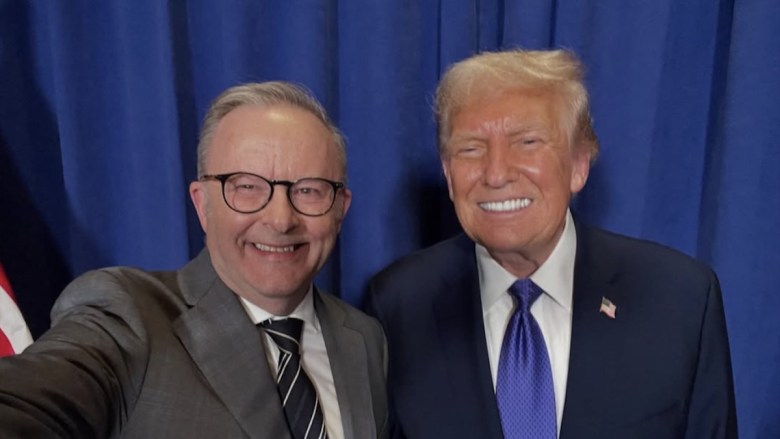
Australia’s foreign policy is under increasing scrutiny as analysts question the nation’s alignment with the United States during the Trump administration. In his latest book, Turbulence: Australian Foreign Policy in the Trump Era, Clinton Fernandes critiques the motivations behind Australia’s strategic decisions, suggesting that they are often aimed at advancing US interests rather than serving Australia’s own national interests.
Fernandes, who has a background in the Australian Army Intelligence Corps, highlights a troubling trend among Australian policymakers. He argues that their primary concern is to enhance US power, stating, “Australia’s policy planners are motivated by […] a single standard – does something protect or advance US power and Australia’s relevance to it?” This perspective raises questions about the independence of thought within Australia’s strategic framework, especially in light of controversial agreements such as AUKUS.
The AUKUS agreement, which involves the acquisition of nuclear-powered submarines from the United States and potentially the United Kingdom, has sparked a significant debate. Critics, including former Prime Minister Paul Keating, have labeled it “the worst deal in all history.” Fernandes contends that the decision to pursue this path is a continuation of past strategic missteps, arguing that AUKUS primarily serves to bolster US military capabilities rather than contribute to Australia’s own defense.
Supporters of AUKUS have likened the submarine initiative to historical nation-building projects, such as the Snowy Mountains Scheme. Fernandes counters this claim by stating that AUKUS represents a shift in Australia’s role, positioning the nation as a subservient partner in the US-led global order. He asserts that “this contribution of people, territory, materials, money, diplomacy and ideology” is ultimately designed to enhance US war-fighting capabilities.
The long-standing relationship between Australia and the US has often placed Australia in a position of compliance. For the last 80 years, Australian foreign policy has defaulted to aligning with the “great and powerful friend,” a sentiment that has become increasingly problematic under the current US administration. With Donald Trump at the helm, many argue that Australia risks compromising its own values and interests in favor of maintaining favor with the US.
Fernandes’ analysis extends beyond Australia’s relationship with the US. He examines the Trump administration’s impact on international relations with Europe, the Middle East, and China. His observations reflect a broader concern regarding the potential destabilization of the international order that the US has historically championed.
For many Australians, the focus on China as a primary threat has become a focal point of national security discussions. Fernandes critiques the narrow framing of the “China threat,” emphasizing that China, as the world’s largest trading nation, is equally invested in maintaining safe maritime routes. He suggests that the aggressive posturing towards China often stems from a desire to surveil its strategic capabilities rather than genuine security concerns.
The debate over Australia’s defense strategy has prompted calls for a reevaluation of military procurement. Fernandes advocates for an independent defense capability that does not contribute to nuclear proliferation. He argues for the consideration of “air-independent propulsion” submarines, which are less costly and do not carry the same proliferation risks as nuclear-powered options.
As Australia grapples with its strategic direction, Fernandes’ insights contribute to a critical discussion about the future of Australian security policy. He challenges the prevailing narrative that prioritizes traditional military threats while neglecting pressing issues such as climate change, which he argues presents a more immediate risk to national security.
In the broader context, Australia’s decision-making processes reveal a disconcerting trend of hypocrisy in foreign policy. While condemning human rights abuses in countries like China, Australia has been slow to critique US actions, including extrajudicial killings in Venezuela. Fernandes concludes that Australia’s foreign policy often serves to legitimize American imperial ambitions, complicating its stance on human rights globally.
As the political landscape evolves, the need for a more independent and nuanced approach to foreign policy has never been more pressing. With environmental concerns escalating, the challenge for policymakers will be to prioritize sustainable solutions over outdated military alliances. The future of Australia’s foreign relations will depend on its willingness to break free from historical constraints and embrace a more balanced and autonomous approach.

India Unveils Long-Range Hypersonic Missile Amid Regional Tensions

SK bioscience Launches Global Trial for Universal Sarbecovirus Vaccine

Senegal Coach Pape Thiaw Suspended and Fined After Final Disruption

PAS Denies Abolishing Chairman Post, Contradicts Muhyiddin’s Claim

Mbappé Critiques Real Madrid’s Effort After Benfica Defeat

Thailand’s December Factory Output Surges 2.52% Year-on-Year

Ishita Dutta Reveals Her Parenting Secret: Strong Coffee

Older GPs Express Concerns Over New Digital Health Record Mandate

Urban Jurgensen: A 252-Year Legacy Enters a New Era

Regina Martinez Breaks New Ground for Mexico in Cross-Country Skiing

South Korea’s Foreign Minister Cho Hyun to Visit China This Week

Starling Bank Plans Secondary Share Sale, Targeting $5.4 Billion Valuation

Munsang College Celebrates 100 Years with Grand Ceremony

PAS Aims to Expand Parliamentary Influence in Upcoming Election

De Minaur Triumphs at Washington Open After Thrilling Comeback

Kenvue Dismisses CEO Thibaut Mongon as Strategic Review Advances

Humanism Camp Engages 250 Youths in Summer Fest 2025

Colombian Senator Miguel Uribe Shows Signs of Recovery After Attack
-
 Sports2 months ago
Regina Martinez Breaks New Ground for Mexico in Cross-Country Skiing
-
 World6 months ago
South Korea’s Foreign Minister Cho Hyun to Visit China This Week
-
 Business6 months ago
Starling Bank Plans Secondary Share Sale, Targeting $5.4 Billion Valuation
-
 Top Stories6 months ago
Munsang College Celebrates 100 Years with Grand Ceremony
-
 World6 months ago
PAS Aims to Expand Parliamentary Influence in Upcoming Election
-
 Sports8 months ago
De Minaur Triumphs at Washington Open After Thrilling Comeback
-
 Business8 months ago
Kenvue Dismisses CEO Thibaut Mongon as Strategic Review Advances
-
 Lifestyle8 months ago
Humanism Camp Engages 250 Youths in Summer Fest 2025
-
 Top Stories8 months ago
Colombian Senator Miguel Uribe Shows Signs of Recovery After Attack
-

 Sports8 months ago
Tupou and Daugunu Join First Nations Squad for Lions Clash
-

 World8 months ago
ASEAN Gears Up for Historic Joint Meeting of Foreign and Economic Ministers
-

 Health8 months ago
New Study Challenges Assumptions About Aging and Inflammation