
Health
Understanding Dementia: Exploring Its Various Forms and Effects

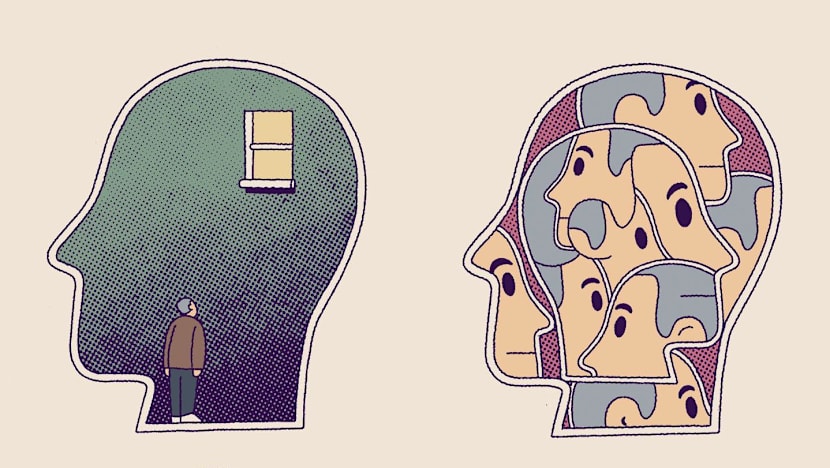
Alzheimer’s disease, the most commonly diagnosed form of dementia, represents only a fraction of the broader spectrum of neurodegenerative diseases. Many individuals diagnosed with dementia exhibit symptoms indicative of multiple types, including vascular dementia, Lewy body dementia, frontotemporal dementia, and limbic-predominant age-related TDP-43 encephalopathy, commonly known as LATE. Understanding these various forms is crucial for accurate diagnosis and effective management of symptoms.
Vascular Dementia: The Impact of Blood Flow
Vascular dementia is the second most prevalent type of dementia and often arises following a stroke, whether a significant one or numerous smaller incidents. It frequently results from long-term damage to the brain’s smaller blood vessels. According to Dr. Silvia Fossati, a professor of neural sciences at Temple University’s Lewis Katz School of Medicine, the impairment typically affects the brain’s white matter—the insulated nerve fibers responsible for transmitting signals between neurons.
When blood flow to the brain is disrupted, brain cells become deprived of essential oxygen and nutrients. This can lead to symptoms such as general cognitive slowing and difficulties with decision-making, problem-solving, and task execution. The most significant risk factor is poor cardiovascular health, particularly conditions like high blood pressure. An MRI can confirm the diagnosis by revealing white matter damage.
While the damage is often irreversible, vascular dementia is more preventable than other forms. Dr. Costantino Iadecola, a professor of neurology at Weill Cornell Medicine, emphasizes the importance of maintaining healthy blood vessels as a proactive measure against dementia.
Lewy Body Dementia: A Complex Array of Symptoms
Lewy body dementia presents a diverse range of symptoms, affecting both cognitive and physical functioning. Dr. Sudha Seshadri, the founding director of the Glenn Biggs Institute for Alzheimer’s and Neurodegenerative Diseases at the University of Texas Health Science Center, notes that this form of dementia impacts not only the brain but also the peripheral nervous system.
Common symptoms include cognitive impairment, particularly with executive function, and visual-spatial difficulties. Patients may experience visual hallucinations, constipation, and symptoms associated with Parkinson’s disease such as tremors and muscle rigidity. Diagnosis can be challenging due to the variability of symptoms among patients. Dr. David Irwin, an associate professor of neurology at Penn Medicine, points out that the unique symptoms often lead to underdiagnosis of Lewy body dementia.
Frontotemporal Dementia: Early Onset and Behavioral Changes
Frontotemporal dementia, while less common than other types, often manifests earlier in life, typically in individuals aged 40 to 60. The frontal lobe of the brain is significantly affected, leading to cognitive symptoms that include difficulties with planning and organization. Dr. Winston Chiong, a professor of neurology at the University of California, San Francisco, explains that these cognitive challenges may surface as difficulties in managing finances or planning activities.
Dramatic personality changes are also prevalent, with individuals becoming uninhibited or emotionally distant. Unfortunately, frontotemporal dementia is frequently misdiagnosed as a psychiatric condition, as its core symptoms can resemble those of depression or other mood disorders.
LATE: A Newly Recognized Form of Dementia
LATE, or limbic-predominant age-related TDP-43 encephalopathy, has gained recognition in recent years as a distinct form of dementia. First identified approximately 20 years ago, this type is characterized by the presence of toxic clusters of the protein TDP-43 in the brains of those exhibiting symptoms similar to Alzheimer’s. Dr. Peter Nelson, a professor of pathology at the University of Kentucky College of Medicine, indicates that about one-third of individuals in their 80s and 90s show signs of LATE.
The hippocampus, a critical area for memory, is primarily affected, making memory loss the most common symptom. Although LATE progresses slowly and is often considered less severe on its own, individuals frequently exhibit concurrent symptoms of Alzheimer’s, leading to a more rapid and severe decline. Currently, there is no definitive blood test for TDP-43, and diagnosis relies on clinical symptoms and the exclusion of other dementia forms.
The first clinical trial for a treatment targeting LATE is currently underway, marking a hopeful step forward in addressing this complex condition.
In conclusion, understanding the various forms of dementia is essential for accurate diagnosis and effective symptom management. As research continues to evolve, individuals and their families can benefit from greater awareness and knowledge of these conditions, leading to better care and support.

India Unveils Long-Range Hypersonic Missile Amid Regional Tensions

SK bioscience Launches Global Trial for Universal Sarbecovirus Vaccine

Senegal Coach Pape Thiaw Suspended and Fined After Final Disruption

PAS Denies Abolishing Chairman Post, Contradicts Muhyiddin’s Claim

Mbappé Critiques Real Madrid’s Effort After Benfica Defeat

Thailand’s December Factory Output Surges 2.52% Year-on-Year

Ishita Dutta Reveals Her Parenting Secret: Strong Coffee

Older GPs Express Concerns Over New Digital Health Record Mandate

Urban Jurgensen: A 252-Year Legacy Enters a New Era

Regina Martinez Breaks New Ground for Mexico in Cross-Country Skiing

South Korea’s Foreign Minister Cho Hyun to Visit China This Week

Starling Bank Plans Secondary Share Sale, Targeting $5.4 Billion Valuation

Munsang College Celebrates 100 Years with Grand Ceremony

PAS Aims to Expand Parliamentary Influence in Upcoming Election

De Minaur Triumphs at Washington Open After Thrilling Comeback

Kenvue Dismisses CEO Thibaut Mongon as Strategic Review Advances

Humanism Camp Engages 250 Youths in Summer Fest 2025

Colombian Senator Miguel Uribe Shows Signs of Recovery After Attack
-
 Sports2 months ago
Regina Martinez Breaks New Ground for Mexico in Cross-Country Skiing
-
 World6 months ago
South Korea’s Foreign Minister Cho Hyun to Visit China This Week
-
 Business7 months ago
Starling Bank Plans Secondary Share Sale, Targeting $5.4 Billion Valuation
-
 Top Stories7 months ago
Munsang College Celebrates 100 Years with Grand Ceremony
-
 World6 months ago
PAS Aims to Expand Parliamentary Influence in Upcoming Election
-
 Sports8 months ago
De Minaur Triumphs at Washington Open After Thrilling Comeback
-
 Business8 months ago
Kenvue Dismisses CEO Thibaut Mongon as Strategic Review Advances
-
 Lifestyle8 months ago
Humanism Camp Engages 250 Youths in Summer Fest 2025
-
 Top Stories9 months ago
Colombian Senator Miguel Uribe Shows Signs of Recovery After Attack
-

 Sports8 months ago
Tupou and Daugunu Join First Nations Squad for Lions Clash
-

 World8 months ago
ASEAN Gears Up for Historic Joint Meeting of Foreign and Economic Ministers
-

 Health8 months ago
New Study Challenges Assumptions About Aging and Inflammation