
Health
Singapore Grapples with Organ Donation Shortage as 500 Await Transplants

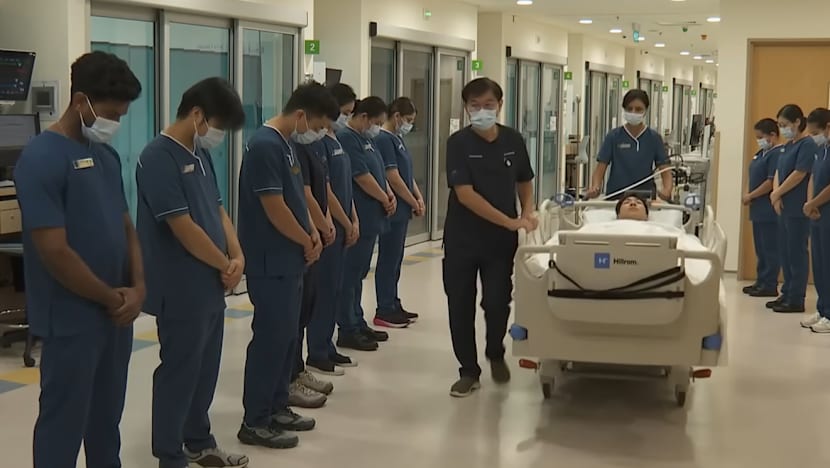
In Singapore, a troubling shortage of organ donations has left over 500 patients on waiting lists for transplants. The situation is particularly dire for those requiring kidney transplants, with only 10 percent of individuals on the list receiving a transplant last year. As of the end of 2024, patients face an average wait time of nine years, primarily due to a limited pool of deceased organ donors, according to the Ministry of Health (MOH).
Honouring Donors in Times of Grief
A poignant moment occurs in hospitals when healthcare staff gathers for an “honour walk,” accompanying brain-dead patients to the operating theatre for organ retrieval. This solemn procession serves as a final tribute to the donors and provides much-needed support to their grieving families. Ms Sally Kong, deputy director of the National Organ Transplant Unit (NOTU), emphasizes the positive reactions from families witnessing the respect and value placed on their loved ones’ donations. “They can see how much the donation is being valued and how they are being cared for at the time when they are hurting the most,” she explains.
Despite the emotional significance of these moments, the number of deceased organ donors in Singapore remains alarmingly low, often in the low double digits annually. Each donor has the potential to save up to seven lives, yet the need continues to outpace the supply.
Understanding the Legal Framework
Organ donation in Singapore operates under two primary legal frameworks. The Human Organ Transplant Act governs the donation of kidneys, hearts, livers, and corneas. This law applies to all citizens and permanent residents aged 21 and above, who are not mentally disordered, unless they have opted out. Those who choose to opt out face reduced priority on transplant waiting lists in the future. The opt-out rate has remained stable at 3 percent annually.
The second framework, the Medical (Therapy, Education and Research) Act, allows individuals aged 18 and above, regardless of nationality, to pledge additional organs, tissues, or even their entire bodies for transplantation, education, or research. Typically, around 800 people make such pledges each year. Nonetheless, various factors, including unsuitable medical conditions and lack of consent from next-of-kin, can hinder organ donations. In 2022, 16 patients with end-stage kidney failure missed out on transplants due to these challenges.
MOH stresses the importance of having timely discussions about organ donation preferences with loved ones. A spokesperson noted, “This underscores the importance of having timely conversations and making one’s organ donation preferences known, so that our loved ones are able to make informed decisions with clarity and confidence.”
For some families, navigating these conversations can be particularly challenging. Ms Kong recalls a case where a son questioned whether his mother fully understood her decision to donate her organs. The healthcare team offered support during this difficult time, helping the family find comfort in the knowledge that their loved one’s decision could significantly impact others’ lives.
Following the donation, the son expressed gratitude for the care provided by the team, even inviting them to the wake to share how his mother’s gift left a lasting legacy.
Raising Awareness and Improving Processes
Healthcare workers in Singapore receive ongoing training to address these sensitive conversations as part of end-of-life care. The MOH also promotes the “Live On” campaign, which aims to enhance public awareness and discussions around organ donation. Individuals interested in pledging their organs can easily log into the Organ Donor Registry using their Singpass account to update their status.
Brain donations are coordinated by both NOTU and Brain Bank Singapore, Southeast Asia’s first tissue bank dedicated to studying human brain tissue in relation to neurological disorders. Although questions have arisen about the existence of separate registries, the MOH has stated that there are no plans to consolidate them into a single national registry. This response follows a parliamentary inquiry from Dr Choo Pei Ling, a neurologist and Member of Parliament, who noted that residents found the system complex.
Dr Choo acknowledged the importance of addressing the information gap between the public and the Ministry, stating, “There is an information and knowledge asymmetry between the public and the Ministry. Addressing it can foster better understanding and encourage more Singaporeans to pledge the gift of life.”
As Singapore continues to address its organ donation shortage, fostering open discussions and raising awareness remain crucial steps toward saving more lives.

India Unveils Long-Range Hypersonic Missile Amid Regional Tensions

SK bioscience Launches Global Trial for Universal Sarbecovirus Vaccine

Senegal Coach Pape Thiaw Suspended and Fined After Final Disruption

PAS Denies Abolishing Chairman Post, Contradicts Muhyiddin’s Claim

Mbappé Critiques Real Madrid’s Effort After Benfica Defeat

Thailand’s December Factory Output Surges 2.52% Year-on-Year

Ishita Dutta Reveals Her Parenting Secret: Strong Coffee

Older GPs Express Concerns Over New Digital Health Record Mandate

Urban Jurgensen: A 252-Year Legacy Enters a New Era

Regina Martinez Breaks New Ground for Mexico in Cross-Country Skiing

South Korea’s Foreign Minister Cho Hyun to Visit China This Week

Starling Bank Plans Secondary Share Sale, Targeting $5.4 Billion Valuation

Munsang College Celebrates 100 Years with Grand Ceremony

PAS Aims to Expand Parliamentary Influence in Upcoming Election

De Minaur Triumphs at Washington Open After Thrilling Comeback

Kenvue Dismisses CEO Thibaut Mongon as Strategic Review Advances

Humanism Camp Engages 250 Youths in Summer Fest 2025

Colombian Senator Miguel Uribe Shows Signs of Recovery After Attack
-
 Sports3 months ago
Regina Martinez Breaks New Ground for Mexico in Cross-Country Skiing
-
 World8 months ago
South Korea’s Foreign Minister Cho Hyun to Visit China This Week
-
 Business8 months ago
Starling Bank Plans Secondary Share Sale, Targeting $5.4 Billion Valuation
-
 Top Stories8 months ago
Munsang College Celebrates 100 Years with Grand Ceremony
-
 World8 months ago
PAS Aims to Expand Parliamentary Influence in Upcoming Election
-
 Sports9 months ago
De Minaur Triumphs at Washington Open After Thrilling Comeback
-
 Business10 months ago
Kenvue Dismisses CEO Thibaut Mongon as Strategic Review Advances
-
 Lifestyle9 months ago
Humanism Camp Engages 250 Youths in Summer Fest 2025
-
 Top Stories10 months ago
Colombian Senator Miguel Uribe Shows Signs of Recovery After Attack
-

 Sports10 months ago
Tupou and Daugunu Join First Nations Squad for Lions Clash
-

 World10 months ago
ASEAN Gears Up for Historic Joint Meeting of Foreign and Economic Ministers
-

 Health9 months ago
New Study Challenges Assumptions About Aging and Inflammation