
Health
Researchers Discover Key Tumor Cells Driving Lung Cancer Growth


Scientists from China and the United States have made a significant breakthrough in lung cancer research by identifying a rare and highly adaptable group of tumor cells. These cells, referred to as high-plasticity cell state (HPCS), play a vital role in the progression of lung cancer. The findings, released this week, outline a potential new therapeutic approach for treating cancers that are often resistant to elimination and prone to recurrence.
One of the challenges in cancer treatment is the disease’s ability to adapt to therapies. Tumor cells can shift between different states to survive drug attacks and regenerate. To study this phenomenon in real time, the research team developed a genetic monitoring system within lung cancer mouse models. This innovative system incorporates “trackable chips” and “precision clearance switches” into tumor cells, enabling scientists to observe their behavior and selectively eliminate them.
The researchers discovered that HPCS cells serve as a “central traffic hub” within tumors. They guide other cancer cells towards various growth pathways while retaining the ability to revert to a highly adaptable form when necessary. In experiments, removing HPCS cells in the early stages of tumor development prevented malignancy. In more advanced cases, targeting these cells significantly slowed tumor growth.
Importantly, the elimination of HPCS cells also reduced resistance to chemotherapy and targeted cancer drugs. When this strategy was combined with existing treatment methods, tumors in the models were nearly eradicated. These promising results suggest that focusing on this highly adaptable tumor cell state could pave the way for innovative treatments not only for lung cancer but possibly for a broader spectrum of cancers as well.
This research highlights the need for continued exploration of tumor cell adaptability and its implications for treatment strategies. As scientists refine their understanding of these mechanisms, the potential for improving patient outcomes in lung cancer and other malignancies could become a reality.

India Unveils Long-Range Hypersonic Missile Amid Regional Tensions

SK bioscience Launches Global Trial for Universal Sarbecovirus Vaccine

Senegal Coach Pape Thiaw Suspended and Fined After Final Disruption

PAS Denies Abolishing Chairman Post, Contradicts Muhyiddin’s Claim

Mbappé Critiques Real Madrid’s Effort After Benfica Defeat

Thailand’s December Factory Output Surges 2.52% Year-on-Year

Ishita Dutta Reveals Her Parenting Secret: Strong Coffee

Older GPs Express Concerns Over New Digital Health Record Mandate

Urban Jurgensen: A 252-Year Legacy Enters a New Era

Regina Martinez Breaks New Ground for Mexico in Cross-Country Skiing

South Korea’s Foreign Minister Cho Hyun to Visit China This Week

Starling Bank Plans Secondary Share Sale, Targeting $5.4 Billion Valuation

Munsang College Celebrates 100 Years with Grand Ceremony

PAS Aims to Expand Parliamentary Influence in Upcoming Election

De Minaur Triumphs at Washington Open After Thrilling Comeback

Kenvue Dismisses CEO Thibaut Mongon as Strategic Review Advances

Humanism Camp Engages 250 Youths in Summer Fest 2025

Colombian Senator Miguel Uribe Shows Signs of Recovery After Attack
-
 Sports2 months ago
Regina Martinez Breaks New Ground for Mexico in Cross-Country Skiing
-
 World6 months ago
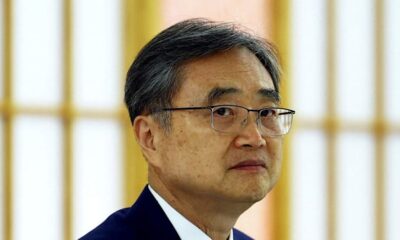
South Korea’s Foreign Minister Cho Hyun to Visit China This Week
-
 Business6 months ago
Starling Bank Plans Secondary Share Sale, Targeting $5.4 Billion Valuation
-
 Top Stories6 months ago
Munsang College Celebrates 100 Years with Grand Ceremony
-
 World6 months ago
PAS Aims to Expand Parliamentary Influence in Upcoming Election
-
 Sports8 months ago
De Minaur Triumphs at Washington Open After Thrilling Comeback
-
 Business8 months ago
Kenvue Dismisses CEO Thibaut Mongon as Strategic Review Advances
-
 Lifestyle8 months ago
Humanism Camp Engages 250 Youths in Summer Fest 2025
-
 Top Stories8 months ago
Colombian Senator Miguel Uribe Shows Signs of Recovery After Attack
-

 Sports8 months ago
Tupou and Daugunu Join First Nations Squad for Lions Clash
-

 World8 months ago
ASEAN Gears Up for Historic Joint Meeting of Foreign and Economic Ministers
-

 Health8 months ago
New Study Challenges Assumptions About Aging and Inflammation